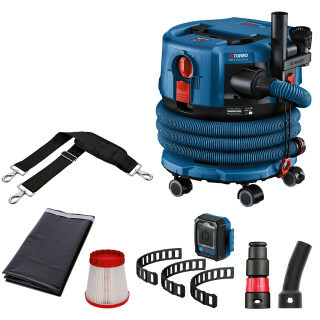
Bosch BiTurbo Vacuums & Dust Extractors
Cutting away from mains power? A Bosch BITURBO dust extractor collects dust at the tool without trailing a power lead across the job.
For joiners, fitters and refurbishment teams, cordless extraction keeps pace between rooms. Match the dust class, hose connection and recommended battery to your work. Browse the range before choosing your setup.
What Jobs Is a Bosch BITURBO Dust Extractor Best At?
- Collect dust at the saw during internal fit-outs, using a compatible extraction connection rather than leaving sawdust across finished floors.
- Move between rooms during refurbishment work without finding a mains socket for the extractor at every stop.
- Clear loose debris from benches and work areas with suitable cleaning attachments, keeping sharp offcuts out of the hose.
- Collect non-flammable liquid spills only with a Bosch BITURBO wet and dry vacuum approved for wet pickup and configured as its manual specifies.
Choosing the Right Bosch BITURBO Dust Extractor
Choose the dust class first, then check battery requirements and tool connections. Tank size alone tells you very little.
1. Match the Class to the Dust
For wood dust and silica-containing construction dust, choose suitable M-class extraction as part of your dust-control assessment. Start with Bosch BiTurbo M-Class Extractors and Vacuums, rather than assuming any workshop vacuum will do.
2. Budget for the Battery Setup
If you expect sustained extraction, check the model's recommended battery type and capacity before buying a body-only unit. Compare compatible Bosch BiTurbo Batteries and allow for a charged spare rather than relying on the battery already running your saw.
3. Check Connections and Automatic Starting
If you want extraction to start with the tool, check whether the extractor needs a separate transmitter or compatible wireless module. When pairing it with Bosch BiTurbo Saws, confirm the dust-port fit as well; sharing a brand does not guarantee a direct hose connection.
Who Uses Bosch BITURBO Dust Extractors?
Joiners and kitchen fitters use a Bosch BITURBO cordless vacuum for extraction while trimming panels and cutting worktops with compatible tools. Refurbishment and maintenance teams benefit when moving between occupied rooms or working before permanent power is available. For hazardous construction dust, the dust class and complete control setup matter more than cordless convenience.
The Basics: Understanding Cordless Dust Extraction
1. Capture Dust Before It Spreads
An extractor draws air through the tool's dust port or shroud, carrying dust into its collection system. A poor connection or unsuitable shroud lets dust escape before filtration can help. Use the tool's recommended extraction arrangement.
2. Dust Class Applies to the Complete Machine
An M-class extractor is more than a vacuum with a fine filter. Its classification covers the complete extraction system, including filtration and airflow warning requirements. Fitting a different filter does not upgrade an unclassified vacuum to M class.
Accessories to Keep Extraction Working
Sort the connection, collection bags and charging setup before the first cut.
1. Compatible Tool Adaptors
Use the correct adaptor to connect the hose securely to the tool. A loose push-fit connection can fall off mid-cut and leave dust spreading through the room.
2. Approved Collection Bags and Filters
Keep model-specific replacements available so a full bag or damaged filter does not stop the job. Use the collection system specified for the material, particularly when handling hazardous dust.
3. Compatible Battery Charger
Check Bosch Pro 18V Chargers against your chosen batteries. Plan charging around the work so both the saw and extractor are not waiting on one flat pack.
Choose the Right Bosch BITURBO Dust Extractor for the Job
Use the task to narrow down the specification.
| Your Job | Extractor Setup | Key Features |
|---|---|---|
| Cutting timber during fit-outs | Suitable M-class cordless extractor | Secure tool connection and sufficient airflow for the saw |
| Moving between refurbishment rooms | Portable cordless extractor | Manageable loaded weight and secure hose storage |
| Long cutting sessions | Extractor with spare compatible batteries | Recommended battery specification and practical charging provision |
| Non-flammable liquid pickup | Wet-rated model | Approved wet configuration and stated liquid capacity |
Common Buying and Usage Mistakes
- Buying on suction figures alone can leave you with the wrong dust class. Check the material hazards and machine classification first.
- Assuming automatic tool activation is included can mean extra trips to the extractor switch. Check which wireless accessories are supplied or required.
- Ignoring an airflow warning leaves dust escaping at the tool. Stop and check for a blocked hose, full bag or filter problem before continuing.
- Using the dry collection setup for liquids can damage bags or compromise performance. Follow the model's wet-pickup instructions before changing tasks.
Cordless Extractor vs Mains Extractor vs Workshop Vacuum
Bosch BITURBO Cordless Extractor
Choose cordless for room-to-room work and locations without convenient mains power. Battery changes become part of the working day, so allow for extraction demand as well as tool demand.
Mains Dust Extractor
Choose mains for prolonged work at a fixed cutting station with a suitable supply. You avoid battery changes, but must manage the lead and check the site's voltage requirements.
General Workshop Vacuum
Choose a general vacuum for cleaning tasks within its stated capabilities. Do not substitute an unclassified workshop vacuum where the work requires classified extraction for hazardous dust.
Maintenance and Care
Check the Air Path
Remove the battery before clearing blockages. Inspect the hose, inlet and tool adaptor regularly, especially after collecting coarse debris.
Contain Collected Dust
Change bags using the specified procedure and suitable protective equipment. Seal hazardous waste appropriately rather than tipping it into an open skip.
Protect Filters and Seals
Check filters and sealing faces for damage. Clean only as instructed; do not blast filters with compressed air or wash them unless expressly permitted.
Dry After Wet Pickup
Empty and clean the container after approved wet use, then let the relevant components dry before storage. Follow the manual when restoring the dry-dust setup.
Why Shop for Bosch BITURBO Dust Extractors at ITS?
Shop the Bosch BITURBO dust extractor range alongside compatible batteries, chargers and extraction accessories at ITS. Stocked lines are held in our own warehouse, ready for next-day delivery, subject to availability and delivery terms. Compare the extractor with the wider Bosch BiTurbo range to plan your cordless setup.
Bosch BITURBO Dust Extractor FAQs
What is the difference between a vacuum and a dust extractor?
A general vacuum mainly collects dirt already on surfaces. A tool-connected dust extractor captures dust as it is produced. Some machines do both, but hazardous dust requires the appropriate machine classification, airflow and collection setup, not simply a hose that fits.
Does the Bosch dust extractor connect to power tools?
Yes, compatible models connect through an extraction hose and suitable tool adaptor. Check the port dimensions and supplied fittings. Wireless automatic starting is model-dependent and may require additional compatible equipment; it is separate from the physical hose connection.
Is the Bosch dust extractor L or M class?
Bosch supplies different extractor classifications, so check the exact model rather than relying on the brand or BITURBO name. Confirm the class in the product specification and on the machine. Choose suitable M-class extraction for wood dust and silica-containing construction dust, alongside the other controls required by your assessment.
Are Bosch dust extractors any good?
They are worth considering if the specification suits your tools and workload, particularly when you already use compatible Bosch Professional batteries. Check dust class, required airflow, filter cleaning, consumable costs and battery requirements. Those details determine whether a particular model earns its place on your job.
Where are Bosch tools made?
Bosch manufactures tools across several countries; the brand's German origins do not mean every tool is made in Germany. Check the country-of-origin marking on the specific machine or packaging if manufacturing location affects your purchase.