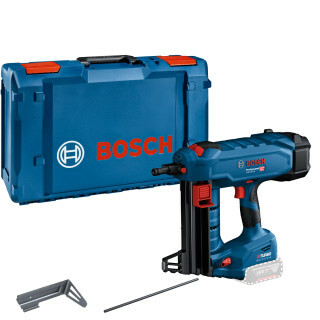
Bosch BiTurbo Nail Guns
Fixing tracks or brackets to concrete? Choose a Bosch BITURBO nail gun for direct fastening, not timber framing or finish carpentry.
For fitters and dryliners, the right cordless concrete nailer can reduce repeated drilling and plugging on suitable substrates. Check the approved pins, base material and fixing requirements before buying. Choose your nailer and compatible fixings together.
What Jobs Are Bosch BITURBO Nail Guns Best At?
- Fix plasterboard partition tracks to suitable concrete floors using approved pins, where the track specification permits direct fastening.
- Secure compatible electrical clips and brackets to approved substrates during first fix, without drilling and plugging each individual fixing.
- Fasten suitable lightweight service supports to steel where the nailer, pin and steel thickness meet the manufacturer's requirements.
- Work through repeated fixing positions across commercial fit-outs without trailing an air hose or managing gas cartridges.
Choosing the Right Bosch BITURBO Nail Gun
Start with what you are fixing into. A concrete nailer is not a substitute for a timber framing nailer or a brad nailer.
1. Concrete, Steel or Timber
For approved direct fastening into concrete or steel, look at Bosch BiTurbo Concrete Nailers. If you searched for a Bosch BITURBO first fix nailer or Bosch BITURBO framing nailer, check carefully: structural timber work needs a dedicated timber nailer with the correct nail specification.
2. Fixing Specification Before Nail Length
Match the approved pin to the substrate, attachment thickness and required embedment. Do not choose by length alone. Safety-critical, overhead or load-bearing attachments need a specified fixing system, not an assumption that a driven pin will hold.
3. Battery and Kit Contents
A Bosch BITURBO cordless nail gun needs a compatible battery with the performance recommended for that model. Check whether the listing includes batteries and a charger; a body-only purchase only saves money if your existing kit is suitable.
4. Finish Work Needs a Different Tool
If you need a Bosch BITURBO second fix nailer or Bosch BITURBO brad nailer for architrave, do not buy a concrete nailer instead. Check the application and fastener gauge across Bosch 18V Nail Guns before ordering.
Who Uses Bosch BITURBO Nail Guns?
Dryliners use cordless concrete nailers for repeated track fixings, while sparkies and mechanical installers use approved clips and brackets for service installation. Teams already using Bosch BiTurbo tools should check battery compatibility before adding a nailer to their kit.
The Basics: Understanding Cordless Concrete Nailers
Direct fastening drives a purpose-made pin into an approved base material. It removes the separate drilling and plugging stages for suitable applications, but it does not replace every anchor.
1. Battery-Powered Driving
The battery powers the nailer's driving mechanism, so you do not need a compressor or gas cartridge. The contact nose must be positioned as instructed before firing; awkward access can rule out a fixing position.
2. The Substrate Determines Suitability
Concrete condition, steel thickness, edge distances and pin choice affect the fixing. Follow the tool and fastener guidance, and carry out checks or testing where the fixing specification requires them.
Accessories for Repeated Direct Fastening
Sort the approved pins and battery supply before starting a full run of track or brackets.
1. Compatible Concrete and Steel Pins
Check Bosch Pins against your exact nailer and substrate. Incorrect pins can cause feeding problems or unsuitable fixings, even when they appear to fit the magazine.
2. Spare Batteries
Use Bosch BiTurbo Batteries that meet the nailer's stated requirements. A suitable spare keeps repeated fastening moving while the other pack charges.
Choose the Right Bosch Nail Gun for the Job
Choose by base material and fixing duty, not the shared nail gun name.
| Your Job | Nailer Type | Key Features |
|---|---|---|
| Partition track into suitable concrete | Cordless concrete nailer | Approved concrete pins, suitable embedment and access for the contact nose. |
| Compatible brackets onto steel | Concrete and steel nailer approved for the task | Specified steel pins and permitted base steel thickness. |
| Timber studwork and framing | Dedicated first fix timber nailer | Correct framing nail length, collation and structural fixing specification. |
| Architrave and finishing trims | Dedicated second fix or brad nailer | Suitable fastener gauge, length and control of the visible fixing mark. |
Common Buying and Usage Mistakes
- Buying a concrete nailer for timber framing leaves you with the wrong fastener system. Check the intended substrate before comparing prices.
- Assuming every concrete surface will accept a pin risks failed fixings or surface damage. Check substrate suitability and follow the specified fixing checks.
- Choosing pins solely by attachment thickness ignores required embedment and base material. Use the approved fastener guidance for the complete fixing.
- Ordering a body without checking battery requirements can leave the tool unusable on arrival. Confirm compatible packs, charger and kit contents first.
Concrete Nailers vs First Fix Nailers vs Brad Nailers
Concrete Nailers
Choose these for approved direct fastening into concrete or steel. They suit repetitive track and bracket installation, but do not replace timber nailers or specified heavy-duty anchors.
First Fix Timber Nailers
Choose these for framing and other timber construction using the specified nails. They drive larger timber fasteners but are not designed to fire concrete pins into hard substrates.
Second Fix and Brad Nailers
Choose these for trims, mouldings and finish carpentry where a smaller fixing mark matters. Their finer fasteners are not substitutes for structural framing nails or concrete fixings.
Maintenance and Care
Clear Dust After Use
Remove the battery and unload the magazine before cleaning. Keep the feed path, contact nose and ventilation openings clear using the methods in the manual.
Deal with Jams Safely
Follow the model's jam-clearing procedure rather than forcing the driver or magazine. Stop using the tool if pins repeatedly misfeed or the contact mechanism is damaged.
Store Pins and Batteries Dry
Keep pins in their packaging, protected from moisture and damage. Store the tool and batteries within the manufacturer's temperature limits, rather than leaving them loose in a damp van.
Inspect Wear Parts
Check the magazine, nose and accessible components for wear before work. Use authorised servicing for damaged driving or safety mechanisms, and do not add oil unless the manual specifies it.
Why Shop for Bosch BITURBO Nail Guns at ITS?
Shop the Bosch BITURBO nail gun range alongside compatible pins, batteries and charging equipment, so you can sort the complete fixing setup in one order. ITS holds stock in its own warehouse, with in-stock items ready for next-day delivery, subject to delivery terms and availability.
Bosch BITURBO Nail Gun FAQs
Are Bosch nail guns any good?
They are worth considering for repeated fastening when the model suits your work and existing battery kit. For a concrete nailer, approved substrate coverage, pin availability and reliable access to each fixing position matter more than the brand name alone.
What is the difference between first fix and second fix nailers?
First fix timber nailers use larger nails for framing and construction. Second fix nailers use finer fasteners for skirting, architrave and trims. A concrete nailer is a separate type: doing electrical first fix does not make a concrete nailer a first fix timber nailer.
Are Bosch nail guns cordless or gas?
Bosch BITURBO cordless concrete nailers are battery-powered and do not need gas cartridges or an air compressor. Check the individual listing for the required battery and whether a pack and charger are included.
Where are Bosch tools made?
Bosch manufactures tools in several countries, so there is no single country of manufacture for the whole range. Check the tool's rating plate or packaging for the origin of the particular model rather than assuming it is made in Germany.
Do Bosch tools come with a warranty?
Bosch tools come with a manufacturer's guarantee subject to its terms. Eligible Professional tools may qualify for an extension through registration within the stated deadline. Check the current UK conditions, retain your invoice and register promptly; wear, misuse and consumable parts are not automatically covered.
Can I use a concrete nailer instead of anchors for every bracket?
No. Direct fastening is only suitable where the attachment, substrate and required load are covered by the fixing specification. Heavy, overhead or safety-critical installations may need a different anchoring system and documented design or testing.