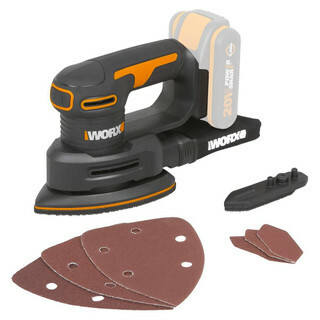
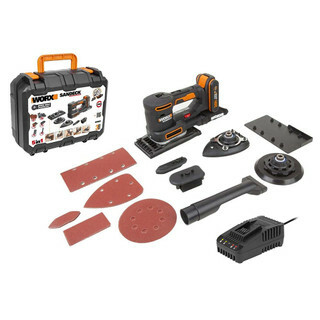
Worx Sanders
Worx sanders are built for stripping, smoothing and finishing timber, filler and paint without making a simple prep job drag on all day.
If you're rubbing down doors, easing filler back on snagging, or tidying edges before paint, a decent worx sander saves time and leaves a cleaner finish than doing it by hand. The range covers worx orbital sander models for broad flat work and more precise options for corners and awkward trim. If you're already on the platform, add a Worx Batteries setup that suits the runtime you need and get the right sanding tool sorted.
What Are Worx Sanders Used For?
- Smoothing filled walls, skirting and trim before decorators come in is where a worx sander earns its keep, especially when hand sanding would leave uneven patches and waste half the morning.
- Stripping tired paint and roughing up old timber for recoat work is quicker with a worx belt sander or orbital model, giving you a surface the next coat can actually key to properly.
- Finishing doors, shelves, worktops and site-made joinery is easier with controlled sanding that takes machining marks out without gouging the face of the timber.
- Getting into corners, edges and tight sections around architrave, stair parts and fitted units is exactly what Worx Detail Sanders & Delta Sanders are there for when bigger sanders just cannot reach cleanly.
- Prepping broad flat panels, tabletops and doors for stain, lacquer or paint is a straightforward job for Worx Random Orbit Sanders, especially when you want a better finish with less visible swirl marking.
Choosing the Right Worx Sander
Sort the right one by the surface first. Flat boards, tight corners and heavy stock removal all want different kit.
1. Orbital for finish work
If you are sanding doors, shelves, panels or filler and want a cleaner finish with less marking, go for a worx orbital sander. It is the safer pick for visible surfaces where you cannot afford deep scratches.
2. Belt for fast material removal
If you need to strip coatings, flatten rough timber or remove material quickly, a worx belt sander is the one to look at. Just do not use it like a finishing sander, because it will take off stock fast and punish a heavy hand.
3. Detail sanders for corners and trim
If most of your work is on stair parts, louvers, architrave, furniture edges or awkward inside corners, a detail sander makes more sense than fighting a round or rectangular pad into spaces it does not fit.
4. Pads, sheets and runtime matter
Do not just buy the machine and hope for the best. Stock the right grit range from Worx Sanding Pads & Sheets, and if you are using delta heads, keep Worx Delta Sanding Sheets ready so you are not stuck when the fitted sheet is spent.
Who Uses These on Site?
- Chippies use a worx sander for cleaning up doors, frames, skirting and site-built joinery, especially on second fix where the finish needs to look right before paint or stain goes on.
- Decorators reach for these when rubbing down filler, flattening old paint edges and keying surfaces between coats, because a proper sanding tool is faster and more even than doing every bit by hand.
- Kitchen fitters and installers use orbital and detail sanders to ease worktops, panels and scribes, and to tidy awkward corners where a full-size pad will not sit properly.
- Maintenance teams keep a worx sander set handy for snagging, patch repairs and quick refresh jobs in schools, offices and tenanted properties where you need neat results without dragging out loads of gear.
The Basics: Understanding Worx Sanders
These all do the same core job, but they remove material in different ways. Pick the wrong type and you either waste time or ruin the finish.
1. Random Orbit Sanders
A random orbit sander moves in a circular pattern while also offsetting the motion, which helps reduce obvious sanding marks. That makes it the usual choice for finish prep on doors, panels and painted timber.
2. Belt Sanders
A belt sander runs a continuous abrasive belt at speed, so it removes stock far quicker than an orbital. That is handy for stripping and flattening, but it is not the tool to wave about on fine finishing jobs.
3. Detail Sanders
A detail sander uses a shaped pad to get into corners, tight edges and narrow sections that bigger sanders miss. It is the one you grab when hand sanding is too slow but access is still tight.
Worx Sander Accessories That Save Time on the Job
The right extras stop downtime, improve the finish and save you making do with worn abrasives.
1. Sanding Pads and Sheets
Keep fresh abrasives in the van. Trying to finish timber or flatten filler with clogged sheets just burns the surface, slows the job and leaves you pressing harder than you should.
2. Delta Sanding Sheets
If you are using a detail or delta head, proper shaped sheets are a must. They let you work right into corners and edges instead of tearing standard paper down to size and hoping it stays put.
3. Spare Batteries
A spare battery is worth having if you are sanding doors, trim or long runs of timber through the day. No point stopping halfway through prep because your cordless kit is flat and the charger is back in the van.
Choose the Right Worx Sander for the Job
Match the sander type to the surface and how much material needs to come off.
| Your Job | Worx Sander Type | Key Features |
|---|---|---|
| Prepping doors, shelves and flat panels for paint or stain | Random orbit sander | Cleaner finish, fewer visible marks, good control on broad faces |
| Stripping coatings or flattening rough timber fast | Belt sander | Quick stock removal, strong material take-off, better for heavier prep |
| Sanding corners, trim and awkward edges | Detail or delta sander | Pointed pad shape, access into tight spots, easier edge control |
| Snagging filler, patch repairs and light decorating prep | Compact orbital or detail sander | Easy handling, neater on small areas, less tiring for quick jobs |
Common Buying and Usage Mistakes
- Buying a belt sander for finishing work is a common one. It removes material quickly, but on visible timber it can leave deeper scratches unless you really know what you are doing.
- Using the wrong grit wastes time and spoils the finish. Too coarse and you spend ages chasing marks out, too fine and you barely remove anything when stripping paint or flattening filler.
- Pressing down hard to speed things up usually makes the job worse. Let the sander and the abrasive do the work or you clog sheets faster, strain the motor and leave uneven patches.
- Ignoring dust collection is short-sighted on indoor work. You end up with more clean-up, a messier finish and dust everywhere, so always check the extraction setup before starting.
- Not ordering spare sheets at the same time catches plenty of people out. Once the fitted abrasive is spent, the job stops, so get the right pads and shapes in before the tool even lands.
Belt Sanders vs Random Orbit Sanders vs Detail Sanders
Belt Sanders
Best when you need fast stock removal, old finish stripped off or rough timber flattened down. They are more aggressive, so they suit heavier prep rather than fine finishing.
Random Orbit Sanders
These are the all-rounders for decorators, joiners and fitters working on flat visible surfaces. They give a tidier finish than a belt sander and are easier to control on painted or finished timber.
Detail Sanders
Detail sanders are for the fiddly bits a larger pad cannot reach, like corners, slats and tight trim. They are not built for big area removal, but they save a lot of hand sanding on awkward work.
Maintenance and Care
Clear Dust After Use
Empty or clean the dust bag or canister after each job. Fine sanding dust builds up quickly and if you leave it sitting in the tool, airflow and collection usually get worse.
Change Worn Abrasives Early
Do not try to stretch dead sheets for the sake of it. Once the grit is spent, the tool runs hotter, the finish drops off and you end up leaning on it harder than you should.
Check the Pad Condition
Keep an eye on hook and loop backing pads and edge wear. If the sheet will not hold properly or the pad face is damaged, your sanding becomes uneven and control goes off.
Store Dry and Clean
Do not leave sanders loose in damp vans under piles of gear. Keeping them dry and reasonably clean helps protect switches, batteries, vents and moving parts from dust and moisture damage.
Replace Consumables Before the Job Starts
Stock the grit and sheet shape you actually use, especially for detail heads. It is cheaper than losing time on site because the only paper left in the van does not fit the tool.
Why Shop for Worx Sanders at ITS?
Whether you need a worx orbital sander for finish prep, a detail sander for corners, or a worx sanding tool setup with the right sheets and batteries, we stock the full range in one place. It is all in our own warehouse, in stock and ready for next day delivery, so you can get the right kit on site without hanging about.
Worx Sander FAQs
What sanders does Worx make?
Worx covers the main sanding jobs properly. You will usually find random orbit sanders for flat finish work, detail and delta sanders for corners and trim, and selected models aimed at quicker material removal depending on the range.
Are Worx sanders compatible with standard sanding pads?
Some are, but do not assume every sheet fits every pad. Random orbit sizes and hole patterns need checking, and delta models need the right shape, so it is always worth matching the sheet to the specific Worx sander you are buying.
Does Worx make a belt sander?
Yes, Worx has belt sander options in the range. If your job is more about stripping and flattening than fine finishing, that is the type to look for rather than expecting an orbital to do heavy removal all day.
Does the Worx sander have dust extraction?
Many Worx sanders include built-in dust collection or a dust port, but it depends on the model. For indoor prep, always check how the extraction works and whether the bag, box or port setup suits the mess you are likely to make.
Is a worx orbital sander enough for painted doors and trim?
Yes, for most repaint prep it is the better choice. It is easier to control, kinder to finished surfaces and far less likely than a belt sander to leave deep scratches that then need chasing out.
Are these worth it for snagging and small repair work?
Yes, especially the compact and detail models. They are handy for filler repairs, rubbing down edges and sorting awkward bits quickly without dragging out bigger kit for a ten minute job.