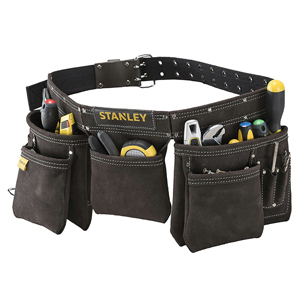
Stanley Storage
Stanley workwear storage keeps your fixings, hand tools and daily bits on you, so you're not up and down ladders or back to the van every five minutes.
If you're fitting out, roofing, framing or snagging, decent wearable storage saves time and keeps the job moving. Stanley workwear storage covers tool belts, pouches, nail pouches and tool rolls that stand up to dust, knocks and full-day site use. If you want kit that keeps the essentials to hand without flapping about or digging into your hips, start here.
What Is Stanley Workwear Storage Used For?
- Carrying screws, fixings, pencils and a tape on first fix jobs saves constant trips down the hop-up or back across site for bits you use every few minutes.
- Working off ladders or tower platforms with a Stanley tool belt keeps cutters, drivers and fasteners at waist level where you can grab them one-handed.
- Loading out for roofing, fencing or timber framing with a Stanley nail pouch keeps nails and loose fixings separate so you are not rooting around mid-task.
- Keeping service tools together in a Stanley tool pouch helps maintenance teams and fitters move room to room without leaving small kit behind.
- Rolling up chisels, drivers or marking tools in a Stanley tool roll makes van storage tidier and stops sharp or awkward bits rattling loose with the rest of your gear.
Choosing the Right Stanley Workwear Storage
Sorting the right setup is simple: buy for what stays on you all day, not what looks like it carries the most.
1. Belt or Single Pouch
If you are on first fix or outdoor jobs all day, go with a full Stanley tool belt so your fasteners and hand tools stay balanced round your waist. If you are doing service work, snagging or short visits, a Stanley tool pouch is usually enough and less hassle in tight spaces.
2. Nail Pouch or General Tool Pouch
If the job is mainly loose fixings like clout nails, framing nails or screws by the handful, pick a Stanley nail pouch with a wide opening you can get into quickly. If you need to carry pliers, drivers, markers and a tape, a general pouch with separate sleeves makes more sense.
3. Nylon or Leather
Nylon is lighter and easier going for everyday mixed trade work, especially if you are wearing it for long shifts. Leather usually suits heavier site abuse and rougher handling better, but it starts stiffer and carries a bit more weight on the hip.
4. Fixed Setup or Add On Pouches
If your loadout changes job to job, look for Stanley belt storage that lets you move or add pouches rather than being stuck with one layout. It is worth thinking about now, because a belt that cannot adapt soon ends up in the van while you buy another one.
Who Uses These on Site?
- Chippies use Stanley workwear storage for first fix, studwork and decking, where having nails, screws, a square and pencil on your belt keeps the pace up.
- Roofers and fencing teams swear by a Stanley nail pouch when they are moving across a roof or line of posts and cannot keep climbing down for fixings.
- Sparkies and fitters keep a Stanley tool pouch for drivers, snips, testers and connectors, especially on snagging and small install work where you only need the core kit.
- General builders and maintenance teams use Stanley tool belts and pouches for punch-list work, kitchen fits and refurbs, where you are in and out of rooms all day carrying mixed tools.
Useful Extras for Stanley Workwear Storage
A few sensible add-ons make belt storage easier to live with on long site days.
1. Extra Belt Pouches
Adding an extra pouch saves you cramming fixings and hand tools into the same pocket, which is how you end up fumbling for screws while balanced up a ladder. If your work changes between first fix and snagging, spare pouches make one belt do both jobs.
2. Tool Belt Braces or Supports
If you carry a lot of nails, screws or heavier hand tools, braces help spread the weight and stop the belt dragging on your hips by mid-afternoon. They are worth it if a full load normally leaves you shifting the belt back into place all day.
3. Tool Rolls
A Stanley tool roll keeps the bits you do not need on your waist organised in the van or tote, so your belt only carries what the job actually calls for. That means less bulk on site and less chance of losing smaller kit.
Choose the Right Stanley Workwear Storage for the Job
Match the storage type to the way you actually work.
| Your Job | Storage Type | Key Features |
|---|---|---|
| First fix carpentry and framing | Stanley tool belt | Multi pouch layout, balanced weight, space for fasteners, tape and hand tools. |
| Roofing, fencing and repetitive fixing | Stanley nail pouch | Wide access pocket, quick grab design, less time reaching into deep compartments. |
| Snagging, service calls and small installs | Stanley tool pouch | Compact carry, easy access to core tools, less bulk in finished spaces. |
| Van organisation and specialist hand tools | Stanley tool roll | Separate sleeves, tidy storage, stops loose tools knocking about in transit. |
| Mixed trade work across changing jobs | Stanley belt storage with add on pouches | Flexible layout, adaptable carry, easier to tailor for different site tasks. |
Common Buying and Usage Mistakes
- Buying the biggest belt straight away sounds sensible, but overloaded belts soon become uncomfortable and end up left in the van. Start with what you genuinely use every hour, then add pouches if needed.
- Using a nail pouch as a general tool pouch usually means poor organisation and tools jabbing about loose. If you carry drivers, pliers and markers, use a pouch with proper sleeves and slots.
- Ignoring belt fit is a common one, especially over layers and waterproofs. If the belt cannot adjust properly, it will sag, twist or rub, which gets old fast on a full shift.
- Mixing too many sharp or awkward tools into one compartment wears the pouch out quicker and slows you down on site. Keep fixings, sharp tools and measuring kit in separate sections where possible.
- Leaving wearable storage wet or full of dust after the job shortens its life. Empty it, brush it out and let it dry before it gets buried back in the van.
Tool Belts vs Tool Pouches vs Tool Rolls
Stanley Tool Belt
Best when you are on the tools for hours and need fixings plus hand tools on you the whole time. It carries more than a single pouch, but if you overload it, it gets tiring fast.
Stanley Tool Pouch
Better for snagging, service work and jobs in tight finished areas where a full belt is overkill. You carry less, but what you do carry is easier to reach without bulk round both hips.
Stanley Nail Pouch
Made for quick access to loose fixings on repetitive work like roofing, fencing or timber assembly. It is faster for nails and screws than a tool pouch, but not as tidy for mixed hand tools.
Stanley Tool Roll
More about transport and organisation than wearable carry. It is the right call for storing chisels, screwdrivers or specialist tools in the van, but it will not replace belt storage on active site work.
Maintenance and Care
Empty It Out Properly
Do not leave old screws, clipped cable ties and broken blades sitting in the bottom of pouches. They wear through linings, make pockets awkward to use and are exactly how you end up with a blade in your hand.
Brush Off Dust and Grit
Fine dust and grit act like sandpaper on seams, pockets and belt edges. A quick brush down after plastering, masonry drilling or roof work will help Stanley workwear storage last longer.
Dry It Before Storing
If the belt or pouch gets soaked, hang it up to dry before chucking it back in the van. Damp kit soon starts smelling rough, softens some materials and can encourage rust on clips or fixings.
Check Stitching and Rivets
The first signs of failure usually show at the pocket tops, belt loops and loaded corners. If stitching is pulling or a rivet is working loose, sort it early before the whole pouch gives up on site.
Replace Worn Belts Before They Slip
A tired belt that will not hold tension is more than annoying. Once it starts slipping under load, it throws the weight about and makes climbing, bending and carrying tools harder than it needs to be.
Why Shop for Stanley Workwear Storage at ITS?
Whether you need a Stanley tool pouch for small fitting jobs, a Stanley nail pouch for repetitive fixing, or a full Stanley tool belt setup, we stock the range in one place. That means different storage types, layouts and site-ready options, all held in our own warehouse and ready for next day delivery.
Stanley Workwear Storage FAQs
What wearable storage does Stanley make?
Stanley workwear storage usually covers tool belts, single tool pouches, nail pouches and tool rolls. The idea is simple. Keep the hand tools, fixings and daily bits you reach for most either on your waist or packed neatly together, instead of loose in pockets or buried in a bag.
Do Stanley pouches fit standard tool belts?
In many cases, yes, Stanley pouches are made to work with standard belt widths, but it is still worth checking the belt loop or fixing style on the product before you buy. If you are adding to an existing setup, make sure the pouch opening and attachment points match the belt you already wear.
Are Stanley tool belts leather or nylon?
Stanley tool belts can come in leather, nylon or mixed material builds depending on the model. Nylon is lighter and often easier for general day to day use, while leather tends to suit rougher abuse and heavier carrying if you do not mind the extra weight and stiffer feel.
What is the difference between a nail pouch and a tool pouch?
A nail pouch is mainly for loose fixings you need to grab quickly by hand, like nails and screws on repetitive work. A tool pouch is better for carrying shaped hand tools like pliers, drivers, markers and a tape, usually with separate slots so everything is not knocking about together.
Can extra pouches be added to a Stanley belt?
On compatible setups, yes, extra pouches can often be added or repositioned. That is worth looking for if your work changes a lot, because a belt you can adapt for first fix one week and snagging the next is far more useful than a fixed layout that never quite suits the job.
Will a Stanley tool belt feel too bulky for indoor fitting work?
It can do if you buy a full framing style belt and only need a few tools. For kitchen fitting, second fix or maintenance work, most lads are better off with a smaller Stanley tool pouch or a lighter belt setup carrying just the essentials.