Stanley Tool Boxes & Organisers
A Stanley toolbox keeps your kit together, protected, and easy to shift from van to job, whether you need a simple box, organiser, or mobile chest.
If you're fed up rooting round loose gear in the van or carrying three bits of kit when one would do, this is where a proper Stanley toolbox earns its keep. From a Stanley organiser box for screws and fixings to a Stanley mobile tool chest for heavier hand tools and site gear, these boxes are built for daily trade use. Pick the right layout now and you will waste less time on every job.
What Are Stanley Toolboxes Used For?
- Keeping hand tools, fixings, and small parts sorted in the van so you are not digging through mixed gear before you even start first fix.
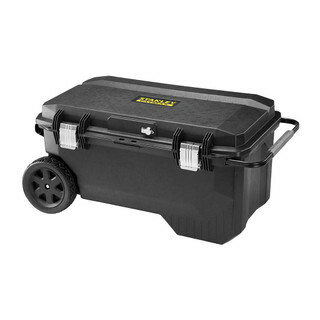
- Shifting a full working kit from room to room on refurbs, where a Stanley mobile tool chest saves extra trips up stairs and across site.
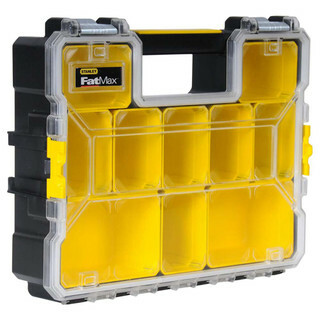
- Separating screws, plugs, terminals, and consumables in a Stanley organiser box so the right parts stay easy to find during snagging and install work.
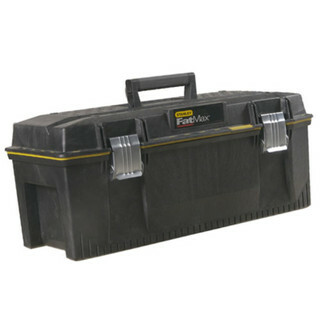
- Carrying heavier everyday kit like hammers, chisels, levels, and tapes in a Stanley tool chest that can take knocks in the back of the van.
- Setting up trade-specific grab kits, whether that is a Stanley cantilever tool box for maintenance call-outs or a Stanley tool box with organiser for mixed jobs.
Choosing the Right Stanley Toolbox
Sorting the right one is simple. Match the box to what you carry and how often you move it.
1. Toolbox or Organiser
If you mainly carry hand tools, a standard Stanley tool box makes more sense. If your day revolves around screws, rawl plugs, terminals, and small fittings, go organiser first or you will end up with a box full of loose odds and ends.
2. Fixed Carry or Mobile Chest
If the kit stays near the van or bench, a carry box is usually enough. If you are dragging tools across larger sites, communal parking, or block refurbs, a Stanley mobile tool chest will save your back and cut down on repeat trips.
3. Open Access or Layered Storage
If you want everything visible at once, a Stanley cantilever tool box is worth a look. If you prefer deeper storage with top trays or built-in compartments, a Stanley tool box with organiser gives you better separation without spreading gear all over the floor.
4. Standalone Box or Stackable System
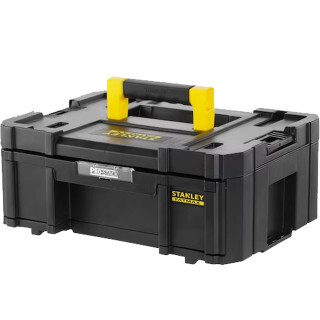
If you are building out a full transport setup, Stanley ProStack is the smarter buy because the units clip together and move as one. If you just need a simple everyday box, do not overcomplicate it with a stack system you will not really use.
Who Uses These on Site?
- Sparkies use a Stanley organiser box to keep connectors, clips, glands, and screws separated, especially on second fix where wasted minutes soon add up.
- Chippies and joiners rely on a Stanley toolbox for carrying hand tools, squares, fixings, and bits between the van, bench, and rooms being fitted out.
- Plumbers and heating engineers often go for a Stanley tool box with organiser so small fittings stay on top and heavier spanners sit underneath.
- Maintenance teams swear by a Stanley cantilever tool box for mixed call-out work because it opens up fast and gives you eyes on the whole kit straight away.
- General builders and site supervisors use a Stanley mobile tool chest when they need one rolling unit for tools, consumables, and odd site essentials.
Toolbox Extras That Make Life Easier
A few sensible add-ons will keep your storage working properly instead of turning into another pile of loose gear.
1. Organiser Inserts and Dividers
Removable dividers stop screws, clips, and fittings mixing together at the worst possible time. If you sort consumables by size or trade, these save you tipping half the box out just to find one pack.
2. Top Totes and Trays
A tray keeps the daily-use bits on top so you are not digging under heavier tools for pencils, blades, or tapes every five minutes. It is a small thing, but it speeds up set-up and pack-down.
3. Padlocks and Security Fittings
If the box is living in the van or left around shared site areas, a lockable setup is worth having. It will not make theft impossible, but it does stop casual hands getting into your gear.
Choose the Right Stanley Toolbox for the Job
Use this quick guide to sort the right storage for the way you actually work.
| Your Job | Stanley Toolbox Type | Key Features |
|---|---|---|
| General day to day hand tool carry | Standard Stanley tool box | Deep main compartment, lift-out tray, easy van-to-job handling |
| Keeping screws, plugs, terminals, and fixings tidy | Stanley organiser box | Separate compartments, removable dividers, quick visual stock check |
| Moving heavier kits across bigger sites | Stanley mobile tool chest | Wheels, pull handle, larger capacity, less lifting |
| Mixed maintenance and call-out work | Stanley cantilever tool box | Fast access to layers, clear layout, good for varied small tools and parts |
| Building a stackable transport setup | Stanley ProStack | Clip together system, modular storage, easier one-trip movement |
Common Buying and Usage Mistakes
- Buying too small and cramming it full usually ends with damaged organisers, lids that do not shut properly, and time wasted digging for tools. Leave room for the kit you actually carry every day.
- Using a standard toolbox for loose fixings is a bad shout because screws, plugs, and connectors end up mixed together. If small parts matter on the job, get a proper Stanley organiser box.
- Choosing a mobile chest for light occasional use can be more bulk than benefit. If you only carry a basic hand tool set, a simpler carry box is easier to store and quicker to grab.
- Ignoring divider layout catches people out when they need odd-shaped fittings or longer bits to fit properly. Check whether the organiser dividers are fixed or removable before you buy.
- Treating water resistant storage like it is fully waterproof leads to rusty tools and soggy consumables. If the box is riding in the rain or sitting outside, keep sensitive gear bagged and covered.
Tool Box vs Organiser vs Mobile Tool Chest
Stanley Tool Box
Best for everyday hand tool carry and general mixed kit. It is the straightforward choice when you want one box for hammers, tapes, pliers, and a few loose bits, but it is not the neatest option for lots of small fixings.
Stanley Organiser Box
Best for screws, terminals, clips, blades, and fittings that need keeping separate. It saves loads of rummaging, but it is not built to replace a deeper main toolbox for larger hand tools.
Stanley Mobile Tool Chest
Best when the load is heavier and the walk from van to work area is longer. You get more capacity and less strain, but it takes up more room and is overkill if your kit is light.
Stanley ProStack
Best for lads who want modular storage that clips together and grows with the kit. It is ideal for splitting tools, consumables, and accessories into separate units, though it makes most sense if you will use the full system.
Maintenance and Care
Empty Out Dust and Debris
Give the box a proper shake out and wipe down now and then. Sawdust, plaster dust, and loose screws soon build up and make organisers harder to use properly.
Check Latches and Hinges
Latches take most of the abuse, especially if the box is overfilled. If they start sticking or sitting out of line, sort it early before the lid stops closing securely.
Dry It Before Storing
If the toolbox has been out in the rain or left in a damp van, dry it off before tools sit in there overnight. That is the easiest way to stop rust on blades, pliers, and fixings.
Do Not Overload the Organisers
Small-part organisers work best when compartments can still shut cleanly. Overloading them leads to cracked lids, mixed fixings, and trays that pop open at the wrong moment.
Replace Worn Boxes Before They Cost You Time
A battered box with broken catches or warped compartments will waste more time than it saves. Once it stops protecting or sorting your kit properly, it is time to swap it out.
Why Shop for Stanley Toolboxes at ITS?
Whether you need a compact Stanley organiser box, a standard Stanley tool box, a Stanley cantilever tool box, or a full Stanley mobile tool chest, we stock the range in depth. It is all held in our own warehouse, ready for next day delivery, so you can get the right storage on site without hanging about.
Stanley Toolbox FAQs
What is the difference between a tool box and an organiser?
A tool box is for larger gear like hammers, pliers, tapes, chisels, and general hand tools. An organiser is for smaller items like screws, wall plugs, terminals, blades, and fittings that need to stay separated. If you mix those jobs up, you usually end with wasted time and a mess.
Are Stanley tool boxes water resistant?
Yes, many Stanley tool boxes are built to handle site conditions and shrug off light rain and damp van use, but do not treat them like a fully waterproof case unless the product says so. If your tools are living outside or in proper wet weather, keep anything that rusts easily protected inside as well.
Do Stanley ProStack units clip together?
Yes, Stanley ProStack units are designed to clip together as a modular stack. That is the whole point of the system. It makes it far easier to move several storage units in one go rather than carrying separate boxes back and forth.
Are the organiser dividers removable?
On many Stanley organiser models, yes, the dividers are removable so you can change the layout for bigger fittings or odd-shaped bits. Just check the individual product details, because not every organiser has the same insert setup.
Are Stanley tool boxes sold empty?
Yes, these are normally sold as empty storage unless the listing clearly says otherwise. That suits most trades fine because you can set the box up with your own hand tools, fixings, and site kit exactly how you want it.
Will a Stanley mobile tool chest take daily van use?
Yes, that is exactly the sort of work it is meant for. They are built for regular loading, unloading, and being dragged across site, but like any storage, they last longer if you do not overload the wheels, handle, or lid.