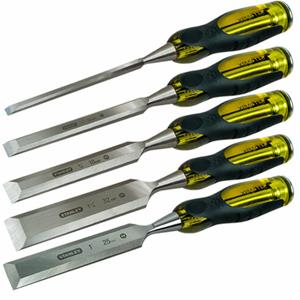
Stanley FatMax Wood Chisels
Stanley FatMax chisels are built for site carpentry, joinery and rough timber work, with bevel edge blades and thru tang construction that takes a proper knocking.
When you're chopping hinges, cleaning out joints or trimming timber that doesn't quite land right first time, a stanley fatmax chisel is the sort of kit worth buying once. These fatmax wood chisels are made for hard use, with blades that hold up, handles that sit well in the hand, and strike caps that cope with regular hammer work. If you want a stanley fatmax chisel set or a single fatmax chisel for the pouch, match the width to the work and get the right one ordered.
What Jobs Are Stanley FatMax Chisels Best At?
- Chopping hinge recesses on doors and frames is where a fatmax wood chisel earns its keep, especially when you need clean shoulders and enough strike strength to work quickly.
- Cleaning out housings, lap joints and mortice edges on first fix timber is easier with a stanley fatmax bevel edge chisel because it gets tight into corners without bruising the surrounding face.
- Paring awkward high spots off studs, noggins and sheet material on site helps you get timber to fit properly without dragging bigger cutting gear back out.
- Trimming plugs, shaving packers and sorting small snagging jobs during second fix is exactly the kind of everyday van work fatmax chisels tend to get used for.
- Working through tougher timber or old joinery during refurbs suits a stanley fatmax thru tang chisel because the blade and handle are built to take repeated striking.
Choosing the Right Stanley FatMax Chisel
Sorting the right one is simple. Buy for the timber and the joint in front of you, not just whatever width looks handy.
1. Single Chisel or Set
If you only need one for hinge work and small trim jobs, a single stanley fatmax chisel makes sense. If you are doing doors, first fix and general bench work, a stanley fatmax chisel set is the better shout because you will use more than one width every week.
2. Blade Width
Narrow chisels are better for latch keeps, tight housings and detail work. Wider blades suit hinge gains, paring larger faces and cleaning joints flat. If the blade is too wide for the recess, you will bruise the edges and make extra work.
3. Striking Work or Fine Paring
If you are belting through site timber and sheet goods, go for a stanley fatmax thru tang chisel that is built for repeated hammer strikes. If most of your work is lighter trimming and controlled paring, focus on the size and edge condition more than outright strike resistance.
4. Bevel Edge Access
A stanley fatmax bevel edge chisel is the one to pick when you need to work into corners and up against gauge lines cleanly. That slimmer edge matters on joinery details where a chunky blade shoulder just gets in the way.
Who Uses These Chisels?
- Chippies and joiners use a stanley fatmax wood chisel for hinge gains, latch plates, housings and general fitting work where a saw gets you close but the chisel finishes it properly.
- Kitchen fitters keep fatmax chisels in the bag for scribing panels, easing cabinet fits and cleaning out tight corners without splintering visible edges.
- Site carpenters and first fix gangs reach for a stanley fatmax chisel set when working stud partitions, roof timbers and door linings because different widths save time across the day.
- Maintenance teams and refurb crews like a fatmax chisel for stripping out damaged trim, freeing old joints and dealing with timber that is never square, straight or clean first go.
Chisel Accessories That Save Time at the Bench and on Site
A good chisel is only half the story. Keep the edge right and the blade protected so it is ready when you pull it from the bag.
1. Sharpening Stones
A blunt chisel tears fibres, slips off the line and makes a mess of finished timber. Decent sharpening stones keep the edge keen so the tool cuts clean instead of forcing you to hack at the job.
2. Honing Guide
If you struggle to hold a consistent bevel by hand, a honing guide stops you rounding the edge over and wasting time trying to rescue it later.
3. Tool Roll or Blade Guards
Loose chisels knocking about in the van soon end up chipped, dulled or punching holes through other gear. A proper roll or guard keeps the edge safe and your hands out of trouble.
Choose the Right Stanley FatMax Chisel for the Job
Pick the blade width and type around the joint you are cutting and how hard you will be striking it.
| Your Job | Category or Type | Key Features |
|---|---|---|
| Fitting hinges and latch plates | Narrow to mid width bevel edge chisel | Gets into corners cleanly and gives better control around marked recesses |
| General first fix timber work | Stanley FatMax chisel set | Multiple widths for housings, trimming studs and cleaning joints without making do |
| Heavy striking in tougher timber | Stanley FatMax thru tang chisel | Built to cope with repeated hammer blows and rougher daily site use |
| Paring and finishing visible joinery | Wider bevel edge chisel | Better support across the cut and cleaner trimming on show faces |
| Van tool for snagging and odd jobs | Single FatMax chisel | Handy for quick trimming, shaving packers and sorting awkward timber fits |
Common Buying and Usage Mistakes
- Buying one width and expecting it to cover every job usually ends in rough recesses and bruised timber. If you do mixed carpentry, get a stanley fatmax chisel set so you have the right blade for the cut.
- Using a blunt edge because it still sort of cuts is false economy. A tired edge needs more force, slips easier and tears the grain, so sharpen it before the job starts fighting back.
- Striking the handle with the wrong hammer can shorten the life of the tool. Use a suitable hammer and let the thru tang design do its job rather than battering it sideways.
- Prying with a wood chisel like it is a wrecking bar bends edges and loosens control. Use it for cutting and paring, then grab the right tool for levering out waste.
- Throwing chisels loose into the tool bag wrecks the edge before you even start work. Protect the blade properly or you will spend the next job regrinding damage that was easy to avoid.
FatMax Chisels vs Bailey Chisels vs Basic Site Chisels
FatMax Chisels
A stanley fatmax chisel is aimed at harder daily use, especially where striking is part of the job. They suit site carpenters and fitters who want a tougher handle and thru tang build for regular graft.
Bailey Chisels
Bailey chisels are more of a traditional pattern and tend to suit lighter woodworking or users who want a simpler bench style chisel. Fine for controlled work, but not always the first pick for repeated hard site striking.
Basic Site Chisels
Cheaper chisels can get you out of a hole, but the edge usually goes off faster and the handles take less abuse. Fine for occasional use, not much fun if you are chopping hinges and housings week in, week out.
Maintenance and Care
Keep the Edge Sharp
Touch the bevel up little and often instead of waiting until it is completely gone. A quick hone takes minutes and gives you cleaner cuts with less effort.
Wipe Off Resin and Dust
Pitch, glue and site dust build up on the blade and drag through the cut. Wipe the steel down after use so it stays clean and easier to control.
Store the Blade Protected
Do not leave the edge loose in a tool box with screws, blades and fixings. A guard or tool roll saves chipped edges and stops accidental cuts when you are digging through the van.
Check the Striking End
If you use the chisel hard, keep an eye on the strike cap and handle condition. Dress off any mushrooming or damage before it starts affecting comfort or safety.
Replace When the Blade Is Past It
Minor nicks can be sharpened out, but badly bent, cracked or heavily shortened chisels are not worth fighting. If it no longer holds an edge or cuts true, retire it.
Why Shop for Stanley FatMax Chisels at ITS?
Whether you need a single stanley fatmax chisel for hinge work or a full stanley fatmax chisel set for day to day carpentry, we stock the range in the sizes and formats trades actually use. It is all in our own warehouse and ready for next day delivery, so you can get the right fatmax wood chisel on site without hanging about.
Stanley FatMax Wood Chisel FAQs
What is a thru-tang chisel?
A thru tang chisel has the steel running through the handle so the striking force goes through the tool properly instead of just battering the handle. In plain terms, it is the better setup for regular site use where the chisel gets hit a lot.
Can Stanley FatMax chisels be struck with a hammer?
Yes. Stanley FatMax chisels are built for striking work and are commonly used that way for hinges, housings and heavier timber trimming. Use a sensible hammer, strike square, and do not use the chisel as a pry bar once the waste is cut.
What is the difference between FatMax and Bailey chisels?
FatMax chisels are generally the tougher site option, with features aimed at harder striking and rougher day to day trade use. Bailey chisels are more traditional in feel and better suited to lighter woodworking or bench tasks where you are not constantly belting them.
What angle should a wood chisel be sharpened to?
For most general wood chisel work, around 25 degrees for the main bevel and roughly 30 degrees for the honed cutting edge is a solid working setup. If the chisel is seeing harder use in tougher timber, a slightly stronger edge helps it last longer between sharpenings.
Are FatMax chisels supplied sharpened and ready to use?
Usually yes, they come with a usable factory edge. That said, most trades will still give them a quick hone before first use because a properly tuned edge cuts cleaner and gives you a better feel straight away.