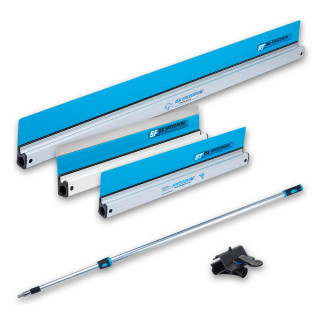
OX Tools Speedskim Trowels
OX Speedskim trowels help you flatten plaster fast, cut trowel lines, and cover big wall and ceiling runs without dragging your arm to bits.
If you're skimming full rooms, boarding out ceilings, or trying to get a cleaner finish over wide areas, this is the kit that saves time and evens the coat up properly. OX Speedskim blades are a proper step up from working every pass with a standard trowel alone, especially on long straight runs where ripples soon show. If you already use OX Speedskim gear, this is the natural place to sort the right blade for the work in front of you.
What Are OX Speedskim Trowels Used For?
- Flattening fresh plaster across wide wall areas lets you pull hollows and high spots out early, before you start chasing the finish with a smaller trowel.
- Running long passes over ceilings helps keep the coat level and cuts down on tramlines, which matters when daylight hits the job from the side.
- Closing in skim over plasterboard joints and broad dry lined surfaces makes life easier on new build plots and refurbs where speed and consistency both matter.
- Feathering material out on patching and blending work helps you lose edges cleanly, so repaired sections do not stand proud once the job has dried back.
- Following up after laying on gives plasterers a faster way to tidy big areas before finishing passes with standard steel tools.
Choosing the Right OX Speedskim Trowel
Sorting the right one is simple: match the blade length to the area you are skimming and how much room you have to work in.
1. Blade Length
If you are working big open walls and ceilings, go longer so you can bridge low spots and keep the surface flatter in fewer passes. If you are in tight rooms, small bathrooms, or boxed in areas, a shorter OX Speedskim blade is easier to control and less of a nuisance.
2. Ceiling Work vs Wall Work
For ceilings, do not get carried away with the biggest blade unless you are used to it. A manageable size is usually the better shout overhead, because once your arms go, your finish goes with it.
3. First Flattening or Final Finishing
If you want to level the coat straight after laying on, choose a blade that covers ground quickly. If you are mainly refining and tidying broad areas before the last steel trowel passes, pick the size that gives you the best control over the surface.
4. Match It to the Rest of Your Kit
A Speedskim is not there to replace every trowel in the van. Most plasterers pair one with OX Pro trowels for laying on, edges, and final steel finishing, so you are covered from first pass to polished finish.
Who Uses These on Site?
- Plasterers are the main users, especially when they are skimming big walls and ceilings and want to flatten up quickly without fighting the whole area with a hand trowel.
- Dry liners reach for OX Speedskim trowels on boarded rooms and long straight runs where keeping everything even across the sheet makes final finishing easier.
- Refurb and maintenance teams use them for patch blending and re-skim work, where a wider blade helps lose repaired areas into the surrounding surface cleanly.
- Apprentices often start with these to learn how to read a wall properly, because they show up hollows and ridges early instead of letting bad work sit until the final trowel.
The Basics: Understanding OX Speedskim Trowels
These are built to flatten and refine broad plastered areas faster than a standard hand trowel on its own. The main thing to understand is what job the blade does in the process.
1. Wide Blade Coverage
A Speedskim blade spans more of the wall or ceiling in one pass, which helps pull the plaster into a flatter plane. On site, that means fewer ripples, fewer missed hollows, and less correcting later.
2. Early Flattening
Used at the right stage, it takes out lines and uneven build-up before the coat starts tightening up. That gives you an easier finishing job instead of trying to rescue the surface at the end.
3. Not a Full Replacement for a Steel Trowel
It is there to speed up flattening and broad finishing, not do every part of the plastering job. You still want a standard plastering trowel for corners, edges, and final detail work.
OX Speedskim Accessories That Make the Job Easier
A couple of sensible add-ons save time, keep the finish cleaner, and stop you making hard work of bigger skim jobs.
1. Replacement Blades
If your blade gets knocked, worn, or clogged with old material, the finish soon tells on you. Keeping a fresh OX Speedskim blade ready stops one damaged edge ruining a full wall.
2. Standard Finishing Trowels
You still need a proper steel trowel for tight edges, corners, and final passes. Pairing these with OX Pro dry lining tools keeps your full plastering setup covered.
3. Dry Lining and Boarding Tools
If you are skimming boarded rooms, sorting the prep matters just as much as the finish. A look through OX Speedskim dry lining tools helps you get the surface ready before plaster goes anywhere near it.
Choose the Right OX Speedskim Trowel for the Job
Pick your blade by working area, access, and how much control you need.
| Your Job | Category or Type | Key Features |
|---|---|---|
| Skimming large walls in open rooms | Long OX Speedskim finishing trowel | Wider coverage, flatter passes, quicker levelling over broad areas |
| Working overhead on ceilings | Mid length OX Speedskim plastering trowel | Better control, less arm strain, easier handling above shoulder height |
| Patching and blending smaller areas | Shorter OX Speedskim blade | More control in tight spaces, easier to feather repairs into existing skim |
| Boarded new build rooms and long straight runs | OX Speedskim skimming blade | Helps flatten sheeted surfaces fast and cut back visible ridges early |
| Finishing alongside standard steel trowel work | OX Speedskim trowel and hand trowel setup | Fast broad flattening with proper edge and corner finishing still covered |
Common Buying and Usage Mistakes
- Buying the longest blade straight away sounds sensible, but it can be awkward in smaller rooms and tiring overhead. If most of your work is domestic refurbs, a more manageable size is often the better call.
- Using a Speedskim like a full replacement for a steel trowel slows you down at edges and corners. Keep it for flattening and broad finishing, then switch tools where detail work matters.
- Letting plaster dry on the blade ruins the edge and drags marks back into the next job. Wash it properly after use and do not chuck it back in the van caked up.
- Trying to flatten at the wrong stage of the set can tear the surface or move too much material about. Get your timing right and use it when the coat is ready to be levelled, not when it is still too wet or already going off.
- Ignoring dings and damage on the blade edge is asking for lines in the finish. If it is knocked or worn, replace it before it costs you time rubbing out bad work.
Speedskim Blade vs Steel Trowel vs Short Skimming Blade
OX Speedskim Blade
Best for flattening wide areas fast and keeping long runs honest. It saves time on walls and ceilings, but it is not the tool for tight corners or detailed edge work.
Standard Steel Trowel
This is still the go to for laying on, closing in, edges, and final polishing. It gives better control in tighter spots, but it takes longer to level big open areas on its own.
Short Skimming Blade
A shorter blade makes more sense for patching, smaller rooms, and jobs with awkward access. You lose some coverage, but gain better control where space is tight.
Long Skimming Blade
Longer blades are the better pick for open walls, ceilings, and straight runs on boarded areas. They flatten more in one pass, but only if you have the room and the technique to handle them properly.
Maintenance and Care
Clean It Straight After Use
Do not let plaster dry on the blade. A proper rinse and wipe down after each job keeps the edge clean and stops hardened bits scratching the next coat.
Check the Edge Before Every Job
A nicked or bent edge will show up in the finish straight away. Give the blade a quick look before you start, especially if it has been loose in the van.
Store It Flat and Protected
Do not wedge it under buckets and boards where it can twist or get knocked. Keep it flat, clean, and out of the way so the blade keeps its shape.
Replace Worn Parts Before They Cost You Time
Once the blade edge is too worn or damaged, stop nursing it along. Replacing it is cheaper than wasting half a day trying to tidy a poor finish.
Why Shop for OX Speedskim Trowels at ITS?
Whether you need a single ox speedskim trowel for patch work or a wider blade for full room skimming, we stock the range in the sizes and types trades actually use. It is all held in our own warehouse, in stock and ready for next day delivery, so you can get the right plastering kit on site without hanging about.
OX Speedskim Trowel FAQs
What is a Speedskim trowel used for?
It is used to flatten and refine skim coat over larger wall and ceiling areas. In plain terms, it helps you pull out ripples, reduce trowel lines, and get the surface truer before your final finishing passes.
What is the difference between a Speedskim and a normal trowel?
A Speedskim covers a much wider area in one pass, so it is better for flattening broad surfaces quickly. A normal steel trowel gives you more pressure and control for laying on, corners, edges, and final polishing, so most plasterers use both.
Are OX Speedskim trowels any good?
Yes, they are well regarded for speeding up large skim work and helping keep walls and ceilings flatter. They are not magic, and they will not fix bad timing or poor plastering, but in the right hands they save effort and improve consistency.
What size Speedskim blade do I need?
Pick the size by the area you are covering and how much space you have to swing it. Longer blades suit open walls and ceilings, while shorter ones are easier in smaller rooms, over door heads, and on patch jobs where control matters more than outright coverage.
How do you clean a Speedskim?
Wash it straight after use with clean water and wipe the blade down before plaster dries on. Do not scrape at it with anything that will damage the edge, and store it flat so it stays true for the next job.