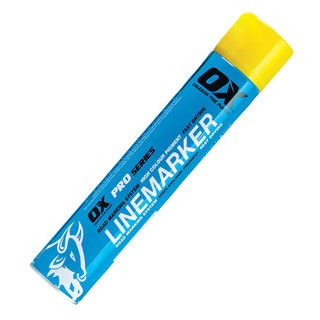
OX Tools Pens, Pencils & Markers
OX pencils and markers are built for clear, reliable marking on timber, block, steel and site materials where a faint line just wastes time.
On a busy first fix or set-out, you need marks you can actually see and tools that do not split, dry out or roll off the scaffold. OX pencils and markers are the sort of simple site kit that earns its place fast, whether you are marking stud, block, pipe runs or cut lines. If you already carry OX tape measures and OX squares and bevels, this is the next bit to get sorted.
What Are OX Pencils and Markers Used For?
- Marking cut lines on timber, sheet material and battens gives chippies a line they can still read once the saw is out and the dust starts flying.
- Setting out socket positions, pipe centres and fixing points on blockwork or plaster helps sparks and plumbers keep first fix neat without guessing off a rough scribble.
- Writing on steel, plastic trunking, conduit and site boxes makes OX marker pens useful when labels need to stay visible in damp, dusty conditions.
- Working through snagging, punch lists and handover jobs is quicker when you have OX trade markers that show clearly on mixed materials instead of fading after one wipe.
- Pairing marks with OX chalk lines and plumb bobs helps when you are setting long straight runs across floors, walls or roof timbers.
Choosing the Right OX Pencils and Markers
Match the marker to the surface first. That is what saves time, not buying whatever is nearest the till.
1. Pencil for Timber and Rough Set-Out
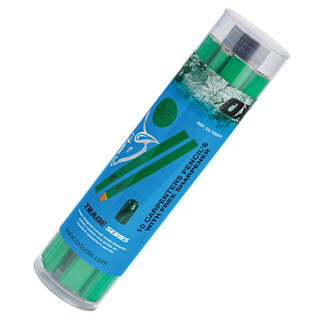
If you are marking carcassing, stud, roofing timber or sheet cuts, go with OX carpenter pencils. They hold up better on rough surfaces and the wider lead gives you a mark you can still follow once the job gets dusty.
2. Permanent Marker for Mixed Materials
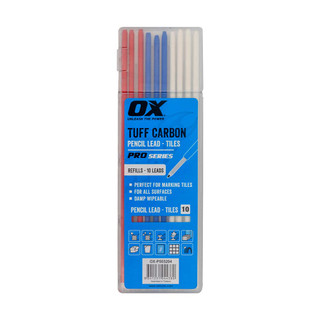
If you are writing on plastic, metal, conduit, tubs or site packaging, use OX permanent markers. A pencil is fine on dry timber, but on smoother materials it will be too faint or rub straight off.
3. Fine Marks vs Bold Site Marks
If you are doing joinery or tighter second-fix work, a finer marker line makes more sense. If you are setting out block, slab edges or rough cuts, go bolder so the line is still visible from standing height and not just with your nose on the job.
4. Buy More Than One
Do not buy a single pencil or marker unless it is just replacing one lost on site. Most trades keep one in the pouch, one in the van and one near the saw or bench because marking gear is the first thing that goes missing.
Who Uses These on Site?
- Chippies swear by OX carpenter pencils for first fix, roofing and studwork because the flat profile sits steady in the hand and gives a solid line on rough timber.
- Sparkies keep ox marker pens in the pouch for marking back box positions, tray routes and board labelling where a normal biro is useless.
- Plumbers and heating fitters use OX permanent markers on copper, plastic pipe and brackets so centres, cuts and circuit notes stay readable during install.
- Brickies, dryliners and general builders reach for ox pencils and markers when setting out on block, board and lintels, especially when the job is moving too fast for faint marks.
- Site managers and snagging teams keep a few in the van for quick notes, punch-list marks and material checks without hunting round for something that still writes.
Site Marking Accessories That Keep the Job Moving
A good marker is only half the job. These extras help you lay out lines properly and stop avoidable mistakes.
1. Tape Measures
There is no point having a clear marker if your measurements are guessed. Keep the mark and the measure together so you are not walking back across site to check a cut twice.
2. Squares and Bevels
These stop you free-handing lines that drift off square. On timber, board and trim work, that is the difference between one clean cut and wasting material.
3. Chalk Lines and Plumb Bobs
For longer runs across floors, walls and roof work, chalk lines are far quicker than joining up short pencil marks and hoping they land straight.
Choose the Right OX Pencils and Markers for the Job
Use this quick guide to match the marking tool to the surface and job in front of you.
| Your Job | Category or Type | Key Features |
|---|---|---|
| Marking stud timber and roofing cuts | Carpenter pencil | Flat shape, strong lead, easy to see on rough wood, does not roll off the work |
| Writing on plastic pipe, trunking or storage tubs | Permanent marker | Clear ink, better adhesion on smooth surfaces, faster than scratching in a pencil line |
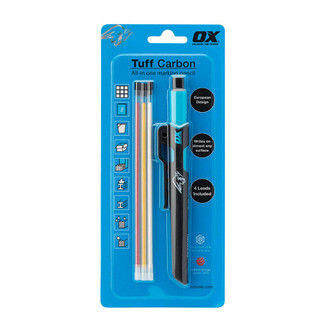
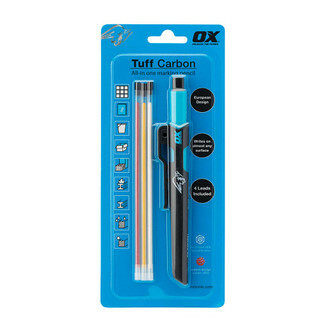
| General first fix set-out across mixed materials | Trade marker pen | Visible lines on timber, block and sheet, quick one-handed use from the pouch |
| Snagging, labelling and handover notes | Marker pen | Readable writing, clean marking on packaging and fittings, handy for quick site notes |
| Joinery and tighter second-fix marking | Finer tip marker | Cleaner lines, better control, less chance of overcutting to a thick mark |
Common Buying and Usage Mistakes
- Buying a normal round pencil for site carpentry is a false economy because it rolls, snaps more easily and gives a weaker mark on rough timber. Use a proper carpenter pencil where the surface is uneven.
- Using a pencil on plastic, metal or damp surfaces usually leaves a faint line that disappears halfway through the job. Switch to a permanent marker when the material is smooth or dirty.
- Picking a thick marker for finish work can leave a line wider than the cut itself, which is how trims and panels end up short. Use a finer point where accuracy matters.
- Only carrying one marker or pencil is asking for trouble because site marking gear gets lost, borrowed or left by the saw. Keep spares in the van and tool bag.
- Letting markers dry out with the cap off ruins them quickly and leaves you scratching about for another one mid job. Cap them straight away and store them properly.
Carpenter Pencils vs Permanent Markers vs Trade Markers
Carpenter Pencils
Best for timber, sheet material and rough set-out where you need a solid visible line and a pencil that will not roll away. Less useful on smooth plastic or metal where the mark can be too light.
Permanent Markers
Best for writing on pipe, conduit, steel, tubs and packaging where a pencil will not hold. They are quicker for labels and mixed materials, but a chunky line can be too much for finer joinery work.
Trade Markers
A good middle ground for general site use when you move between timber, block and board. They suit fast-paced first fix, though they still need the right tip size for the level of accuracy you want.
Maintenance and Care
Keep Marker Caps On
It sounds obvious, but half of dried-out marker problems come from leaving the cap off on a bench or windowsill. Cap them as soon as the mark is down.
Store Pencils Dry
Wet tool bags and van floors will swell timber pencils and make them split or go soft. Keep them in a pouch or dry box so they stay usable.
Sharpen Before They Go Blunt
A blunt carpenter pencil gives a fat line and costs accuracy. Trim it back before it starts making every cut line wider than it should be.
Wipe Dust and Grime Off Marker Tips
If you keep marking filthy block or dusty board, the nib picks up muck and the ink flow suffers. A quick wipe helps keep the line clear.
Replace When the Mark Stops Being Reliable
If a marker is drying out or a pencil keeps snapping, bin it and move on. Marking tools are cheap compared with the time lost remeasuring or recutting.
Why Shop for OX Pencils and Markers at ITS?
Whether you need single replacements, site pack-ups or the right marking kit to go with the rest of your OX hand tools, we stock the full range of OX pencils and markers in one place. That means OX carpenter pencils, OX marker pens and more, all in our own warehouse, in stock and ready for next day delivery.
OX Pencils and Markers FAQs
What pencil do carpenters use?
Most carpenters use a flat carpenter pencil rather than a standard round pencil. It is better on rough timber, easier to grip with dusty hands, and far less likely to roll off a joist or scaffold board.
What is a carpenter's pencil?
A carpenter's pencil is a flat, rectangular pencil made for site work. The shape stops it rolling away, and the wider lead gives a clearer mark on timber, block and other rough materials where a normal pencil struggles.
Are OX markers any good?
Yes, for proper trade use they are a solid choice. OX markers are made for the sort of mixed materials you get on site, and they hold up well for marking cuts, labelling parts and writing on surfaces a normal pen will not touch.
What is the best marker for construction?
The best marker for construction depends on the surface. For timber and rough set-out, a carpenter pencil is usually the right call. For plastic, metal, conduit or site labels, a permanent marker is the better option because the mark stays visible.
Why are carpenter pencils flat?
They are flat so they do not roll off the work, and so they give a broader, more visible mark on rough materials. That shape also makes them easier to hold when you are wearing gloves or working one-handed on site.