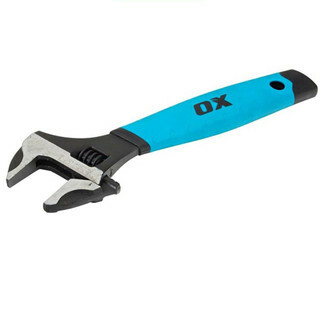
OX Tools Spanners
OX adjustable spanner options give you proper grip on pipework, fixings and nuts without carrying half the van in loose sizes and mismatched kit.
When you're tightening back nuts under sinks, adjusting plant fixings, or dealing with awkward fasteners on site, a decent spanner matters. OX adjustable spanner models, ox spanner set options, and ox wide jaw adjustable spanner designs are built for trades who need solid jaw control, clean adjustment and tools that do not round off fittings. If you want fastening kit that earns its place in the bag, start here.
What Are OX Spanners Used For?
- Adjusting compression fittings, tap connectors and back nuts in kitchens, bathrooms and plant rooms where carrying every fixed spanner size just slows you down.
- Holding bolts and tightening nuts on brackets, trunking, site plant and general fixings where an OX adjustable spanner saves swapping between multiple sizes.
- Working on wider fasteners and flat-sided fittings where an ox wide jaw adjustable spanner gives you extra opening without jumping up to a bulkier tool.
- Shifting repeated nuts and bolts during install work, maintenance and snagging where an ox ratchet spanner cuts down wasted hand movement in tight spaces.
- Keeping an ox spanner set in the van for first fix, maintenance and repair jobs so you have the right size ready when adjustables are not the best fit.
Choosing the Right OX Spanner
Sort the tool by the fixing in front of you, not by what happens to be cheapest in the drawer.
1. Adjustable or Fixed Set
If you are doing mixed maintenance, plumbing or site snagging, an OX adjustable spanner is the one that gets grabbed first. If you are on repeated nut sizes all day, an ox spanner set or ox combination spanners will grip better and slip less.
2. Standard Jaw or Wide Jaw
If you keep finding the jaws just short on larger fittings, go for an ox wide jaw adjustable spanner. It gives you more opening without stepping up to a longer, heavier tool that is a pain under sinks or inside cupboards.
3. Ratchet or Non Ratchet
If the job gives you decent swing room, standard spanners are simple and reliable. If you are working inside frames, near pipe runs or behind units, an ox ratchet spanner is worth it because you keep driving the fastener without lifting off every turn.
4. Length and Access
Shorter spanners are easier in cupboards, panels and tight corners. Longer ones give you more leverage on stubborn fixings, but do not buy a big one unless you actually need the reach and extra turning force.
Who Uses These on Site?
- Plumbers swear by them for tightening taps, rad valves and compression fittings, especially when space is tight and you need one tool to cover a few sizes quickly.
- Heating engineers use ox adjustable spanner options on boilers, pumps and pipe brackets where a smooth jaw adjustment saves time on service and install work.
- Sparkies keep a spanner set in the van for tray supports, containment brackets and plant fixings where fixed sizes give a cleaner fit on stubborn nuts.
- Maintenance teams reach for ox ratchet spanner and ox combination spanners when they are stripping down kit, making adjustments and clearing snag lists across a busy site.
- Groundworkers and fitters use wide jaw models for larger nuts, couplings and site hardware where a standard opening can leave you short on bigger fixings.
Choose the Right OX Spanner for the Job
Use this quick guide to match the spanner to the fixing and the space you are working in.
| Your Job | OX Spanner or Type | Key Features |
|---|---|---|
| General plumbing repairs and site maintenance | OX adjustable spanner | Fast jaw adjustment, covers multiple nut sizes, handy when you do not know exactly what fittings you will face. |
| Larger valves, couplings and wider flat-sided fixings | OX wide jaw adjustable spanner | Greater jaw capacity in a compact body, useful where a standard adjustable will not quite open far enough. |
| Repeated fastening on install and assembly work | OX ratchet spanner | Ratcheting action speeds up turns, ideal where there is limited swing room around brackets and plant. |
| Workshop, van stock and regular fixed-size fastening | OX spanner set | Range of common sizes ready to hand, better contact on nuts and bolts than relying on one adjustable for everything. |
| Mixed fitting work across plant, brackets and hardware | OX combination spanners | Open end for quick access and ring end for stronger grip when a fastener is tight or partly rounded. |
Common Buying and Usage Mistakes
- Buying one adjustable and expecting it to cover every fastening job usually ends in chewed nuts and awkward access. Keep a proper ox spanner set or combination sizes for repeated work and use the adjustable where it makes sense.
- Using a loose adjustable jaw on tight fixings is asking to round the flats off. Wind the jaw up properly before loading it and make sure the tool is sitting square on the nut.
- Choosing a standard jaw when you regularly work on larger fittings just wastes time. If bigger couplings and valves are common in your work, move straight to an ox wide jaw adjustable spanner.
- Ignoring access and buying the longest spanner you can find is not always clever. Big tools give more leverage, but they are no use if you cannot turn them under a sink or inside a service panel.
- Using the wrong type on repeated fastening can slow the whole job down. If you are constantly turning the same nuts in a cramped spot, a ratchet spanner is the easier choice.
Adjustable Spanners vs Ratchet Spanners vs Combination Spanners
Adjustable Spanners
Best when you need one tool to cover different nut sizes during plumbing, maintenance or snagging. They are flexible and save pocket space, but they are not always the cleanest fit for high-torque repeated fastening.
Ratchet Spanners
Best for repetitive work in tighter spots where there is not much room to swing. They speed jobs up nicely, but they only suit the sizes you have with you, so they are less forgiving than an adjustable.
Combination Spanners
Best when you want a proper fit on fixed sizes, with an open end for quick positioning and a ring end for stronger grip. They take up more room in the bag, but they are the better choice for stubborn or easily marked fasteners.
Wide Jaw Adjustable Spanners
Best when standard adjustable capacity keeps leaving you short on larger fittings. They bridge the gap between a normal adjustable and carrying a bigger dedicated tool, especially on plumbing and plant work.
Maintenance and Care
Keep the Jaws Clean
Wipe dirt, swarf and plaster dust off after use so the jaws sit square on the fixing. Grit in the faces is one of the quickest ways to lose proper grip.
Check the Adjustment Mechanism
On adjustable models, make sure the worm screw still runs smoothly and does not bind up. A drop of light oil now and then helps keep the jaw movement clean.
Store Them Dry
Do not leave spanners sitting wet in the van tray or bottom of a bucket. Dry storage cuts down surface rust and keeps the jaws and ring ends working as they should.
Replace Worn Tools Before They Slip
If the jaws are spread, the edges are rounded or the ratchet mechanism starts skipping, retire it. A worn spanner usually announces itself by damaging the fixing before it fully fails.
Use the Right Tool for the Load
Do not use an adjustable as a hammer or shove pipe over the handle unless the job genuinely needs more leverage and the tool is up to it. Abuse ruins alignment and shortens tool life fast.
Why Shop for OX Spanners at ITS?
Whether you need a single ox adjustable spanner for the tool bag, an ox wide jaw adjustable spanner for bigger fittings, or a full ox spanner set for regular fastening work, we stock the range. It is all held in our own warehouse, in stock and ready for next day delivery, so you can get the right size and type on site without hanging about.
OX Spanner FAQs
What jaw capacities do OX adjustable spanners support?
Jaw capacity depends on the individual spanner size and whether you are looking at a standard or wide jaw model. In plain terms, the bigger the tool and the wider the jaw design, the more fastening range it will cover. Check the listed capacity against the nut or fitting sizes you see most on your jobs, especially if you work on larger valves, couplings or plant fixings.
Are OX spanners forged from chrome vanadium steel?
Many OX spanners are made from chrome vanadium steel, which is what most trades want for strength and day-to-day site durability. That said, always check the individual product spec rather than assuming the whole range is identical. If it is going in a van for hard daily use, material spec is worth confirming before you buy.
What are the advantages of an OX wide-jaw adjustable spanner?
The main advantage is getting more jaw opening without carrying an overgrown spanner that is awkward in tight spaces. That makes an OX wide-jaw adjustable spanner handy for bigger nuts, wider flat-sided fittings and plumbing hardware where a standard adjustable is just short. It is a smart pick if you want more range but still need decent access under sinks, in cupboards or around pipework.
Does OX offer ratcheting combination spanner sets?
OX does offer ratcheting and combination spanner options within the range, including sets on selected lines. The key thing is to check whether you need a straight ratchet set for speed, a standard combination set for stronger grip, or both. If your work is repetitive and access is tight, the ratcheting style usually earns its keep quickly.
Will an adjustable spanner do the whole job, or should I still carry fixed sizes?
An adjustable will get you out of trouble on mixed jobs, but it should not replace fixed sizes completely. For repeated fastening or stubborn nuts, fixed combination spanners give a better fit and are less likely to mark or round the flats. Most lads keep both and use the adjustable as the problem-solver, not the only answer.
Are these decent for tight plumbing spaces, or are they too bulky?
Yes, plenty of them are well suited to tight plumbing work, but size choice matters. A compact adjustable or wide jaw model is often the better shout for basin back nuts, valves and tight service voids. Do not just buy the longest one in the range and expect it to fit everywhere.