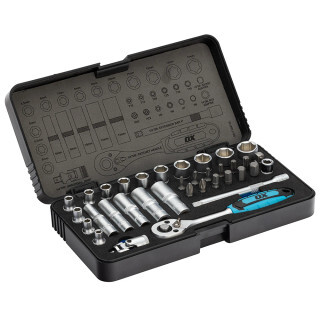
OX Tools Sockets & Socket Sets
OX sockets are built for tightening and stripping fixings properly, from plant maintenance and steelwork to van repairs and site assembly jobs.
When you're fighting seized nuts, awkward bolts or fixings buried in brackets, a decent OX socket set saves time and saves your knuckles. You'll want the right drive size, a ratchet that does not slip under load, and deep sockets where threads stand proud. For site fitters, mechanics and trades keeping kit running, these are the bits worth having in the van.
What Are OX Sockets Used For?
- Tightening anchor bolts, frame fixings and heavy-duty fasteners on steelwork, site set-ups and general install jobs is where ox sockets earn their keep, especially when spanners keep slipping off rounded flats.
- Working on vans, trailers and plant is easier with an ox socket set because you can get proper purchase on stubborn nuts without skinning your hands on guards, arches and chassis parts.
- Assembling racking, work benches, fencing and larger joinery fixings goes quicker with ox 1/2 drive sockets when you need steady torque and a ratchet that fits into tighter spaces than a big adjustable.
- Reaching over long studs, exposed threads and recessed nuts is exactly what ox deep sockets are for, saving you from half-seating a shallow socket and chewing the fixing.
- Keeping an ox metric socket set in the van covers the fixings you actually see on most UK site kit, flat-pack hardware, machinery guards and day-to-day repair work.
Choosing the Right OX Socket Set
Sorting the right one is simple: match the drive and socket depth to the fixings you actually deal with, not the set with the biggest piece count.
1. Pick the Right Drive Size First
If you are mainly doing smaller fixings on brackets, covers and lighter assemblies, a smaller drive set keeps things compact. If you are into larger bolts, seized nuts and harder pulling on site, ox 1/2 drive sockets are the safer bet because they cope better with higher torque.
2. Shallow for General Work, Deep for Studs
For everyday bolts and nuts sitting proud and accessible, shallow sockets are quicker and handier. If the nut sits on a long thread or down inside a recess, go straight to ox deep sockets or you will end up not seating the socket fully.
3. Buy the Sizes You Actually Use
A massive set looks useful until half of it never leaves the case. If most of your work is UK site fixing, vehicle maintenance or plant checks, an ox metric socket set usually makes more sense than paying for odd sizes you will rarely touch.
4. Think About Where It Lives
If it is staying in the van for call-outs, get an ox socket set with a proper case that keeps every size visible and in place. Loose sockets rolling about soon turn a full set into three missing sizes and a wasted trip back to the yard.
Who Uses These on Site?
- Fitters and maintenance teams rely on ox sockets for keeping machinery, brackets, access gear and plant guards tightened properly without wasting time swapping between loose spanners.
- Groundworkers and steel erectors use an ox ratchet set for bolting up frames, clamps and site hardware where fixings are tight, dirty and usually need more leverage than hand tools with open jaws can give.
- Mechanics and van owners keep an ox socket set close for wheel-adjacent jobs, battery clamps, under-bonnet fixings and general repairs where the right socket saves rounding off tired nuts.
- Joiners, kitchen fitters and installers use ox socket sets for furniture bolts, frame fixings and awkward assembly jobs, especially when threaded bar or recessed hardware makes a normal spanner a poor choice.
Socket Set Extras That Save Time on Site
A few sensible add-ons make socket work quicker, safer and a lot less frustrating when fixings are buried or seized.
1. Extension Bars
These save you from trying to get your hand and ratchet into places they do not fit, like behind guards, inside engine bays or down past pipework. Keep one in the case and you will use it more than you think.
2. Universal Joints
For angled fixings tucked behind brackets or framework, a universal joint stops you attacking the nut from the wrong angle and rounding it off. Handy when access is poor and stripping back more parts is not worth the time.
3. Breaker Bar
Do not wreck a ratchet trying to crack off seized fasteners. A breaker bar gives you the leverage for stubborn bolts first, then you can switch back to the ratchet once the fixing is moving.
4. Spare Ratchet
If your main ratchet gets left on another job or starts skipping teeth under load, the whole set becomes useless. A spare ratchet in the same drive size keeps the work going and saves a walk back to the van.
Choose the Right OX Sockets for the Job
Use this quick guide to match the set to the fixing and the amount of torque involved.
| Your Job | Socket or Set Type | Key Features |
|---|---|---|
| General van, workshop and site repairs | OX metric socket set | Covers the common sizes you actually use, keeps everything in one case, and suits day-to-day fastening work. |
| Larger bolts and stubborn fixings | OX 1/2 drive sockets | Better for higher torque, heavier ratchets and tougher jobs where smaller drives start to struggle. |
| Nuts on long studs or recessed threads | OX deep sockets | Extra depth lets the socket seat properly over exposed thread without slipping off the fixing. |
| Fast assembly and repeated tightening | OX ratchet set | Speeds up repetitive work and makes life easier where there is not enough swing for a spanner. |
| Mixed maintenance and install work | OX socket sets | A spread of sizes and core accessories like ratchets and extensions for covering more jobs with one case. |
Common Buying and Usage Mistakes
- Buying by piece count alone is a classic mistake because a bigger set is no use if it misses the drive size or socket depth your work actually needs. Start with the fixings you deal with most and build from there.
- Using a shallow socket on a nut sitting on a long stud usually means the socket does not seat fully, which rounds the flats and wastes time. If threads stand proud, use deep sockets straight away.
- Trying to crack seized fixings loose with the ratchet can damage the mechanism. Use a breaker bar for the first movement, then swap back to the ratchet for speed.
- Ignoring drive size leads to snapped adaptors, poor leverage or a set that feels too bulky for the job. Match lighter work to compact drives and keep 1/2 drive for heavier fastening.
- Leaving sockets loose in the van is how useful sets end up incomplete. Keep them in the case, check missing sizes after each job, and you will not get caught short on the one fixing you cannot improvise.
Deep Sockets vs Shallow Sockets vs Full Socket Sets
Deep Sockets
Best for nuts running down threaded rod or studs, and for fixings recessed below a surface. They are not always as compact in tight spaces, but when a shallow socket will not reach, these save the job.
Shallow Sockets
These are the go-to for general repair, assembly and maintenance work where the fixing is fully exposed. They are handier in cramped spots and often quicker to seat, but they are the wrong choice for long exposed threads.
Full Socket Sets
A full ox socket set makes sense if you are covering mixed work and do not want to be caught out by missing sizes or no ratchet on hand. It costs more up front, but it is the practical option for van stock and regular site use.
Maintenance and Care
Wipe Them Down After Dirty Jobs
Mud, dust, swarf and road grime soon build up inside sockets and around the square drive. Give them a quick wipe after use so they seat properly next time and do not grind away at the finish.
Keep the Ratchet Clean
If the ratchet starts feeling rough or skipping, dirt has usually found its way into the mechanism. Clean it out and lightly lubricate where appropriate rather than forcing it until the teeth wear out.
Store the Set in Its Case
A case is not just for looking tidy. It stops sockets knocking together, rusting in damp van floors and disappearing between jobs, which is what usually kills a good set before the steel does.
Check for Rounded or Cracked Sockets
If a socket is slipping or showing cracks around the drive end, retire it. Pushing on with a damaged socket usually means a rounded nut, a split socket or a smashed knuckle.
Keep Moisture Off Long Term
If the set lives in the van, damp is the main enemy. Dry the sockets before packing away after wet jobs and do not leave the case sitting on a soaked floor overnight.
Why Shop for OX Sockets at ITS?
Whether you need a compact ox ratchet set for van repairs or a full ox socket set with the sizes you use on site, we stock the range that matters. From ox deep sockets to ox 1/2 drive sockets and ox metric socket set options, it is all in our own warehouse, in stock, and ready for next day delivery.
OX Sockets FAQs
What is a socket set used for?
A socket set is for tightening and loosening nuts and bolts faster and with better grip than most spanners. On site that means assembly work, plant maintenance, van repairs, frame fixings and any job where access is tight or you are dealing with repeated fasteners.
What drive size socket set do I need?
It depends on the size of the fixings and how much torque you need. For heavier fastening and stubborn bolts, 1/2 inch drive is the usual safe choice. For lighter, tighter work, a smaller drive is easier to handle. If your jobs are mixed, start with the drive size that matches the biggest fixings you deal with regularly.
Are OX socket sets any good?
Yes, for regular trade use they are a solid option if you want a set that covers real site and workshop jobs without overcomplicating things. The key is choosing the right OX set for your workload, drive size and fixing type rather than just chasing the biggest case.
What is the difference between shallow and deep sockets?
Shallow sockets are for standard nuts and bolts where the fixing is easy to reach and there is not much thread sticking through. Deep sockets are longer, so they fit over extended threads, studs and recessed fixings. If you use a shallow socket where a deep one is needed, it often will not seat properly.
How many pieces should a socket set have?
More pieces do not automatically mean a better set. If you are doing day-to-day site maintenance and vehicle work, you want the common metric sizes, a decent ratchet and a couple of useful extras like extensions. Buy the set that covers your actual jobs, not the one padded out with sizes you will never touch.