Makita Nail Guns Makita Nail Guns

Makita Nail Guns

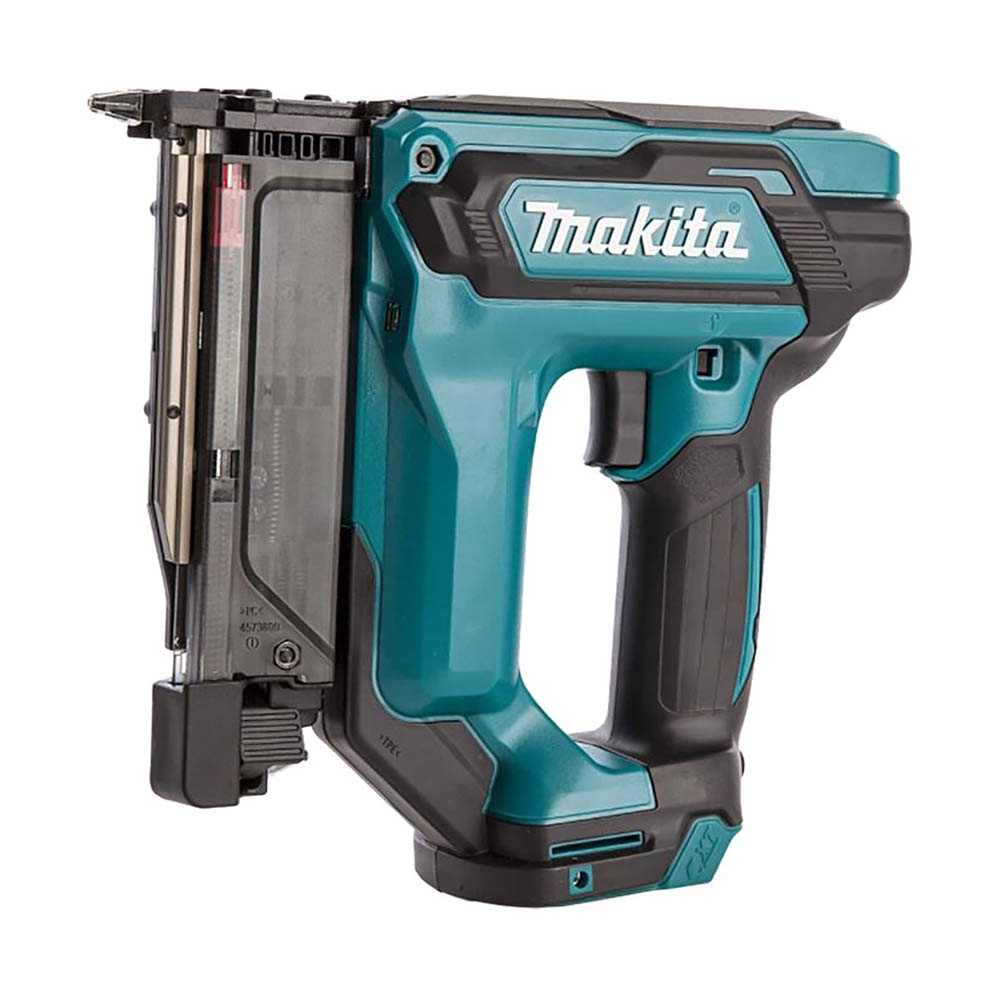
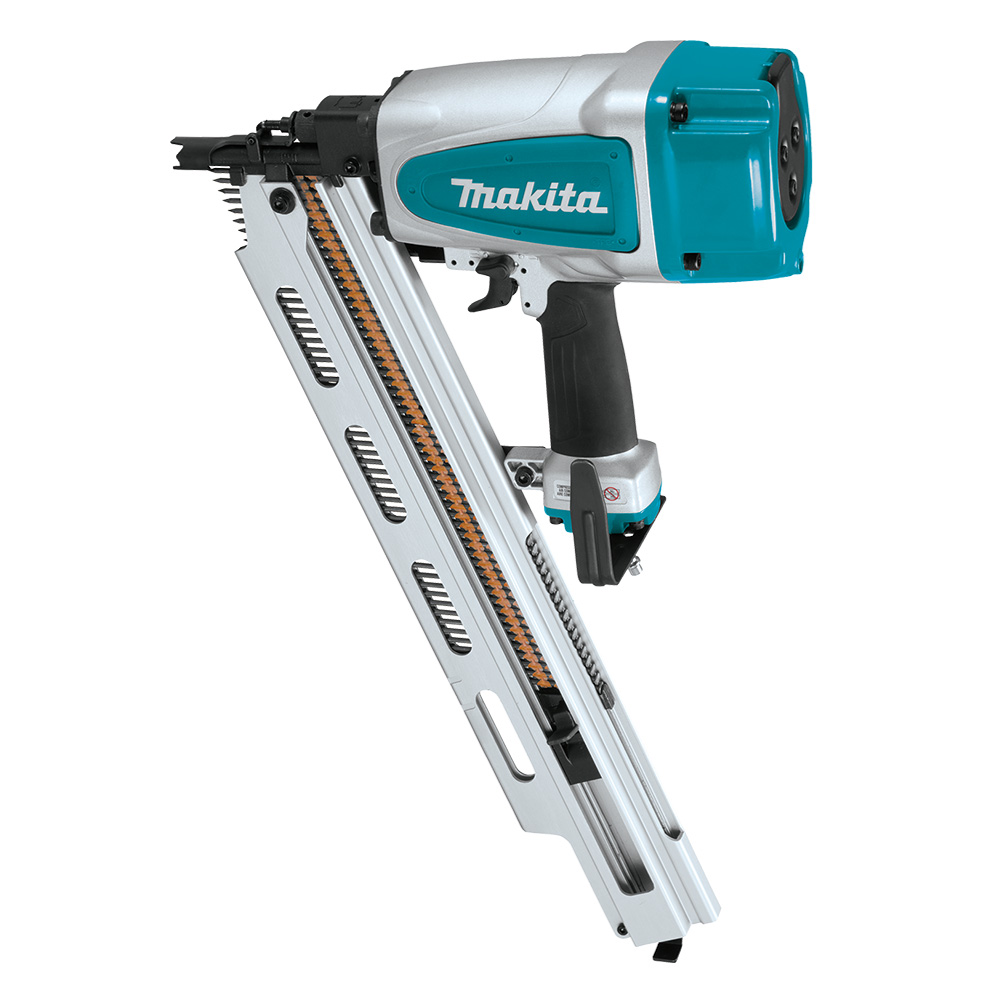
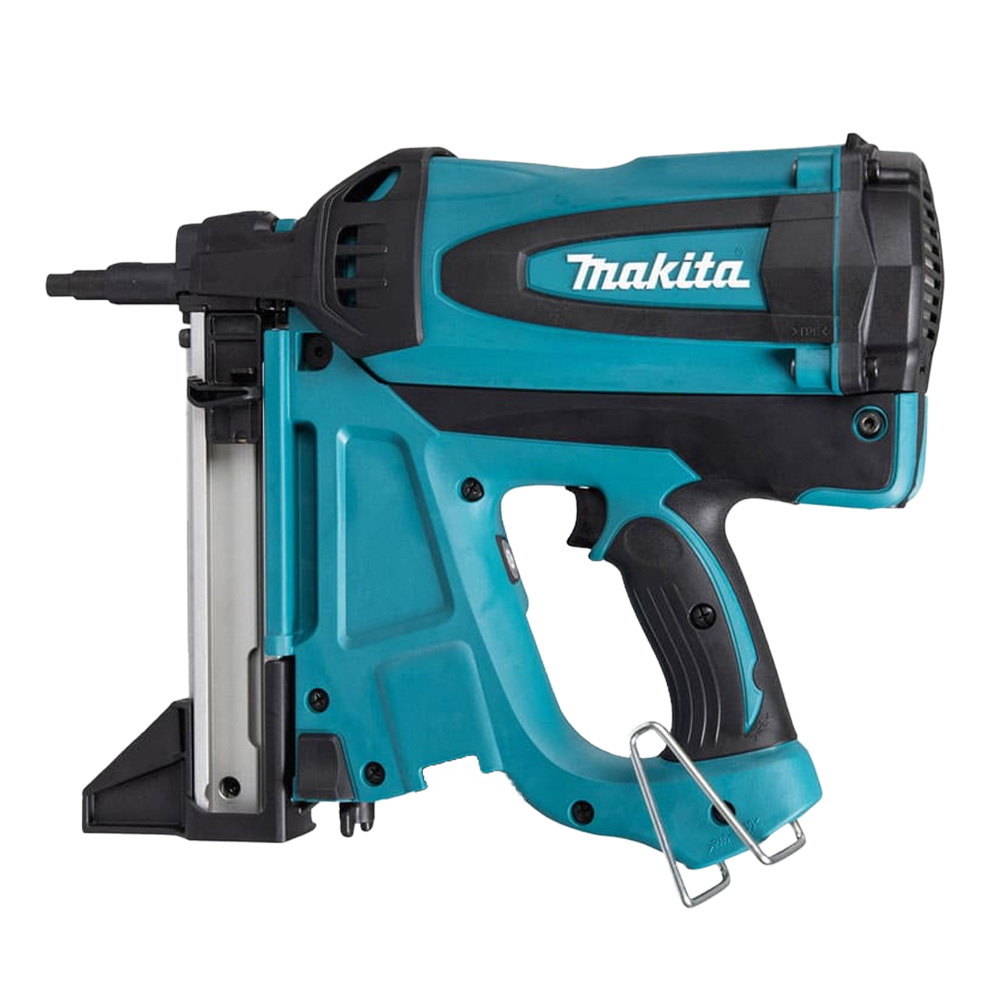
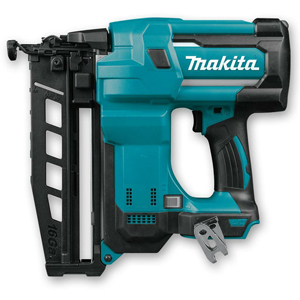
Makita nail guns speed up first fix and second fix without dragging a compressor about.

When you're banging out stud walls, skirtings, architraves or cladding, a Makita nailer keeps the work moving and the finish tidy. From an 18V Makita nail gun for site fit-out to a Makita pin gun for neat trim, pick the gauge and nail length to match the timber, then decide if you want body only to suit your LXT batteries.

What Are Makita Nail Guns Used For?

  • Fixing studwork, noggins, and roofing battens on first fix where a Makita first fix nail gun saves hours over hand nailing and keeps your line moving.
  • Hanging skirting, architrave, door linings, and panelling with a Makita brad nailer or Makita finish nailer so you get a clean hold without splitting the timber.
  • Pinning beading, glazing beads, and delicate trims with a Makita pin nailer when you want the fixing to disappear with minimal filling.
  • Working in refurbs and occupied jobs with a Makita nail gun cordless setup, so you are not trailing hoses through finished rooms or hunting for power.
  • Batch fixing sheet materials and softwood trims where consistent depth and repeat shots matter more than brute force, especially when you are doing the same detail all day.

Choosing the Right Makita Nail Gun

Match the nailer to the fixing and the timber, not what's on offer, because the wrong gauge will either blow out the work or not hold.

1. First Fix vs Second Fix

If you are framing and structural timber work, go Makita first fix nail gun with the nail length and collation suited to carcassing. If you are doing skirting and architrave, a Makita brad nailer or Makita finish nailer is the right call for a cleaner head and less filling.

2. Gauge Choice for the Finish

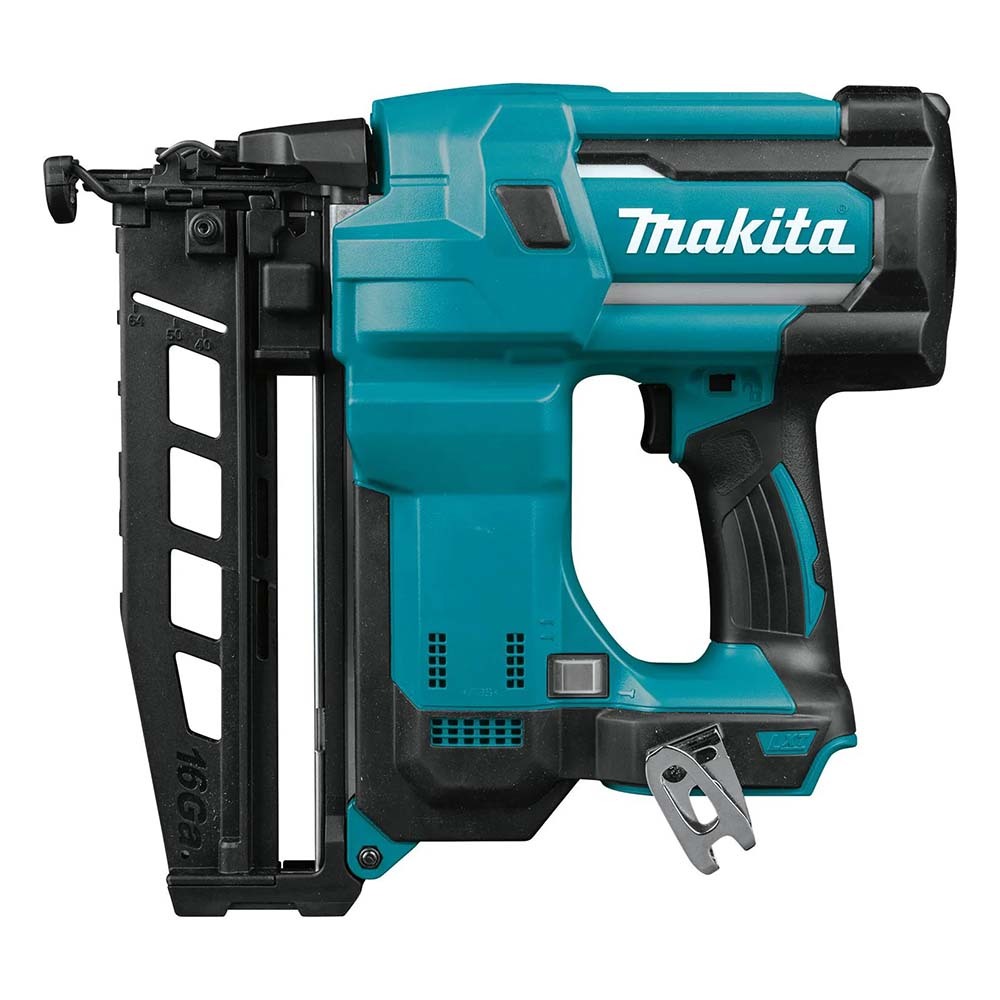
If you want the smallest mark and you are pinning light trims, pick a Makita pin nailer. If the trim needs proper bite into studs and you still want a neat finish, step up to a 16ga style finish nailer rather than relying on tiny pins.

3. 18V LXT Body Only vs Kit

If you are already on Makita LXT, a Makita 18V nail gun body only makes sense and keeps cost down. If this is your first nailer, a kit with batteries and charger stops you getting caught mid-run when the battery drops on a long fixing day.

4. Cordless Gasless vs Pneumatic

If you are in and out of rooms all day, Makita cordless nail gun options keep it simple with no hose and no compressor. If you are set up in a workshop or doing repetitive bench work, a Makita air nail gun can still be a solid choice where you already run air lines.

Makita Nail Gun FAQs

Are Makita nail guns any good?

Yes, for day to day site fixing they are a solid choice, especially if you are already on Makita LXT. They are built for repeat work, and the big win is turning up with one tool and getting on with it without compressors, hoses, or gas cells.

Makita nail gun 18V, is it strong enough for first fix?

An 18V Makita nail gun can absolutely cover first fix, but only if you buy the right first fix model and match nail length to the timber. If you are trying to frame with a brad nailer, it will not hold and you will blame the tool instead of the setup.

What nails does a Makita nail gun use?

It depends on the nailer type, because a Makita pin nailer, Makita brad nailer, and Makita first fix nail gun all take different gauges and collations. Check the listing for gauge and nail length range, then buy nails made for that exact spec to avoid jams and misfeeds.

Can you use paslode nails in a Makita nail gun?

Sometimes, but do not assume it. You can only use them if the gauge, angle, collation type, and nail head style match what the Makita nailgun is designed to feed, otherwise you will get constant jamming and poor driving. If you are unsure, stick to nails listed as compatible with your Makita nailer model.

Makita pin gun, what is it actually for?

A Makita pin gun is for delicate trim and beading where you want the fixing to be almost invisible. It is not a structural fixing tool, so do not use it where you would normally reach for a first fix nail gun makita setup.

What is better, an 18 gauge or a 16 nailer?

18 gauge is better for lighter trim and the smallest fill, but it does not bite as hard into studs and can be easier to pull out. A 16 gauge finish nailer gives more holding power for thicker skirting, architrave, and door linings, with a slightly bigger hole to fill.

Who Uses Makita Nail Guns on Site?

  • Chippies and joiners on first fix who want a Makita 18V nail gun for studwork, joists, and general carcassing without stopping to drag a compressor around.
  • Second fix teams and fitters who live on a Makita brad nailer 18V or Makita finishing gun for skirting, architrave, and kitchens where the finish needs to look sharp.
  • Shopfitters and maintenance lads who keep a Makita pin gun 18V in the van for quick trims and repairs that still need to look tidy.

The Basics: Understanding Makita Nail Guns

Nailers look similar, but the way they hold and the mark they leave is down to gauge, nail type, and what the gun is built to drive. Here's what matters on site.

1. First Fix Nailers (Holding Power)

A Makita 1st fix nail gun is built to drive longer nails into structural timber, so your frames and battens stay put without you re-hitting proud nails all day. It is about speed and bite, not hiding the fixing.

2. Finish and Brad Nailers (Cleaner Work)

A Makita finish nailer or Makita brad nailer is for visible trim where you need a strong enough fixing but you do not want big holes to fill. You get a neater head and more control on depth so the timber does not get chewed up.

3. Pin Nailers (Minimal Mark)

A Makita pin nailer uses very fine pins for beading and delicate trims where you want the fixing to disappear. It is not for structural holding, it is for keeping the detail tight while glue cures or while you finish the job.

Makita Nailer Accessories That Save Time on Site

The right consumables and spares stop misfires, split timber, and wasted trips back to the van.

1. Correct Nails and Pins for the Gun

Buy the exact gauge and collation your Makita nailer is designed for, because the wrong strips are what cause jams and broken drivers when you are halfway through a run of skirting.

2. Spare Batteries for Makita 18V LXT

A Makita 18V nail gun can chew through packs on repetitive fixing, so a spare battery means you are not stood waiting while the charger catches up when the job is on a deadline.

3. Nose Tips and Contact Trip Spares

If you are working on finished trims, a fresh nose tip helps prevent marking the timber, and having the right wear parts to hand keeps the gun working properly when it has had a few knocks in the van.

Shop Makita Nail Guns at ITS

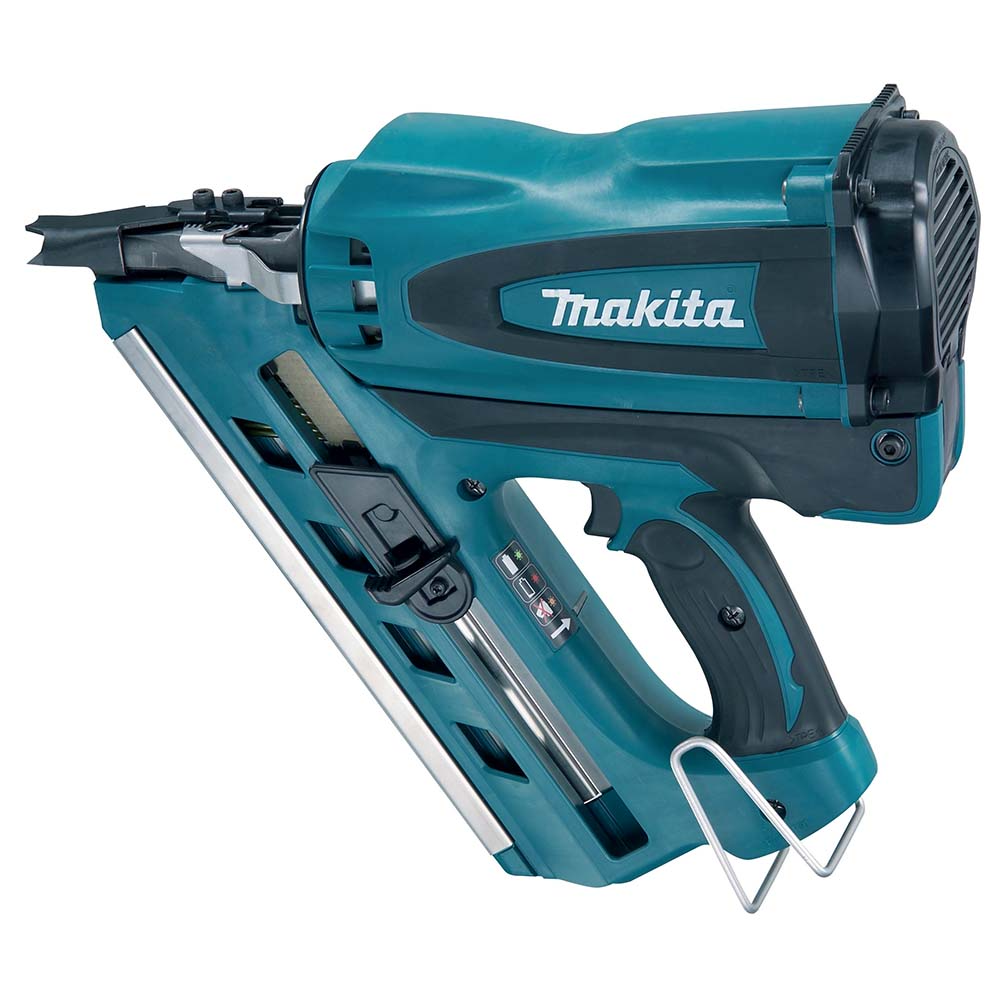
Whether you need a Makita nail gun 18V for first fix, a Makita brad nailer for second fix, or a Makita pin gun for fine trim, we stock the full range in the key types and setups. It's all held in our own warehouse, in stock and ready for next day delivery so you can order today and be fixing tomorrow.
Read more

Makita Nail Guns

Makita nail guns speed up first fix and second fix without dragging a compressor about.

When you're banging out stud walls, skirtings, architraves or cladding, a Makita nailer keeps the work moving and the finish tidy. From an 18V Makita nail gun for site fit-out to a Makita pin gun for neat trim, pick the gauge and nail length to match the timber, then decide if you want body only to suit your LXT batteries.

What Are Makita Nail Guns Used For?

  • Fixing studwork, noggins, and roofing battens on first fix where a Makita first fix nail gun saves hours over hand nailing and keeps your line moving.
  • Hanging skirting, architrave, door linings, and panelling with a Makita brad nailer or Makita finish nailer so you get a clean hold without splitting the timber.
  • Pinning beading, glazing beads, and delicate trims with a Makita pin nailer when you want the fixing to disappear with minimal filling.
  • Working in refurbs and occupied jobs with a Makita nail gun cordless setup, so you are not trailing hoses through finished rooms or hunting for power.
  • Batch fixing sheet materials and softwood trims where consistent depth and repeat shots matter more than brute force, especially when you are doing the same detail all day.

Choosing the Right Makita Nail Gun

Match the nailer to the fixing and the timber, not what's on offer, because the wrong gauge will either blow out the work or not hold.

1. First Fix vs Second Fix

If you are framing and structural timber work, go Makita first fix nail gun with the nail length and collation suited to carcassing. If you are doing skirting and architrave, a Makita brad nailer or Makita finish nailer is the right call for a cleaner head and less filling.

2. Gauge Choice for the Finish

If you want the smallest mark and you are pinning light trims, pick a Makita pin nailer. If the trim needs proper bite into studs and you still want a neat finish, step up to a 16ga style finish nailer rather than relying on tiny pins.

3. 18V LXT Body Only vs Kit

If you are already on Makita LXT, a Makita 18V nail gun body only makes sense and keeps cost down. If this is your first nailer, a kit with batteries and charger stops you getting caught mid-run when the battery drops on a long fixing day.

4. Cordless Gasless vs Pneumatic

If you are in and out of rooms all day, Makita cordless nail gun options keep it simple with no hose and no compressor. If you are set up in a workshop or doing repetitive bench work, a Makita air nail gun can still be a solid choice where you already run air lines.

Makita Nail Gun FAQs

Are Makita nail guns any good?

Yes, for day to day site fixing they are a solid choice, especially if you are already on Makita LXT. They are built for repeat work, and the big win is turning up with one tool and getting on with it without compressors, hoses, or gas cells.

Makita nail gun 18V, is it strong enough for first fix?

An 18V Makita nail gun can absolutely cover first fix, but only if you buy the right first fix model and match nail length to the timber. If you are trying to frame with a brad nailer, it will not hold and you will blame the tool instead of the setup.

What nails does a Makita nail gun use?

It depends on the nailer type, because a Makita pin nailer, Makita brad nailer, and Makita first fix nail gun all take different gauges and collations. Check the listing for gauge and nail length range, then buy nails made for that exact spec to avoid jams and misfeeds.

Can you use paslode nails in a Makita nail gun?

Sometimes, but do not assume it. You can only use them if the gauge, angle, collation type, and nail head style match what the Makita nailgun is designed to feed, otherwise you will get constant jamming and poor driving. If you are unsure, stick to nails listed as compatible with your Makita nailer model.

Makita pin gun, what is it actually for?

A Makita pin gun is for delicate trim and beading where you want the fixing to be almost invisible. It is not a structural fixing tool, so do not use it where you would normally reach for a first fix nail gun makita setup.

What is better, an 18 gauge or a 16 nailer?

18 gauge is better for lighter trim and the smallest fill, but it does not bite as hard into studs and can be easier to pull out. A 16 gauge finish nailer gives more holding power for thicker skirting, architrave, and door linings, with a slightly bigger hole to fill.

Who Uses Makita Nail Guns on Site?

  • Chippies and joiners on first fix who want a Makita 18V nail gun for studwork, joists, and general carcassing without stopping to drag a compressor around.
  • Second fix teams and fitters who live on a Makita brad nailer 18V or Makita finishing gun for skirting, architrave, and kitchens where the finish needs to look sharp.
  • Shopfitters and maintenance lads who keep a Makita pin gun 18V in the van for quick trims and repairs that still need to look tidy.

The Basics: Understanding Makita Nail Guns

Nailers look similar, but the way they hold and the mark they leave is down to gauge, nail type, and what the gun is built to drive. Here's what matters on site.

1. First Fix Nailers (Holding Power)

A Makita 1st fix nail gun is built to drive longer nails into structural timber, so your frames and battens stay put without you re-hitting proud nails all day. It is about speed and bite, not hiding the fixing.

2. Finish and Brad Nailers (Cleaner Work)

A Makita finish nailer or Makita brad nailer is for visible trim where you need a strong enough fixing but you do not want big holes to fill. You get a neater head and more control on depth so the timber does not get chewed up.

3. Pin Nailers (Minimal Mark)

A Makita pin nailer uses very fine pins for beading and delicate trims where you want the fixing to disappear. It is not for structural holding, it is for keeping the detail tight while glue cures or while you finish the job.

Makita Nailer Accessories That Save Time on Site

The right consumables and spares stop misfires, split timber, and wasted trips back to the van.

1. Correct Nails and Pins for the Gun

Buy the exact gauge and collation your Makita nailer is designed for, because the wrong strips are what cause jams and broken drivers when you are halfway through a run of skirting.

2. Spare Batteries for Makita 18V LXT

A Makita 18V nail gun can chew through packs on repetitive fixing, so a spare battery means you are not stood waiting while the charger catches up when the job is on a deadline.

3. Nose Tips and Contact Trip Spares

If you are working on finished trims, a fresh nose tip helps prevent marking the timber, and having the right wear parts to hand keeps the gun working properly when it has had a few knocks in the van.

Shop Makita Nail Guns at ITS

Whether you need a Makita nail gun 18V for first fix, a Makita brad nailer for second fix, or a Makita pin gun for fine trim, we stock the full range in the key types and setups. It's all held in our own warehouse, in stock and ready for next day delivery so you can order today and be fixing tomorrow.
ITS - All The Tools You Need Click and Collect Icon
Store Opening Hours
Opening times