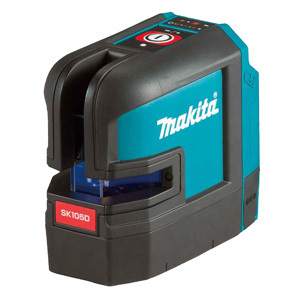
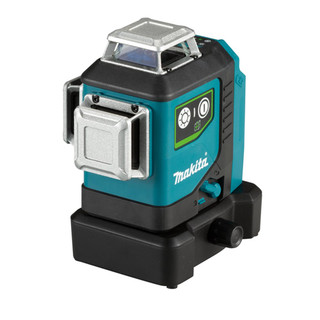
Makita Laser Levels
Makita laser level kits keep your set-out straight first time, from stud and kitchens to ceilings and tray runs, without messing about with chalk lines.
When you're marking out all day, a Makita laser is the difference between "near enough" and dead-on. From a Makita cross line laser for indoor fit-out to a Makita 360 laser level for full-room lines, pick the right voltage and beam colour, then let the Makita self leveling laser do the graft.
What Jobs Are Makita Laser Levels Best At?
- Setting out stud walls and door linings on refurbs, so your tracks go down straight and you are not fighting plasterboard all afternoon.
- Fitting kitchens, wall units, and worktops where a Makita laser level keeps your datum line consistent across long runs and awkward corners.
- Running cable tray, conduit, and bracket lines in plant rooms and commercial first fix, so everything lands level without constant re-measuring.
- Ceilings, MF grid, and downlight layouts where a Makita 360 laser level throws a continuous line round the room for quick, clean marking.
- Tiling and bathroom fit-out where a Makita green laser level stays easier to see under bright lights and helps keep courses true.
Choosing the Right Makita Laser Level
Sort the right Makita laser level by matching the beam layout and power to the work you actually do, not what looks good in the box.
1. Cross line vs 360 degree
If you are mainly doing walls, units, and general indoor set-out, a Makita cross line laser is the sensible pick. If you are constantly working around full rooms on ceilings, grid, or multi-wall layouts, a Makita 360 laser level saves time because you are not moving the tool every five minutes.
2. Green vs red beam
If you are working under bright site lighting or in bigger spaces, a Makita green laser level is simply easier to see at a glance. If it is mostly small rooms and close work, red is often fine, but do not expect miracles in sunlight without a detector.
3. 12V vs 18V Makita laser level
If you want a compact setup that lives in the tool bag for fit-out, a Makita 12V laser level makes sense. If you are already deep into LXT and want longer runtime and fewer battery swaps on bigger jobs, a Makita laser level 18V is the practical choice.
4. Self levelling and locking
A Makita self leveling laser is what you want for proper site pace, because it settles fast and keeps lines true when the floor is rough. Make sure it has a pendulum lock for transport, otherwise it will get knocked about in the van and you will be chasing accuracy issues later.
Makita Laser Level FAQs
How accurate is the Makita laser level?
They are built for set-out accuracy, but the exact tolerance depends on the model, so always check the spec in mm at a set distance before you buy. On site, the bigger issue is usually setup, so use a solid mount, let the self-levelling settle, and do a quick check line if it has had a knock in the van.
What brand of laser level is best?
The best brand is the one that stays accurate, survives site life, and fits your battery system and accessories. If you are already on Makita, a Makita laser level is a sensible choice because it keeps your charging and spares simple and you are not mixing platforms on the van.
Are Makita lasers self-leveling?
Many are, and that is what you want for proper trade set-out because it removes guesswork on uneven floors. Just remember self levelling has a limit, so if it is flashing or warning, you need to re-position the laser until it is within range.
How much does a level laser cost?
It varies with beam type and kit level. A basic cross line Makita lazer level is usually less than a multi-plane Makita 360 laser level, and green beam models often cost more because they are easier to see. Price it against how often you set out, because the right one pays for itself the first time it saves a re-do.
Should I go for a Makita laser level 18V or a Makita 12V laser level?
If you want compact and light for indoor fit-out, 12V is handy and lives in the bag. If you are on bigger sites and want longer runtime with the batteries you already use in your drills and saws, a Makita 18V laser level is the easier day-to-day option.
Who Are Makita Laser Levels For on Site?
- Chippies and dryliners doing first fix and partitions, because a laser level Makita setup speeds up track, stud, and noggin set-out without creeping errors.
- Sparks and HVAC fitters running long, visible lines, because a Makita laser 18V or Makita 12V laser level can live on the same battery platform as the rest of the van.
- Kitchen and bathroom fitters who need repeatable datums for units, splashbacks, and tiling, especially when floors and walls are not square.
- Site supervisors and snag teams checking levels and alignment fast, because a Makita laser makes it obvious when something has drifted before it gets boxed in.
The Basics: Understanding Makita Laser Levels
A Makita laser level projects a straight reference line so you can set out quicker and more accurately than measuring off a wonky floor. The key is choosing the right beam type and visibility for the job.
1. Self levelling (what it actually does)
The self-levelling mechanism finds level within its working range, so your line is true even if the surface is not. If it is out of range, it will warn you, which stops you fixing to a line that is quietly miles out.
2. Line layout: one plane vs multiple planes
A cross line laser gives you a horizontal and vertical reference for most indoor work. A 360 laser level throws a full horizontal ring, and sometimes additional vertical planes, which is why it is quicker for ceilings, full-room set-out, and repeating bracket heights.
3. Visibility: green lasers and detectors
Green beams are generally easier to pick up by eye in bright conditions, which is why you will see Makita green laser level options on bigger fit-outs. For longer distances or brighter environments, a compatible detector is what turns "I can't see it" into "I can work off it".
Makita Laser Accessories That Save Time on Set Out
The right add-ons stop you fighting poor mounting, bad visibility, and dead batteries halfway through marking up.
1. Laser detector and bracket
If you are working further out, in bright areas, or outdoors, a detector is what makes a makita laser usable when your eye cannot pick the line up. The bracket lets you clamp it to a staff or straight edge and keep readings consistent.
2. Tripod or elevating mount
A solid tripod or fine-adjust mount lets you set height properly and dial a line in without stacking off-cuts and packing pieces that get kicked out of place.
3. LXT and CXT batteries and charger
If you are running a Makita laser level 18V or a Makita 12V laser level, having a spare battery stops the job stalling when you are halfway round a room marking brackets and the pack dies.
Shop Makita Laser Levels at ITS
Whether you need a Makita cross line laser for day-to-day fit-out or a Makita green laser level for brighter, bigger spaces, we stock the full Makita laser level range and the accessories that go with it. It is all held in our own warehouse, in stock and ready for next day delivery.