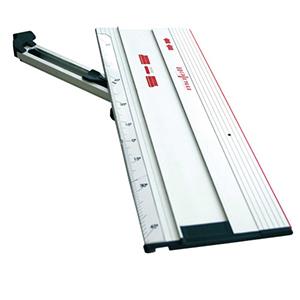
Mafell Guide Rails & Plunge Saw Accessories
A Mafell rail gives you dead-straight, repeatable cuts in sheet material, doors, worktops and fitted panels, without the wander you get freehand.
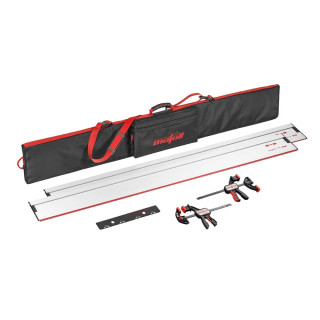
If you're trimming fire doors, breaking down boards in a finished property, or chasing clean cabinet cuts, this is the gear that keeps the saw honest. A proper Mafell Guide Rails setup with the right clamps, connectors and splinter guard saves time on set-out and cuts down rework. You'll also find Mafell Plunge Saw Guides, Mafell Guide Rail Bags, Mafell Other Plunge Saw Accessories and Mafell Plunge Saw Accessory Kits to keep everything matched and protected.
What Are Mafell Rails and Plunge Saw Accessories Used For?
- Cutting full sheets of ply, MDF and laminated board on site is far easier with a Mafell guide rail, as it keeps long rips straight and stops the saw drifting when you're working off trestles or the floor.
- Trimming doors, worktops and fitted panels in occupied properties is where a Mafell rail earns its keep, giving you clean edges and less breakout when the finish actually matters.
- Joining shorter rails with a Mafell rail connector lets you handle longer runs without dragging out a panel saw, which is handy for shopfitting, joinery installs and kitchen work.
- Locking the rail down with a Mafell rail clamp stops creep on awkward pieces, especially when you're cutting coated boards or making repeat cuts where even a slight shift ruins the line.
- Replacing a worn Mafell splinter guard keeps cut lines accurate and tidy, which matters when you're working on visible faces and do not want to be sanding chips out of expensive material.
Choosing the Right Mafell Rail
Match the rail length and accessories to the cut you do most, not the one odd job you might get twice a year.
1. Rail Length
If you're mainly trimming doors, smaller options like a Mafell F80 rail are easier to handle in tight rooms and stairwells. If you're breaking down sheet material day in day out, a longer Mafell F160 rail saves stopping, repositioning and checking your line twice.
2. Single Rail or Joined Rails
If you regularly cut long panels, use a proper Mafell rail connector rather than trying to fudge alignment by eye. For occasional long cuts, joined rails are fine, but if that's your daily work, one longer rail is usually quicker and less hassle.
3. Clamps and Hold Down
Do not assume the rail will always stay put on slick or dusty surfaces. If you're working with melamine, veneered boards or vertical pieces, a Mafell rail clamp is worth having because one slip can wreck the face and the cut.
4. Protection and Consumables
If the rail lives in the van, get a rail bag and keep an eye on the splinter guard. A bent rail or chewed-up strip will show up straight away in your finish, and that's the sort of damage that costs you time you never get back.
Who Uses These on Site?
- Chippies and joiners use Mafell rail setups for first fix and second fix cutting, especially when they need straight, repeatable cuts in sheet goods, doors and bespoke panels.
- Kitchen fitters swear by a Mafell guide rail for worktop cuts, end panels and filler pieces, because it gives them a clean line in finished homes without wrestling big workshop kit indoors.
- Shopfitters and interior fit-out teams use Mafell plunge saw accessories to extend rails, clamp awkward boards and protect rails in transit, so the setup stays accurate from one job to the next.
- Cabinet makers and bench joinery installers keep spare splinter guards and connectors in the van, as one damaged strip or loose join can spoil a run of expensive finished boards.
The Basics: Understanding Mafell Guide Rails
The rail is there to control the saw, protect the cut edge and keep repeated cuts consistent. The key is understanding what each part of the setup actually does on the job.
1. The Rail Guides the Saw
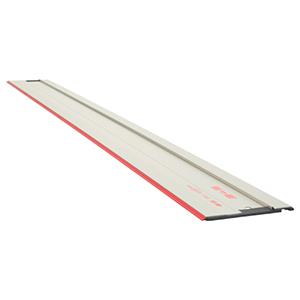
A Mafell guide rail gives the plunge saw a fixed, straight path to follow. That means cleaner rips, straighter trims and less time checking and correcting freehand cuts.
2. The Splinter Guard Protects the Finish
The splinter guard sits on the cut edge of the rail and helps reduce breakout on the top face of the board. On laminated or veneered panels, that can be the difference between fitting it straight away and having to remake it.
3. Connectors and Clamps Keep It Accurate
Rail connectors line up two rails for longer cuts, while clamps stop movement during the pass. Used properly, they keep the cut straight over distance and stop the rail shifting at the worst moment.
Mafell Rail Accessories That Save Hassle on Site
These are the add-ons that keep your cuts accurate and stop small setup problems turning into wasted boards.
1. Mafell Rail Clamp
This stops the rail creeping when you're cutting slick-faced sheet or working on awkward pieces. You will be glad of it when a board is too expensive to risk moving halfway through the cut.
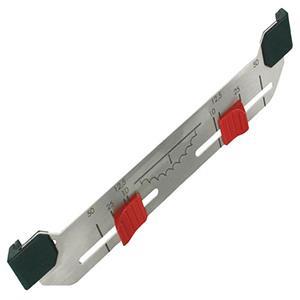
2. Mafell Rail Connector
Use this when one rail is not long enough for the run. It saves you trying to line two rails up by hand, which is exactly how you end up with a step in the cut and a panel that does not fit.
3. Mafell Splinter Guard
A fresh splinter guard keeps the cut edge neat on laminated and veneered boards. Once the old one is torn or worn, you lose that clean finish and start chasing snags with filler and sandpaper.
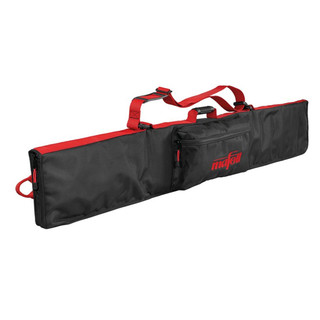
4. Mafell Rail Bag
A rail bag stops guide rails getting knocked about in the van or yard. It is a simple fix for one of the most annoying problems going, turning up with a rail that looks straight until the saw starts wandering.
Choose the Right Mafell Rail for the Job
Start with the cut length, then add the accessories that stop movement and protect accuracy.
| Your Job | Rail or Accessory Type | Key Features |
|---|---|---|
| Trimming doors and short joinery cuts in tight spaces | Mafell F80 rail | Shorter length, easier to handle indoors, quicker to set up on small work. |
| Breaking down full sheets and longer cabinet parts | Mafell F160 rail | Longer straight run, fewer resets, better for repeat panel cutting. |
| Cutting oversized panels or long continuous runs | Mafell rail connector | Joins rails accurately, keeps alignment over distance, avoids stepped cuts. |
| Working on slippery boards or awkward setups | Mafell rail clamp | Stops rail movement, improves repeatability, reduces spoilage on finished faces. |
| Keeping cut quality tidy on visible finished boards | Mafell splinter guard | Helps reduce breakout, keeps cut line clean, easy to replace when worn. |
Common Buying and Usage Mistakes
- Buying the shortest rail because it is easier to store often means extra repositioning on sheet cuts, which slows the job and gives you more chances to lose the line. Match the rail to the material you cut most often.
- Joining rails without a proper connector is a false saving. If the rails are even slightly out, the saw will follow that error and leave you with a cut edge that needs rework or replacing.
- Ignoring a worn splinter guard is a common one on site. Once it is damaged, your cut line and finish suffer, especially on laminated boards where breakout shows straight away.
- Trusting friction alone instead of using a rail clamp can catch you out on dusty, coated or awkward material. One small shift is enough to spoil an expensive panel.
- Throwing rails loose in the van is asking for damage. A bent or dinged rail might not look bad at first glance, but it will show up when you need a dead-straight cut.
F80 Rail vs F160 Rail vs Joined Rails
Mafell F80 Rail
Best for shorter work like door trimming, narrow panels and quick setup jobs inside finished properties. Easier to carry and store, but not the one to pick if most of your day is full sheet cutting.
Mafell F160 Rail
The better choice for breaking down boards and longer straight runs where you want fewer setups and less checking. It takes up more room in the van, but it saves time if long cuts are a regular part of the job.
Joined Rails with Connector
A sensible option when you need extra length without carrying one very long rail all the time. Good if used properly, but setup matters more, and poor joining will show up in the cut.
Maintenance and Care
Keep the Rail Edge Clean
Wipe dust, adhesive and site grime off after use so the saw runs properly and the rail sits flat on the work. Build-up underneath can throw accuracy off more than most lads realise.
Check the Splinter Guard Regularly
If the splinter guard is nicked, peeling or worn back, replace it before doing finish work. It is a small part, but it has a big effect on clean edges and cut-line confidence.
Inspect Connectors and Clamps
Make sure connectors pull rails up straight and clamps still hold firm. If hardware starts loosening off, sort it before the next job rather than trying to nurse a bad setup through expensive material.
Store Rails Properly
Do not leave rails rattling around under toolboxes and offcuts. Store them flat or in a rail bag so they stay straight and the guide edges do not get knocked about in transit.
Replace Damaged Parts Early
A slightly bent rail or battered guide edge is not worth fighting with on precision work. Replace worn parts early and keep the good rail for the jobs where accuracy really counts.
Why Shop for Mafell Rails at ITS?
Whether you need a single Mafell rail, a Mafell guide rail in the right length, or the plunge saw accessories that make the setup work properly, we stock the full range. That includes rails, clamps, connectors, bags, splinter guards and more, all held in our own warehouse and ready for next day delivery.
Mafell Rail FAQs
What length guide rails does Mafell offer?
Mafell offers a range of guide rail lengths to suit different jobs, including shorter rails such as the Mafell F80 rail and longer options such as the Mafell F160 rail. Short rails are easier for door work and tight rooms, while longer rails are the better shout for sheet material and longer cabinet parts.
Can Mafell guide rails be joined for longer cuts?
Yes, they can. Use a proper Mafell rail connector and take the time to align the rails correctly. Done right, it gives you the length for long rips and oversized panels without dragging one huge rail to every job.
Are Mafell guide rails compatible with other brands' plunge saws?
Sometimes, but do not assume they will be a straight match. Rail profile, saw base fit and anti-tip features all matter. Check the exact saw and rail combination before you buy, especially if accuracy is critical and you are mixing brands on finish work.
What's a rail clamp used for?
A rail clamp locks the guide rail to the workpiece so it cannot shift mid-cut. It is especially useful on slippery sheet, narrow pieces, vertical work or any job where one small movement would spoil the panel.
Are Mafell rails compatible with Festool plunge saws?
Some users look at mixing Mafell rails with Festool plunge saws, but compatibility depends on the exact model and how the base runs on the rail. Be careful here. If you want reliable, repeatable accuracy, always check the fit properly rather than assuming cross-brand use will be spot on.