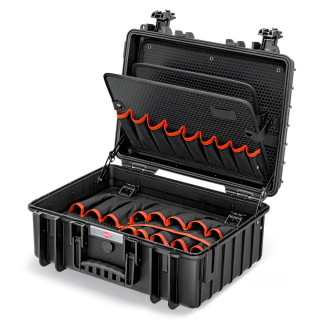
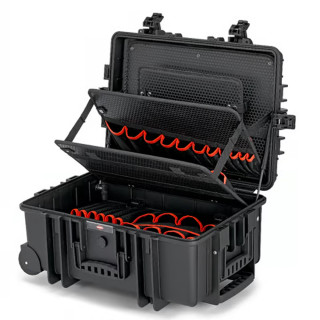
Knipex Tool Boxes & Organisers
A Knipex tool box keeps your kit protected, sorted, and ready for site, van, or workshop use without bits rattling loose or getting battered in transit.
When you're carrying expensive pliers, testers, cutters and fixings from job to job, a flimsy box is false economy. This Knipex range covers proper storage for sparks, fitters and maintenance lads who need organised layouts, hard-shell protection and stackable options that hold up in the van. If you need a Knipex Tool Box, a tougher Knipex Tool Chests setup, or lighter grab-and-go Knipex Tool Bags, pick the storage that matches how you actually work.
What Are Knipex Tool Boxes and Organisers Used For?
- Carrying pliers, screwdrivers, testers and small parts between the van and the job keeps your kit together, instead of loose in a tote where the bits you need always end up at the bottom.
- Working on first fix, maintenance rounds or plant rooms is easier with a Knipex tool organiser that separates hand tools, terminals, connectors and consumables so you are not wasting time hunting through one deep box.
- Protecting precision hand tools during transport matters when the van is getting bounced around all week, and a Knipex tool case hard shell gives better impact resistance than soft storage alone.
- Stacking storage in the van or workshop helps keep gear in order, especially if you are building out a Knipex modular tool box setup for different trades, tasks or call-out work.
- Turning up for inspection, service or snagging jobs with clean, organised storage looks sharper and makes the job run smoother because every cutter, crimper and driver has its place.
Choosing the Right Knipex Tool Box
Sorting the right one is simple: match it to how you carry your kit, not just how much kit you own.
1. Open Access or Organised Layout
If you are constantly grabbing tools on the move, a standard Knipex tool box with quick access makes more sense. If your work relies on small parts, testers, ferrules or neatly stored hand tools, go for a Knipex tool organiser or case with set compartments and panel storage.
2. Hard Case or Softer Carry
If your tools live in the van, get stacked in stores, or go through communal site access, a Knipex tool case hard build is worth it. If you are mainly carrying a lighter load up stairs and around finished properties, softer storage can be easier on the arm but gives less protection.
3. Modular Stack or Standalone Box
If you split gear by job type, a Knipex modular tool box setup is the better shout because you can keep electrical, service and install kits separate. If all your daily tools stay together, one standalone case or organiser is usually quicker and less faff.
4. Empty Storage or Loaded Kit
Do not assume every Knipex tool box with tools comes ready loaded. Some are empty storage only, while others are built around a supplied tool set, so always check whether you need the case, the tools, or both.
Who Uses These on Site?
- Sparkies swear by Knipex tool boxes for keeping pliers, side cutters, VDE tools and testers laid out properly, especially when they are in and out of risers, ceilings and plant rooms all day.
- Maintenance engineers use them for call-out work where one organised case saves dragging half the van into a building just to sort a fault or replace a component.
- Fitters and panel builders like a Knipex tool organiser for keeping smaller hand tools, fixings and electrical bits separate, so bench work and site installs stay tidy.
- Site managers and supervisors often use hard cases for inspection gear, documents and essential tools because they stack neatly and take less abuse in the boot or van.
- Anyone buying Knipex Hand Tool Kits usually wants decent storage to go with them, especially if the tools are travelling daily and need proper protection.
Accessories and Add-Ons That Make Storage Work Better
A decent storage setup is not just the box. The right extras stop wasted trips to the van and keep your kit protected properly.
1. Tool Inserts and Pre-Formed Layouts
These stop good hand tools knocking into each other or ending up in a pile at the bottom. If you use the same cutters, pliers and drivers every day, fitted layouts make missing tools obvious straight away.
2. Spare Compartments and Organiser Trays
Worth having if you carry terminals, screws, glands or service parts. They save you mixing consumables in with tools, which is exactly how lids stop shutting properly and boxes turn into a mess.
3. Additional Modules or Matching Storage
If your kit is growing, adding matching boxes is better than overloading one case until it is awkward to lift. Start with what you use daily, then build into a proper Knipex Tool Storage setup as the work demands it.
Choose the Right Knipex Tool Box for the Job
Use this quick guide to sort the right storage before you load it up.
| Your Job | Knipex Tool Box or Type | Key Features |
|---|---|---|
| Daily electrical install and first fix | Tool organiser case | Internal panels, small parts sections, tidy layout for pliers, drivers and testers |
| Van storage for expensive hand tools | Hard tool case | Rigid shell, better impact protection, cleaner stacking in the van or workshop |
| Service and maintenance call-outs | Compact organiser or case | Quick grab size, clear compartments, easier to carry into occupied buildings |
| Larger mixed tool setup split by task | Modular tool box system | Stackable units, separate kits by trade or job type, easier van organisation |
| Buying storage with a ready-made hand tool loadout | Tool box with tools | Matched tool set, organised layout, useful for standardised issue or starting out |
Common Buying and Usage Mistakes
- Buying by outside size alone is a mistake because a big box with poor layout still wastes time. Check the internal storage format and whether it actually suits hand tools, fixings or test gear.
- Assuming every hard case comes with tools catches plenty of people out. Some Knipex tool boxes are empty storage only, so always confirm whether you are buying a case, an organiser, or a full kit.
- Overloading one box makes it awkward to lift, harder to stack and more likely to get dumped on site. Split heavy gear across modules or use a larger case built for the weight.
- Using one mixed box for tools and loose consumables usually ends in broken organisers and missing kit. Keep screws, connectors and terminals in proper trays instead of chucking them in with cutters and pliers.
- Ignoring van fit and stacking is another common one. A box that looks right on paper is no good if it slides about, will not stack cleanly, or wastes the shelf space you have got.
Tool Box vs Organiser vs Hard Case
Tool Box
Best if you want straightforward storage for mixed hand tools and quick access on site. It is the practical all-rounder, but smaller parts can end up muddled if there are not enough dividers.
Organiser
Better for structured layouts, smaller components and keeping tools in fixed positions. If you work methodically and hate rooting around for the right bit, this is usually the smarter choice.
Hard Case
This is the one for better impact protection and cleaner transport in the van. It suits pricier gear and regular travel, but it can be bulkier than a simple open-access box.
Modular System
Worth it if your kit is split across install, service and consumables, or if several boxes travel together. It keeps the van tidier and grows with the work, though it is more storage than some lads need for a basic hand tool loadout.
Maintenance and Care
Clean Out Dust and Debris
Empty out dust, swarf and loose fixings regularly. Grit in the hinges, catches and tray runners soon makes any box feel rough and shortens its life.
Check Latches and Handles
Give the catches, seals and carry handles a quick once-over before loading up. If a latch is damaged, sort it before the case opens in the van and scatters your kit everywhere.
Do Not Store Wet Tools
Putting damp pliers and drivers back in the case traps moisture and encourages rust on both tools and metal fittings. Dry tools off first, especially after outside work or winter call-outs.
Keep the Layout Sensible
If the box has trays, inserts or dedicated tool positions, use them properly. A tidy layout stops damage, makes missing tools obvious and saves time every single shift.
Replace Cracked Inserts Before They Fail
Worn dividers and cracked trays only get worse once the case is loaded. Replace them early rather than waiting until your fixings mix together or your tools start knocking about.
Why Shop for Knipex Tool Boxes at ITS?
Whether you need a compact Knipex tool organiser, a full-size Knipex hard tool case, or stackable storage for daily van use, we stock the proper range. That means different sizes, layouts and storage types all in one place, including options that suit hand tool users, service engineers and site teams. It is all held in our own warehouse and ready for next day delivery, so you can get sorted without hanging about.
Knipex Tool Box FAQs
What is the difference between a tool box and an organiser?
A tool box is usually better for carrying mixed hand tools quickly, while an organiser is built around compartments, trays or fixed positions for smaller parts and neater layouts. If you mostly carry pliers and drivers, a box is often enough. If you deal with terminals, screws, test gear or service parts, an organiser saves a lot of rummaging.
Are Knipex tool boxes lockable?
Some are, some are not, so do not assume. Many hard cases and site-ready storage options have proper latch points for locking, but it depends on the model. If security matters because the box lives in the van or shared stores, check the product details for lock compatibility before you buy.
Do Knipex tool boxes stack?
Yes, selected Knipex tool boxes stack, especially modular designs made for van and workshop organisation. That said, not every case is part of a stacking system. If you are planning a proper modular setup, buy within the same range so the boxes actually sit and secure together properly.
Are Knipex tool boxes supplied with tools?
Some are supplied loaded, others are empty. That is one of the main things to check on any Knipex tool box listing. If you want a ready-made setup, look for the versions sold as kits. If you have already got your own pliers and cutters, an empty case is the better value option.
Are Knipex cases dust and water resistant?
Some Knipex cases are built with seals and hard-shell protection that give good resistance to site dust and rain, but the rating varies by model. Be honest about the job. If the case is living in the back of a van, outside on plant, or going through rough weather, check the sealing and protection spec rather than guessing.
Are hard cases worth it over bags for daily site work?
Yes, if your tools are expensive, precise or regularly knocked about in transit. A hard case protects better and stacks cleaner in the van. If you are carrying a lighter everyday kit and need something easier up stairs, a bag can be handier. It comes down to protection versus carry comfort.
Can I build a Knipex storage setup as my kit grows?
Yes, and that is usually the sensible way to do it. Start with the box or organiser that covers your daily hand tools, then add extra storage when the workload justifies it. If you know you will expand, look at modular options first rather than buying random cases that do not work together.