




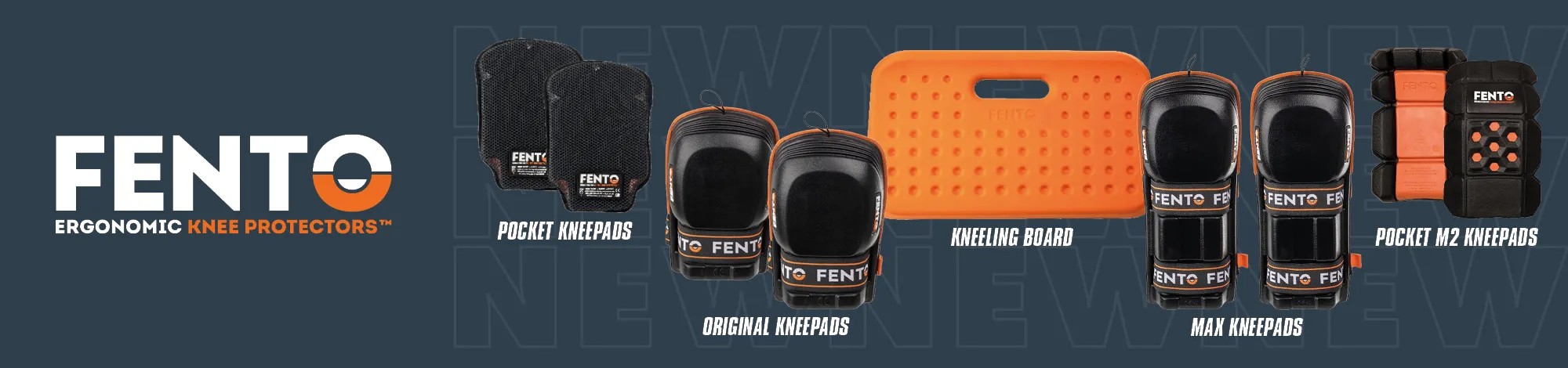
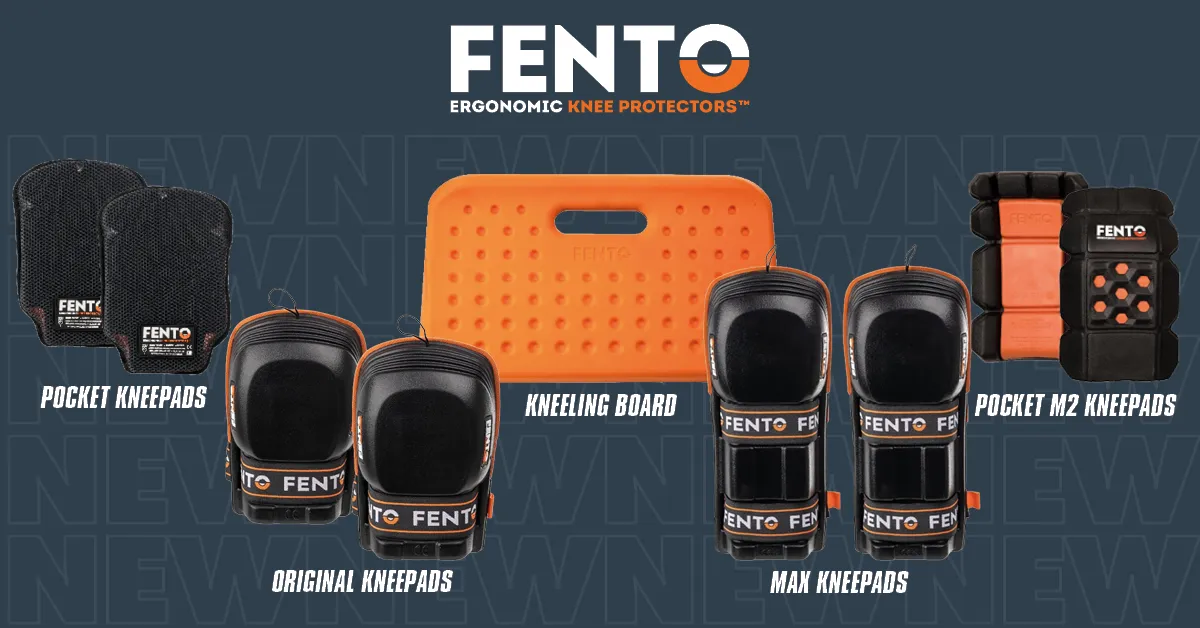
FENTO
FENTO knee pads are built for trades who spend hours kneeling on hard floors, concrete, roofing and fit-out work without wrecking their knees.
If you're down on your knees all day, cheap pads soon start cutting in, slipping about, or leaving you aching by lunch. FENTO knee protection is made for proper trade use, with ergonomic support that spreads pressure better across the lower leg and knee. Whether you're tiling, flooring, roofing, first fixing or snagging, these FENTO work knee pads are the sort of kit you buy once and actually keep using. Pick the right style for how you work and get proper kneeling protection that earns its place on site.
What Are FENTO Knee Pads Used For?
- Laying floors, fitting skirting, and working through full rooms is where FENTO knee pads come into their own, giving steady support when you are kneeling for hours on timber, screed, or concrete.
- Roofing work, flat roof detailing, and low-level external jobs are easier with FENTO kneeling protection because the pad stays positioned properly instead of twisting round every time you shift.
- First fix and second fix tasks in tight spaces, such as boxing in pipework or wiring low sockets, are less punishing when FENTO ergonomic knee pads spread the load instead of digging straight into one point.
- Tiling bathrooms, kitchens, and commercial washrooms suits FENTO work knee pads because they are built for repeated up-and-down movement without the usual rubbing and pressure hot spots.
- Snagging, decorating low walls, and maintenance work all benefit from FENTO knee protection when you need something light enough to wear all day but supportive enough to save your knees by the end of shift.
Who Uses These on Site?
- Floor layers and tilers swear by FENTO knee pads because they are kneeling for most of the day and need support that does not start cutting in halfway through a long room.
- Roofers use FENTO knee protection for low-level work, detailing, and repetitive kneeling where a pad that stays put matters more than bulky protection that gets in the way.
- Plumbers and heating engineers keep FENTO work knee pads close for under-sink jobs, pipe runs, and plant room work where hard floors and awkward positions soon punish your knees.
- Sparkies and fitters use FENTO ergonomic knee pads when working low on walls, fitting sockets, trunking, or skirtings, especially on refurbs where you are constantly up and down.
- Decorators, maintenance teams, and snaggers reach for them on finishing jobs because they are lighter and easier to live with over a full shift than many basic foam pads.
Choosing the Right FENTO Knee Pads
Sorting the right pair is simple: match the pad to how long you kneel, how much you move, and whether you need them inside your trousers or strapped on.
1. Strap On or Trouser Fit
If you are moving between tasks all day and want protection on whenever you drop down, go for strapped FENTO knee pads. If you already wear work trousers with knee pad pockets and want less bulk round the leg, pick inserts made to sit inside them.
2. Short Jobs or All Day Kneeling
If you are only kneeling now and then for snagging or quick fixes, a lighter option will do the job. If flooring, tiling, roofing, or fit-out is your bread and butter, buy the FENTO knee protection built for long stints because that extra support is what saves you later in the day.
3. Mobility Matters
If the job has you constantly shuffling, climbing, and standing back up, look for FENTO work knee pads that stay centred and do not pinch behind the knee. A pad can be well cushioned, but if it slips about, you will stop wearing it.
4. Think About the Surface
For hard slabs, concrete, tiles, and rough subfloors, go with FENTO ergonomic knee pads that spread pressure properly rather than just adding soft foam. Soft padding alone feels fine for ten minutes and then bottoms out when the graft starts.
The Basics: Understanding FENTO Knee Protection
Good knee protection is not just about adding padding under the kneecap. The real difference is how the load is spread and how the pad stays in place while you work.
1. Pressure Spread, Not Just Cushioning
FENTO knee pads are designed to spread pressure across the knee and part of the lower leg. On site, that means less of the load sits in one sore spot when you are kneeling on concrete, tiles, or subfloors for a long stretch.
2. Ergonomic Shape
The ergonomic shape matters because a flat pad can shift, dig in, or leave gaps as you move. FENTO ergonomic knee pads follow the leg better, so they stay more stable when you are crawling, reaching, and getting up and down all day.
3. External Pads vs Inserts
External pads suit trades who need protection ready to go on any pair of trousers. Inserts are better if you wear work trousers with knee pockets and want a neater setup with less to catch when working indoors or in tighter spaces.
Choose the Right FENTO for the Job
Use this quick guide to sort the right FENTO knee protection for how you actually work.
| Your Job | FENTO or Type | Key Features |
|---|---|---|
| All day tiling, flooring, or fit-out work | Full support FENTO knee pads | Ergonomic shape, better pressure spread, secure fit for long kneeling periods |
| Plumbing, electrical, and general snagging | Lightweight FENTO work knee pads | Lower bulk, easier movement, comfortable for repeated up and down work |
| Working in trousers with knee pad pockets | FENTO knee pad inserts | Fits inside workwear, less strap bulk, handy for indoor and finishing jobs |
| Roofing and rough external surfaces | Strapped FENTO knee protection | Stays in place better, ready on any trouser, suited to constant repositioning |
| Refurb work across mixed tasks and surfaces | General purpose FENTO ergonomic knee pads | Balanced support, good mobility, proper kneeling protection without overdoing the bulk |
Common Buying and Usage Mistakes
- Buying purely on padding thickness is a common mistake because more foam does not always mean better support. If the pad does not spread pressure properly, your knees still take a beating on hard surfaces.
- Picking the wrong style for your trousers wastes money and patience. If you wear knee pad pocket trousers every day, inserts make more sense, while strap-on pads suit mixed workwear and changing site kit.
- Wearing loose knee pads that slip round the leg means the protection is never where you need it. Get the fit right or you will spend the day readjusting them instead of getting on with the job.
- Using worn-out knee protection for too long is false economy because once the support has flattened or the fit has gone, you are back to taking the load through the joint. Replace them when they stop doing the job properly.
- Keeping knee pads only for the worst jobs is short-sighted. Repeated short kneeling jobs still add up over weeks and months, so wearing proper FENTO knee protection early saves grief later.
Strap On Knee Pads vs Trouser Inserts vs Basic Foam Pads
Strap On Knee Pads
These are the best choice if you want kneeling protection on any pair of work trousers and need to move between jobs, sites, or outdoor tasks. They give proper coverage and are easy to throw on, but only if they fit well and stay put.
Trouser Insert Knee Pads
These suit regular indoor work and trades already wearing trousers with knee pad pockets. They are neater and less bulky round the leg, but they depend on the trousers holding them in the right position for your kneeling style.
Basic Foam Pads
Cheap foam pads are fine for quick odd jobs, but they flatten fast and usually do little for long-term comfort. If you kneel every day on hard surfaces, they are the sort of stopgap you end up replacing after learning the hard way.
FENTO Ergonomic Knee Pads
FENTO knee pads are aimed at trades who need more than basic cushioning. The main gain is better support and pressure distribution over longer shifts, which is why they make more sense for flooring, roofing, fit-out, tiling, and repeated kneeling work.
Maintenance and Care
Brush Off Site Dirt
Get the grit, dust, and dried muck off after the job, especially around straps and closures. Leaving sharp debris stuck in the pad lining soon causes wear and makes them less comfortable next shift.
Check Straps and Fastenings
If straps start stretching, twisting, or losing grip, the pad will wander round your leg. Sort that early because even good knee protection is useless if it never stays over the knee.
Dry Them Properly
If they get wet on site, let them dry naturally before chucking them back in the van or locker. Damp kit left bundled up soon starts to smell and can break down quicker over time.
Watch for Flattened Support
Once the structure starts compressing and the support feels dead, you will notice it by the end of the day. That is usually the point to replace them rather than trying to squeeze a few more months out of tired pads.
Store Them Flat
Do not wedge them under heavy gear in the van. Keeping FENTO work knee pads stored flat helps them keep their shape and stops them coming out bent and uncomfortable for the next job.
Why Shop for FENTO at ITS?
Whether you need FENTO knee pads for full-time flooring work, lighter kneeling protection for snagging, or inserts for work trousers, we stock the range in one place. ITS carries FENTO workwear accessories and FENTO knee protection from our own warehouse, so the gear you need is in stock and ready for next day delivery.
FENTO FAQs
What are FENTO products designed for?
FENTO products are designed to protect your knees during repeated or long periods of kneeling on site. The main point is not just softness under the kneecap, but better support and pressure spread so trades can work longer on hard ground without the usual aches building up.
Are FENTO knee pads suitable for professional trade use?
Yes. FENTO knee pads are aimed at proper trade use, not just the odd DIY job. They suit floorers, tilers, roofers, fitters, plumbers, and anyone spending real time kneeling on concrete, timber, tiles, and subfloors through the working week.
What is the difference between FENTO knee pads and other knee protection?
The biggest difference is the ergonomic approach. A lot of knee pads just add a lump of padding, while FENTO knee protection is built to spread pressure more effectively and sit more naturally on the leg. In real use, that usually means less digging in and better comfort over longer shifts.
How do I choose the right FENTO knee pads for my job?
Start with how often you kneel and what you wear on site. If you are down on your knees most of the day, go for the FENTO knee pads built for long-duration support. If your trousers have knee pad pockets, inserts may be the cleaner option. If you swap trousers or work outside a lot, strap-on styles are usually the safer bet.
Are FENTO knee pads comfortable for all-day wear?
Yes, that is the whole point of them, provided you pick the right style and fit for your work. They are made for trades who spend hours kneeling, so they are far better suited to all-day wear than basic pads that feel fine at first and then start rubbing or flattening out.
Can FENTO knee pads be used with work trousers?
Yes, depending on the type. Some FENTO knee pads are designed to be worn externally with straps, while others are better suited to trousers with knee pad pockets. Check the style before buying so you do not end up with a setup that does not match your usual workwear.



