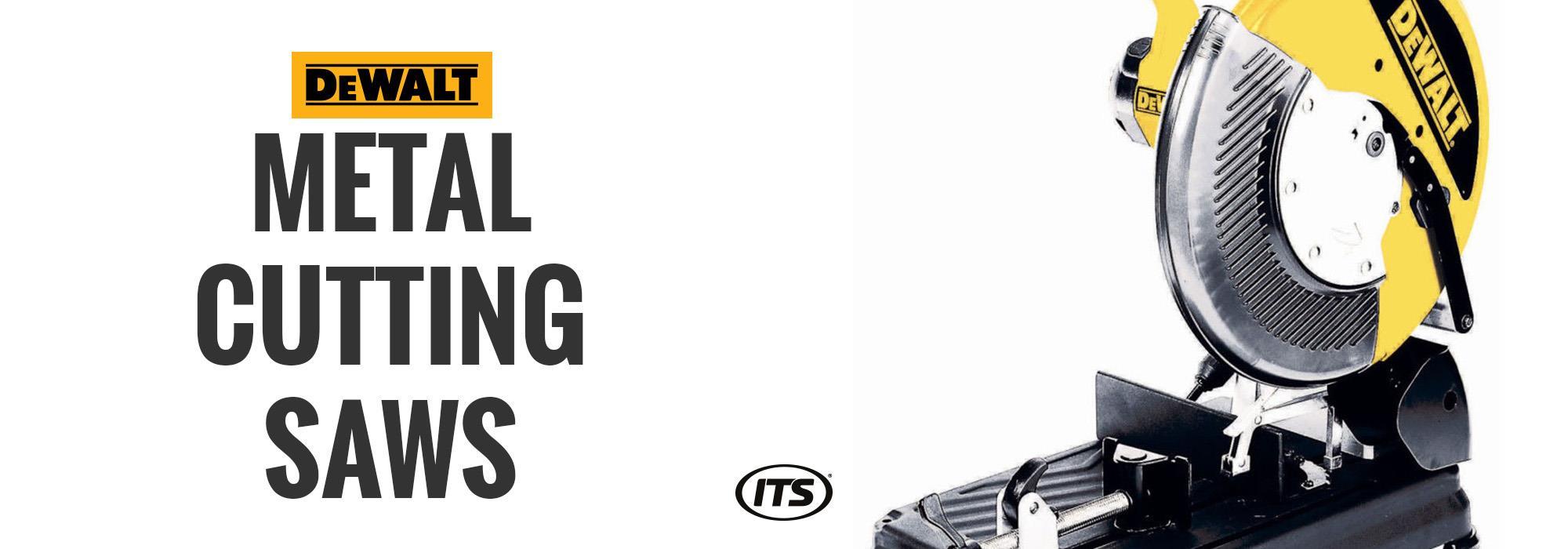
DEWALT METAL CUTTING SAWS
A DeWalt metal chop saw is for fast, square cuts in steel without chewing through grinder discs or fighting burrs all day.
When you're knocking up box section frames, cutting channel for supports, or trimming threaded rod and angle iron, a proper DeWalt metal chop saw keeps the cut straight and repeatable. Go cordless if you're moving bay to bay or working where power's a pain, and keep spare blades on hand so you're not forcing dull teeth through steel.
What Jobs Are DeWalt Metal Chop Saws Used For?
- Cutting box section, angle iron, and channel for gates, balustrades, frames, and general fabrication when you need repeatable lengths that actually line up on the bench.
- Trimming threaded rod, strut, and metal conduit cleanly so fixings run on properly and you are not dressing every end for ten minutes with a file.
- Batch cutting steel stock for site installs, where a chop saw and a stop block lets you smash out identical pieces without measuring every single cut.
- Working on refurbs and fit-outs where sparks and mess need controlling, because a metal saw with the right blade is easier to manage than leaning on a grinder in tight areas.
Choosing the Right DeWalt Metal Chop Saw
Match the saw to the material and how often you are cutting, because the wrong setup just means slow cuts and wrecked blades.
1. Corded vs Cordless
If you are cutting in one spot all day in a workshop or site cutting area, corded keeps you running without thinking about charge. If you are bouncing between floors, working outside, or cutting at the point of install, a cordless DeWalt metal chop saw saves time and stops you dragging leads through finished areas.
2. Blade Type and What You Are Cutting
Do not treat blades as "one fits all". If you are mostly on thin-wall box and sheet, run the blade made for that so it does not snatch and burr. If you are into thicker section, pick the blade that is rated for heavier stock, and replace it early rather than forcing it and cooking the cut.
3. Capacity and Angled Cuts
Check the max cut capacity against the biggest section you actually use, not the occasional one-off. If you are doing lots of mitres for frames and brackets, prioritise a solid fence and easy angle adjustment, because that is what keeps your joints tight without constant re-checking.
Who Are DeWalt Metal Chop Saws For on Site?
- Fabricators and welders cutting box and angle all day, because a chop saw keeps lengths consistent and joints tighter when it comes time to tack up.
- Mechanical and HVAC fitters cutting strut, rod, and bracket steel, because it is quicker to set an angle and repeat than messing about with a grinder and a square.
- Site maintenance teams and installers who need clean, predictable cuts for repairs and alterations, especially when they are working to an existing frame or opening.
- Anyone doing mobile work who wants a cordless DeWalt metal chop saw so they can cut where the job is, not where the nearest socket happens to be.
How Metal Chop Saws Work for You
A metal chop saw is about controlled, repeatable cuts. Set the angle, clamp the work, and let the blade do the job so your lengths stay consistent and your fit-up is quicker.
1. Clamping and a Solid Fence
The clamp and fence stop the steel walking as the blade bites, which is what ruins accuracy and chews edges. If it is moving, your cut will be out and you will be dressing every piece to make it fit.
2. Let the Blade Cut, Do Not Force It
A steady feed rate keeps the cut cooler and cleaner and helps the blade last. If you are leaning on it to get through, the blade is wrong for the material or it is past its best.
Metal Chop Saw Accessories That Save Time on the Bench
The right add-ons stop wasted cuts, reduce clean-up, and keep you cutting consistently instead of constantly fettling.
1. Spare Metal Cutting Blades
Have at least one spare blade ready, because a dull blade is what causes slow cuts, extra burr, and overheating. Swapping early is quicker than forcing it and then spending ages cleaning up the ends.
2. Material Support Stands or Roller Supports
Long lengths of box and angle sag and twist if you are balancing them on a boot. A simple stand keeps the stock level to the fence, which is how you get square cuts and stop the blade grabbing as the offcut drops.
3. Clamps and Stop Blocks
For batch work, a stop block setup is the difference between ten identical cuts and ten "near enough" cuts. A decent clamp also stops thin section vibrating, which is what leaves rough edges and wandering cuts.
Shop DeWalt Metal Chop Saws at ITS
Whether you need a DeWalt metal chop saw for workshop fabrication or a cordless DeWalt metal chop saw for moving around site, you can pick the right setup here with the blades and capacities to match. We stock the full range in our own warehouse, ready for next day delivery so you are not stood waiting when steel turns up and the cuts need doing.
DeWalt Metal Chop Saw FAQs
Is a DeWalt metal chop saw better than using a grinder for steel?
For straight, repeatable cuts, yes. A chop saw gives you a fixed fence and clamp so lengths come out consistent, and you spend less time squaring up and dressing ends compared with freehand grinder cuts.
Will a cordless DeWalt metal chop saw keep up on site, or is it just for small cuts?
It will keep up if you use it sensibly and run the right batteries, but it is still a saw doing hard work. If you are batch cutting thick section all day, corded is the steady option; if you are doing install cuts around a job, cordless is the one that saves you time and hassle.
Do metal chop saw cuts need much clean-up?
You will usually get some burr on steel, but a sharp blade and a steady feed keeps it minimal. If you are getting heavy burr and blueing, that is a sign the blade is wrong, blunt, or you are forcing the cut.
What is the biggest mistake people make when buying a metal chop saw?
Ignoring capacity and the type of work they actually cut. Check the max cut size against your regular box and channel, and make sure the fence and angle adjustment are solid if you are doing mitres, because that is where accuracy is won or lost.
How do you stop steel moving or grabbing during the cut?
Clamp it properly and support long stock so it stays level to the fence. Most grabbing happens when the work is loose, twisted, or the offcut drops and pinches the blade right at the end of the cut.