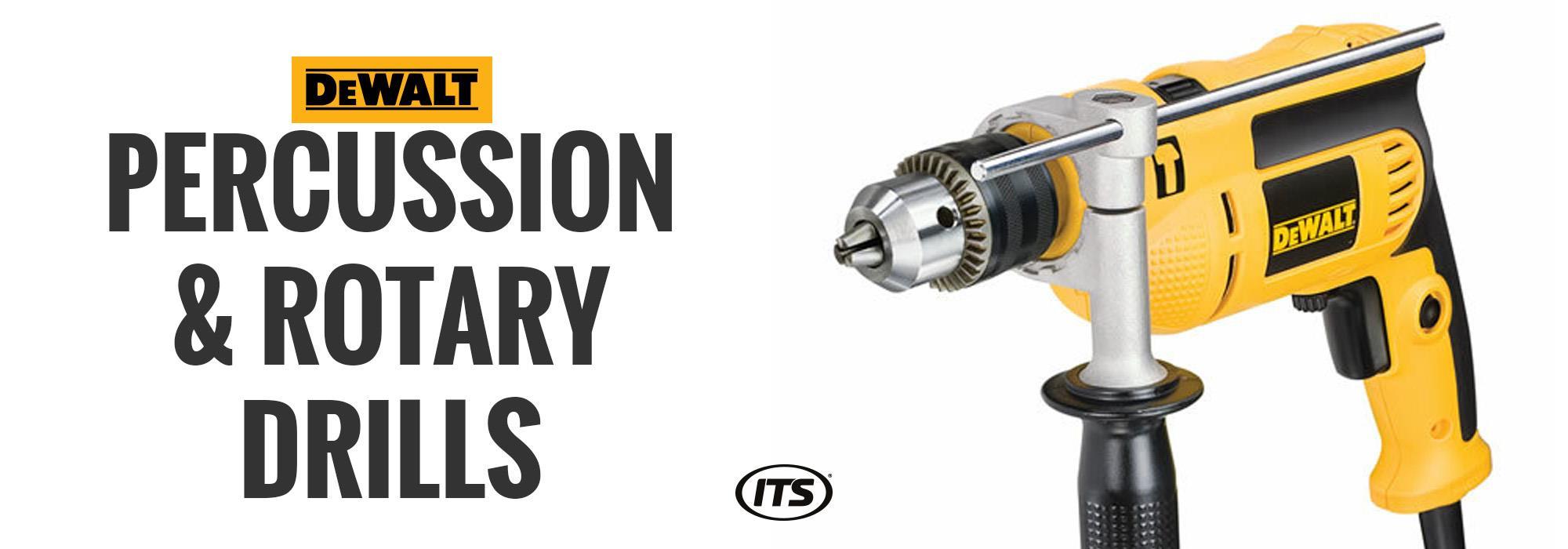
DEWALT PERCUSSION & ROTARY DRILLS
DeWalt percussion drills are built for drilling masonry, block, timber and metal when a standard drill starts struggling on proper site work.
If you're fixing into brick all day or opening up holes in block and concrete, this is the kit you look at first. A dewalt percussion drill gives you that extra hammer action for anchors, plugs and first fix work, while a DeWalt drills and drivers range also covers lighter day to day drilling. If you're stepping up from a combi, a DeWalt 18V XR combi drills setup may still suit lighter masonry, but for harder stuff a dewalt rotary drill or dewalt sds drill is the better shout. Pick the one that matches the wall in front of you and get drilling with less fight.
What Are DeWalt Percussion Drills Used For?
- Drilling fixing holes into brick and block for plugs, frame fixings and clips is where a dewalt percussion drill earns its keep on first fix and snagging jobs.
- Working through timber, sheet metal and masonry on the same day is easier with a dewalt rotary drill when you need one tool that can swap between materials without dragging extra kit round site.
- Opening up repeated holes in tougher concrete, dense block and old hard mortar is better suited to a dewalt sds drill because the hammer mechanism hits harder and wastes less of your energy.
- Running a dewalt hammer drill corded in workshops, refurbs or long shift site work makes sense when you want steady power all day and do not want to think about battery changes.
- Fitting brackets, trays, pattresses and handrail fixings into masonry goes quicker when a dewalt rotary hammer does the hammering for you instead of you leaning your full weight into the drill.
Choosing the Right DeWalt Percussion Drill
Sorting the right one is simple: match it to the wall, the hole size and how often you are actually drilling masonry.
1. Percussion Drill or SDS
If you are mainly drilling brick, block and the odd concrete fixing hole, a dewalt percussion drill is usually enough. If you are into concrete day in, day out, or drilling bigger holes repeatedly, skip the struggle and go straight to a dewalt sds drill.
2. Corded or Cordless
If the drill lives on site, near power, and gets hammered all day, a dewalt hammer drill corded setup is still a solid choice. If you are moving room to room, up ladders or around a live refurb, cordless is far less hassle.
3. Body Only or Full Kit
If you already run DeWalt batteries, a dewalt percussion drill body only deal makes more sense and saves money. If this is your first step into the range, buy the full kit so you are not chasing batteries before the job even starts.
4. Hole Size and Material
For small to medium fixings in brick and block, a standard dewalt rotary drill with percussion action will cover plenty. For larger anchors, tougher concrete and repeated overhead drilling, a dewalt rotary hammer will get through faster with less strain on your wrists.
Who Uses These on Site?
- Sparkies use a dewalt percussion drill for back boxes, clips and small fixing holes in brick and block, especially on first fix when speed matters more than fancy extras.
- Plumbers and heating engineers reach for a dewalt rotary drill when they are fixing pipe clips, brackets and supports into masonry across kitchens, risers and plant rooms.
- Kitchen fitters, carpenters and general builders keep a dewalt hammer drill corded or cordless nearby for mixed drilling through timber one minute and masonry the next.
- Mechanical and electrical installers usually move to a dewalt sds drill or dewalt rotary hammer when they are boring repeated holes into concrete soffits and structural walls for anchors and containment.
- Maintenance teams swear by dewalt percussion drill body only options if they are already on the battery platform and just need another bare unit in the van without paying again for chargers and packs.
The Basics: Understanding DeWalt Percussion and SDS Drills
These drills all make holes, but they do it in different ways. The important bit is knowing which hammer action actually matches the material in front of you.
1. Percussion Drills
A dewalt percussion drill uses a fast mechanical hammering action while the bit rotates. It is ideal for brick, block and lighter masonry jobs where you still want a normal drill for wood and metal once the hammer mode is switched off.
2. SDS Rotary Hammers
A dewalt sds drill or dewalt rotary hammer uses a stronger hammer mechanism designed for concrete and harder masonry. It hits properly, so the tool does more of the work and you spend less time forcing the bit through dense material.
3. Corded and Cordless Use
Corded models suit bench work, site cabins and long drilling sessions where power is always available. Cordless models suit access work, snagging and any job where dragging leads around finished areas is more trouble than it is worth.
DeWalt Drill Accessories That Keep the Job Moving
The right bits and sets save wasted time, cleaner blown holes and that walk back to the van when the wall gets harder than expected.
1. DeWalt drill bits
Keep the right sizes in the case so you are not trying to make one worn bit do every hole on site. Fresh DeWalt drill bits cut cleaner, run truer and stop you cooking the tool by forcing blunt gear.
2. DeWalt masonry drill bits
If you are drilling brick, block or concrete, use proper DeWalt masonry drill bits. They are what stop a simple fixing job turning into burned tips, wandered holes and plugs that never grip right.
3. DeWalt drill bit sets
A decent set means you have timber, metal and masonry covered in one grab. Keep DeWalt drill bit sets in the van and you will not get caught short halfway through a mixed fixings job.
Choose the Right DeWalt Percussion Drill for the Job
Use this quick guide to sort the right drill type before you start burning time and bits.
| Your Job | Category or Type | Key Features |
|---|---|---|
| Drilling plugs and small fixings into brick and block | DeWalt percussion drill | Hammer mode, standard chuck, good all rounder for masonry, wood and metal |
| Mixed first fix work across timber, metal and light masonry | DeWalt rotary drill | Multi material use, variable speed, easier to carry around site |
| Repeated holes into dense concrete or structural walls | DeWalt SDS drill | SDS chuck, stronger hammer action, less effort in hard materials |
| Long drilling sessions with power nearby | DeWalt hammer drill corded | Continuous runtime, no battery swaps, steady output all shift |
| Battery platform top up for existing users | DeWalt percussion drill body only | Cheaper if you already own packs and charger, easy van spare |
Common Buying and Usage Mistakes
- Buying a standard percussion drill for heavy concrete work is the usual mistake. It will do some holes, but progress is slower, bits wear quicker and you end up fighting the tool instead of letting it work.
- Using worn or cheap masonry bits in a decent DeWalt drill wastes the tool's effort. If the bit is blunt, the hole runs hot, takes longer and often ends up oversized or untidy.
- Choosing body only without checking your battery platform first catches people out. It only saves money if you already run compatible packs and charger, otherwise the job stops before it starts.
- Forcing too much pressure into the drill is another one. Let the hammer action and the bit do the cutting, because leaning on it hard just overheats the bit and tires you out faster.
- Picking corded when the work is spread over finished rooms or awkward access can slow everything down. If leads are going to be more trouble than the drilling, cordless is usually the better call.
Percussion Drill vs SDS Drill vs Combi Drill
Percussion Drill
Best when you need one drill for regular masonry holes plus timber and metal work. It is the sensible middle ground for brick, block and general fixing jobs, but it is not the fastest option for hard concrete all day.
SDS Drill
This is the one for concrete, repeated anchors and heavier site drilling. It hits harder, drills quicker and takes the graft out of dense material, but it is bulkier than a standard percussion model for lighter day to day jobs.
Combi Drill
A combi drill is handy if you are mostly driving screws and drilling wood, with only occasional light masonry work. For constant wall drilling, a proper dewalt percussion drill or SDS unit will cope far better and last happier.
Maintenance and Care
Clean the Chuck and Vents
Brick and concrete dust gets everywhere. Brush out the chuck area and keep the air vents clear after use so the drill runs cooler and the mechanism does not fill up with grit.
Check Bits Before Every Job
A chipped tip or rounded cutting edge slows everything down. Swap worn bits early rather than cooking the motor and wasting ten minutes on every fixing hole.
Store It Dry and Properly
Do not leave the drill rolling about in wet rubble in the back of the van. Keep it in its case or box, dry off site dust and moisture, and it will hold up far better over time.
Do Not Ignore Heat
If the tool or bit is getting too hot, stop and sort the cause. Usually it is a blunt bit, too much pressure or the wrong drill for the material.
Repair or Replace Honestly
If the chuck is slipping, the hammer action feels weak or the housing has taken a proper knock, get it checked. A tired drill costs more in bad holes and lost time than a replacement ever will.
Why Shop for DeWalt Percussion Drills at ITS?
Whether you need a compact dewalt percussion drill for general fixing work, a dewalt hammer drill corded for long sessions, or a dewalt sds drill for tougher concrete, we stock the full DeWalt range. It is all held in our own warehouse, in stock and ready for next day delivery, so you can get the right drill on site without hanging about.
DeWalt Percussion Drill FAQs
What's the difference between a percussion drill and an SDS rotary hammer?
A percussion drill uses a lighter mechanical hammer action and suits brick, block and general site drilling where you also want to drill wood and metal. An SDS rotary hammer hits much harder and is the better tool for repeated drilling into concrete, bigger holes and tougher materials.
Is a percussion drill suitable for drilling into concrete?
Yes, for lighter concrete work and occasional fixing holes it can do the job, especially with a sharp masonry bit. Be honest about the workload though. If you are drilling dense concrete regularly, an SDS drill will be quicker, cleaner and far less punishing on both you and the tool.
Are DeWalt percussion drills corded or cordless?
Both. DeWalt makes corded and cordless options, so the right one depends on how you work. Corded suits longer drilling sessions with steady power available, while cordless is better for moving round site, ladder work and finished areas where leads just get in the way.
Is body only worth buying, or is it a false economy?
Body only is worth it if you already run the right DeWalt battery system and have chargers ready to go. If you do not, it is not a bargain at all, because you still need to price in packs and charging time before the drill earns its keep.
Will a percussion drill replace a combi drill on site?
Not always. If most of your day is drilling masonry, it is the better choice. If you are mostly driving screws and only making the odd fixing hole in brick, a combi can still make more sense. Match the tool to the work, not the label on the box.