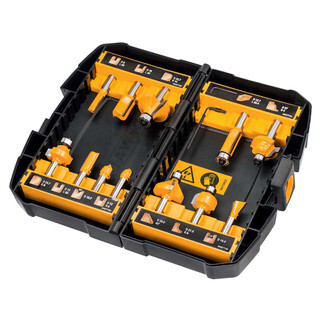
Dewalt Router Bits
DeWalt router bits are for clean, repeatable cuts in timber when you cannot afford tear-out or sloppy edges, especially on 1 4in shank routers.
When you are trimming doors, cutting hinge recesses, or putting a tidy edge on a worktop, the bit is what makes or breaks the finish. DeWalt router bits cover the common profiles and straight cutters you actually use on site, including DeWalt router bits 1 4 for compact and cordless routers like the DCW600. Pick the right shank size and cutter type, keep the speed sensible, and you will get crisp work without burning or chatter.
What Are DeWalt Router Bits Used For?
- Cutting clean hinge and lock recesses in doors and frames when you need a sharp shoulder and a flat bottom that does not need hours of chiselling.
- Trimming laminate, lippings, and edge banding flush on kitchens and built-ins, where a decent flush trim bit stops you chewing the face up.
- Routing housings, grooves, and rebates for shelving, cabinet backs, and panel work, especially with DeWalt router bits 1 4 on compact routers for quick fit-outs.
- Putting a consistent roundover, chamfer, or decorative profile on exposed edges so handrails, sills, and trims look finished straight off the router.
- Working on refurbs and second-fix where a cordless router and the right router bits for DeWalt cordless router setups let you get in and out without trailing leads.
Choosing the Right DeWalt Router Bits
Match the bit to the cut and the shank to the router, because forcing the wrong size is how you get chatter, burning, and wrecked collets.
1. Shank size: DeWalt router bits 1 4 vs 1 2
If you are on a compact or cordless router, you will usually be on 1 4in shanks, so buy DeWalt router bits 1 4 and do not try to bodge it with sleeves. If your router takes 1 2in, use it for bigger cutters and heavier passes, because it runs steadier and is less prone to vibration.
2. Cutter type: straight, flush trim, or profile
If you are cutting grooves, housings, or recesses, start with straight cutters in the width you actually use. If you are trimming laminate or lippings, go flush trim with a bearing so the bit follows the work and does not wander. If it is exposed edges, pick the profile you want and do a couple of lighter passes instead of one deep bite.
3. Single bit vs DeWalt router bits set
If you already know the job, buy the exact cutter you need and a spare, because that is what keeps you moving. If you are doing varied fit-out work, a DeWalt router bits set is handy for covering the common profiles, but do not expect every bit in the box to be a daily driver.
4. Standard vs Extreme
If you are only doing occasional trimming and light profiling, standard bits will do the job fine when used properly. If you are routing day in day out, especially in abrasive sheet materials, the Extreme versions are the sensible pick because they are built to hold an edge longer and stay consistent across repeated cuts.
Who Are DeWalt Router Bits For on Site?
- Chippies and joiners doing first fix and second fix, because the right bit gives you repeatable hinges, latches, and tidy edge work without fettling.
- Kitchen fitters and shopfitters who need router bits for DeWalt router setups to trim, rebate, and profile sheet material all day without the finish going furry.
- Carpenters running compact and cordless routers, especially anyone on a DCW600, where DeWalt 1 4 router bits are the day to day shank size.
- Site maintenance teams doing repairs and patch jobs, because a small DeWalt router bits set covers most common trims and quick clean-ups.
The Basics: Understanding Router Bit Shanks and Bearings
Most problems with router bits come down to shank size, how the bit is guided, and taking too much in one go. Get these basics right and your cuts come out clean and controlled.
1. Shank size is about grip and stability
A 1 4in shank is the common size for compact and cordless routers, so it suits DeWalt compact router bits and quick site work. A 1 2in shank gives more support for larger cutters and deeper passes, which means less vibration and a cleaner finish on heavier routing.
2. Bearing guided bits follow an edge or template
Flush trim and many profile bits use a bearing to run against the workpiece or a jig, which is how you get repeatable results on lippings, laminates, and templates. Keep the bearing clean and free spinning, because a seized bearing will burn the edge and ruin the cut fast.
3. Depth of cut matters more than brute force
If you take big bites, the bit heats up, the timber burns, and the router starts snatching. Multiple shallow passes give you a straighter line, less tear-out, and a finish you can hand over without hiding it under filler.
Router Accessories That Keep Your Cuts Clean
A couple of basic add-ons make routing safer, cleaner, and more accurate, especially when you are doing repeat work on site.
1. Spare collets in the right size
A worn collet is a proper headache because the bit can slip or run out and you will see it straight away in the finish. Keep the correct collet for your router so your DeWalt 1 4 router bits clamp properly and stay put.
2. Edge guide or guide rail adaptor
When you need a straight groove or a consistent offset, a guide stops you freehanding and ruining a panel on the last pass. It is the difference between a neat housing and a wavy line you cannot uncut.
3. Dust extraction adaptor and a decent vac
Routing makes fine dust that gets everywhere and hides your line, especially in MDF. Hooking up extraction keeps the cutter clearer, improves visibility, and saves you an hour of sweeping at the end.
Shop DeWalt Router Bits at ITS
Whether you need a single replacement cutter, a DeWalt router bits set for the van, or DeWalt router bits 1 4 for a compact or cordless router, we stock the range in the sizes and profiles trades actually use. It is all held in our own warehouse, in stock and ready for next day delivery so you are not stood waiting when the job is booked in.
DeWalt Router Bits FAQs
Are these router bits compatible with all major brands?
Mostly yes, as long as the shank size matches your collet. If your router takes 1 4in shanks, DeWalt router bits 1 4 will fit any brand with a true 1 4in collet, but do not force a 1 2in bit into a 1 4in router or rely on cheap sleeves.
How do I identify the correct size for my task?
Start with the shank size your router accepts, then choose the cutter diameter and cutting length for the profile or groove you need. If you are matching a hinge, a latch plate, or a worktop edge, measure the hardware or existing profile and pick the closest cutter, then take light passes to dial it in.
What is the difference between standard and Extreme versions?
Standard bits are fine for general trimming and occasional routing if you do not overheat them. Extreme versions are aimed at heavier use, holding an edge longer and staying more consistent when you are doing repeat cuts in sheet materials and timber all week.
What size bits for a DeWalt router like the DCW600?
The DCW600 is typically a 1 4in collet router, so you want DeWalt 1 4 router bits or router bits for DeWalt cordless router setups in that shank size. If you are unsure, check the collet marking or the manual before ordering, because the wrong shank simply will not clamp safely.
Do DeWalt drywall router bits work for timber routing as well?
They are made for cutting plasterboard cleanly and quickly, not for joinery finishes. You can physically cut soft timber with the wrong bit, but the finish will be rough and it will dull faster, so use proper timber router bits for DeWalt router work if you care about the edge.