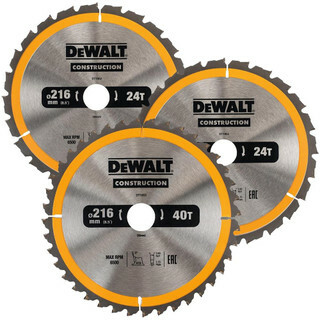
Dewalt Construction Blades
DeWalt construction blades are built for fast, repeated site cuts in timber, sheet and mixed materials without burning time on blunt, wandering blades.
When you're cutting all day, cheap blades soon show themselves through rough edges, slow progress and extra strain on the saw. DeWalt construction blades are the sort of consumable that earn their keep on first fix, roofing, fit-out and general site work. This range covers DeWalt saw blades and DeWalt cutting blades for trade saws where clean tracking, decent life and reliable tooth strength matter. If you're already running DeWalt 18V XR saws or DeWalt FLEXVOLT saws, match the blade properly and get the saw working as it should.
What Are DeWalt Construction Blades Used For?
- Cutting carcassing timber, studwork and sheet material on first fix jobs where a blade needs to stay straight and keep producing usable cuts through a long shift.
- Trimming roofing timbers, flooring sheets and site hoarding where fast feed speed matters and you do not want the saw labouring halfway through the stack.
- Handling general construction cuts across softwood, plywood, OSB and other common build materials where a proper DeWalt blade range saves swapping blades every five minutes.
- Replacing worn site consumables on circular saws and mitre saws before handover work starts to suffer from breakout, burning or ragged edges.
Choosing the Right DeWalt Construction Blades
Sort the blade to the material and saw first. That matters more than just grabbing whatever diameter looks about right.
1. Match the Blade to the Material
If you are ripping through stud timber and rough carcassing, go for a blade built for fast framing cuts. If you are working on plywood, flooring or sheet goods where the edge needs to stay tidier, pick a finer-tooth option instead of forcing a rough construction blade to do a finishing job.
2. Check Diameter and Bore Properly
Do not guess this. If the diameter or bore is wrong, the blade is no use to you no matter how good it is. Check the saw spec before ordering, especially if you run different cordless and mains saws across the gang.
3. Tooth Count Changes the Cut
Lower tooth counts are the usual choice for quicker, rougher construction cuts. Higher tooth counts slow things down a bit but leave a cleaner edge. If speed is the priority, do not over-spec a finishing blade. If appearance matters, do not expect a framing blade to leave cabinet-shop results.
4. Buy for the Saw You Actually Use
If most of your cutting is done with cordless site saws, choose blades suited to that setup and keep a spare ready. The right DeWalt construction circular saw blades will make more difference on daily site work than chasing extra power from the tool alone.
Who Uses These on Site?
- Chippies use DeWalt construction saw blades for first-fix timber, floor sheets and roofing cuts because a decent blade tracks cleaner and wastes less material.
- Roofers reach for them when cutting battens, rafters and sheet goods all day, especially where a tired blade starts tearing instead of cutting.
- General builders and maintenance teams keep spare DeWalt blades in the van for quick replacements on refurbs, snagging and day-to-day site cutting.
- Shopfitters and fit-out crews use the finer end of the range where they need neater cuts in boards and finished materials without dragging out another saw.
The Basics: Understanding DeWalt Construction Blades
With saw blades, the main things that change the result are tooth count, blade size and what the blade is meant to cut. Get those right and the saw cuts faster, cleaner and with less strain.
1. Fewer Teeth for Faster Construction Cuts
A lower tooth count usually clears waste faster, which suits framing timber, sheet breakdown and general site work. It is the better choice when speed matters more than leaving a finish-ready edge.
2. More Teeth for Cleaner Edges
A higher tooth count gives a neater cut in boards and sheet materials, but it is not always the fastest option. It is handy when you want less breakout and less remedial work afterwards.
3. Blade Fit Matters as Much as Tooth Shape
The blade has to match the saw diameter and bore exactly. If it is wrong, you risk poor cutting, vibration or simply ordering a blade that never leaves the packet.
Blade Extras That Keep You Cutting
A good blade is only part of it. A few sensible extras save downtime and stop simple jobs turning into a faff.
1. Spare Blades
Keep a spare in the van or box. Once a blade starts burning timber or tearing sheet, the job slows right down and you waste more time trying to nurse it through than swapping it out.
2. Blade Storage Cases
Loose blades get chipped teeth, bent plates and battered edges before they even hit the saw. A proper case keeps them separated and stops good blades being wrecked under other kit.
3. Saw Dust Extraction Adaptors and Bags
If your saw setup allows it, sort the dust out. You will see the cut line better, keep the work area cleaner and spend less time sweeping up at the end of the day.
Choose the Right DeWalt Construction Blades for the Job
Use this quick guide to narrow down the right blade before you order.
| Your Job | Category or Type | Key Features |
|---|---|---|
| Fast first-fix framing and carcassing cuts | Construction circular saw blade | Lower tooth count, quick waste clearance, suited to repeated timber cutting |
| Cutting plywood, OSB and sheet material | Finer-tooth construction blade | Cleaner edge, less breakout, better control on visible board cuts |
| Replacing a worn blade on a cordless site saw | Blade matched to saw diameter and bore | Correct fit, stable running, proper cutting performance from the saw |
| General van stock for mixed building jobs | Mixed DeWalt blade range | Different tooth counts, flexible use across timber and sheet materials |
Common Buying and Usage Mistakes
- Buying by diameter alone and ignoring bore size is a classic mistake. The blade has to fit the saw exactly or it is useless from the start.
- Using a rough framing blade for finish-sensitive sheet work usually leaves breakout and rough edges. Swap to a finer blade and save yourself patching or recutting.
- Running a blunt blade too long puts extra strain on the saw and the user. If it starts burning, dragging or wandering, change it before it costs you time and accuracy.
- Forgetting what material you are cutting leads to poor blade life and poor results. Match the blade to timber, board or general construction cutting rather than trying one blade for everything.
Construction Blades vs Fine Cut Blades vs General Saw Blades
Construction Blades
These are the practical choice for repeated site cutting in timber and sheet materials. They favour speed, decent durability and everyday trade use over cabinet-grade finish quality.
Fine Cut Blades
Fine cut blades are better when edge quality matters more than outright speed. They are a smarter pick for cleaner sheet cuts, but they are not always what you want for rough first-fix graft.
General Saw Blades
General-purpose blades sit in the middle and can cover mixed tasks, but they often do not excel at any one job. If you cut the same material day in, day out, a dedicated construction blade is usually the better buy.
Maintenance and Care
Keep Resin and Dust Off
Built-up resin and packed dust make blades cut hotter and slower. Wipe them down properly and do not leave them caked after a week of timber cutting.
Store Blades Flat and Protected
Do not throw loose blades into the van. Chipped teeth and bent blades usually happen in storage, not on the saw. Use sleeves, racks or a case if you want them to last.
Check for Missing or Damaged Teeth
If the teeth are chipped or the blade has taken a knock, stop using it. A damaged blade cuts poorly and can start vibrating or grabbing, which is the last thing you need mid cut.
Replace at the Right Time
Once the blade starts burning, wandering or tearing material badly, it is done for site work. Do not keep pushing a tired blade just because it still spins.
Why Shop for DeWalt Construction Blades at ITS?
Whether you need a quick replacement or you are stocking up on DeWalt saw blades for daily site work, we carry the DeWalt blade range trades actually use, including DeWalt circular saw blades for common site saw setups. It is all held in our own warehouse, in stock, and ready for next day delivery.
DeWalt Construction Blades FAQs
What construction blades does DeWalt make?
DeWalt makes construction blades for common site saws, including circular saw setups used for timber, sheet materials and general building cuts. In this range you will find trade-focused options covering different diameters, bores and tooth counts so you can match the blade to the saw and the material properly.
Are DeWalt construction blades suitable for site use?
Yes. That is what they are for. DeWalt construction blades are made for repeated cutting on building jobs where blades see timber, board and everyday site abuse. They are not magic and they will still wear if you use the wrong one for the job, but matched properly they cope well with regular trade use.
How do you choose the right blade for the material being cut?
Start with the material first, then check the saw size and bore. For fast framing and rough timber work, use a blade aimed at quicker cuts. For plywood and sheet goods where edge quality matters more, choose a finer-tooth blade. If the fit is wrong or the tooth count does not suit the material, the cut quality suffers straight away.
Will these blades fit any circular saw?
No. You need to check both the blade diameter and the bore against your saw. Plenty of returns happen because lads assume one circular saw blade fits the lot. It does not. Check the saw plate or manual before ordering.
Do DeWalt construction blades give a clean finish, or are they mainly for rough work?
Mainly they are aimed at solid construction cutting, but some will leave a tidier result than others depending on tooth count and material. If the cut edge matters, choose carefully rather than assuming every construction blade will do finish work neatly.
When should I replace a site saw blade?
Replace it when it starts burning, slowing the saw, tearing fibres badly or wandering off line. If you have to force the cut, the blade is costing you time and putting more strain on the saw. Change it and crack on.