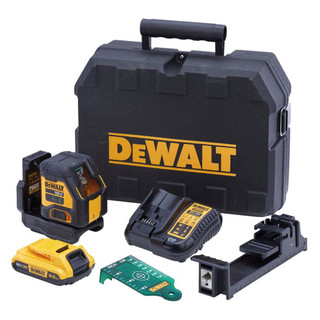
Dewalt 18V XR Lasers, Detectors & Digital Measures
DeWalt 18V laser level kit gives you fast, accurate set-out for stud, ceilings, kitchens and first fix, using the same XR batteries as the rest of your gear.
When you're marking out partitions, levelling tray, or lining up units, a decent laser saves time and stops silly mistakes. DeWalt XR kit is built for proper site use, with self-levelling models, detectors for brighter jobs and digital measures for quick room checks. If you already run XR tools, start with DeWalt 18V XR laser levels and build a measuring setup that actually earns its place in the van.
What Jobs Are DeWalt 18V Laser Levels, Detectors and Digital Measures Used For?
- Setting out stud walls, door openings and service runs is quicker with a DeWalt 18V laser level because you get straight reference lines without dragging a spirit level across the whole room.
- Installing kitchens, wall units and dado runs is cleaner with a DeWalt cordless laser level, especially when you need consistent heights carried across awkward walls and corners.
- Working in brighter areas or longer distances is where a DeWalt 18V detector earns its keep, helping you pick up the beam when the line is harder to see by eye.
- Measuring rooms, openings and ceiling heights for first fix, snagging or quotes is faster with a DeWalt 18V digital measure than constantly folding out a tape on your own.
- Laying out ceilings, pipework and full-room reference lines is exactly where DeWalt 18V XR 360 degree lasers save time, especially when several trades are working from the same mark.
Choosing the Right DeWalt 18V Measuring Tool
Sort the tool by the set-out job first. Do not buy a full room laser setup if all you need is quick measuring and marking inside a flat.
1. Cross Line or 360 Degree
If you are doing kitchens, sockets, shelves or short stud runs, DeWalt 18V XR crossline lasers are usually enough. If you need full-room lines for ceilings, partitions or multi-wall set-out, go straight to a 360 degree model and save yourself constant repositioning.
2. Indoor Visibility or Detector Use
If you mainly work indoors on fit-out and first fix, the visible beam is often all you need. If you are stretching longer distances or working in brighter conditions, pair the laser with a DeWalt 18V detector so you are not guessing where the line has gone.
3. Laser or Digital Measure
If the job is alignment, levelling and plumb, buy the laser. If you are pricing jobs, checking openings or measuring rooms on your own, a DeWalt 18V digital measure is the better time-saver and takes less space in the bag.
4. Battery Platform
If you already run DeWalt XR gear, stick with 18V models that use the same packs. It means fewer chargers in the van, easier battery rotation, and less chance of the measuring kit being flat when the rest of your tools are ready to go.
Who Uses These on Site?
- Sparkies use a DeWalt 18V laser tool for setting socket lines, tray runs and lighting positions, especially on first fix where one bad line carries right through the job.
- Dryliners and chippies swear by them for studwork, ceilings, door sets and kitchen installs, where getting level and plumb quickly matters more than messing about with hand levels.
- Plumbers and HVAC fitters use a DeWalt 18V laser level to keep pipe clips, bracket lines and plant room runs straight over distance, particularly in refurbs with uneven walls and floors.
- Site managers, survey teams and snagging crews keep a DeWalt 18V digital measure handy for checking room sizes, openings and finished heights without needing a second pair of hands.
- Groundworkers and external teams reach for a DeWalt 18V detector when they need to pick up laser lines over longer runs or in stronger daylight where the beam is harder to spot.
The Basics: Understanding DeWalt 18V Lasers, Detectors and Digital Measures
These tools all help with set-out and checking work, but they do different jobs. The simple bit is knowing which one gives you the result you need on site.
1. Laser Levels for Lines
A DeWalt 18V laser level projects level and plumb reference lines onto walls, floors or ceilings. That means faster set-out for stud, kitchens, containment and second fix, without marking and rechecking every few feet.
2. Detectors for Harder to See Beams
A DeWalt 18V detector picks up the laser beam when distance, daylight or site brightness makes the line difficult to see. On longer runs or open areas, that is what keeps the setup usable instead of hit and miss.
3. Digital Measures for Quick Dimensions
A DeWalt 18V digital measure gives you fast point-to-point dimensions without needing someone to hold the other end of a tape. It is ideal for room sizes, ceiling heights, openings and quote work where speed matters.
DeWalt Laser Accessories That Make Site Life Easier
The right add-ons stop bad readings, flat batteries and awkward setups slowing the whole job down.
1. Laser Detectors
If the beam disappears in bright rooms or over longer distances, a detector saves you wasting time squinting and second-guessing the line. It is the bit that turns a laser from handy to genuinely useful on bigger set-out work.
2. Brackets and Mounts
A proper mount lets you fix the laser where you actually need it instead of balancing it on a bucket, step or window board. That means steadier lines and less chance of someone knocking it out halfway through the room.
3. Tripods
Tripods help when floor levels are rough or you need a clean adjustable working height. They are especially useful for ceiling lines, long corridors and empty rooms where there is nothing sensible to clamp onto.
4. Spare Batteries
A flat laser in the middle of a set-out is a pointless delay, especially when other trades are waiting on your marks. Keep spare DeWalt 18V XR batteries ready so the measuring kit stays live all day.
Choose the Right DeWalt 18V Measuring Tool for the Job
Match the tool to the sort of set-out or measuring you do most days.
| Your Job | Category or Type | Key Features |
|---|---|---|
| Setting sockets, tray and kitchen units indoors | Cross line laser level | Level and plumb lines, quick room setup, less repositioning than hand marking |
| Running ceiling lines and full-room partitions | 360 degree laser level | Full room coverage, faster multi-wall set-out, useful for several trades at once |
| Working in brighter spaces or over longer distances | Laser detector | Picks up beams that are hard to see, improves accuracy, helps outside standard indoor conditions |
| Measuring openings, room sizes and ceiling heights | Digital measure | Fast one-person measuring, fewer tape errors, useful for quotes and snagging |
Common Buying and Usage Mistakes
- Buying a cross line laser for full-room ceiling or partition work can slow you right down because you keep moving it. If you are working across several walls at once, a 360 degree model makes far more sense.
- Assuming every job will be fine without a detector is a common one. In brighter conditions or over longer distances, the beam can be hard to see, so add a detector before the job turns into guesswork.
- Using a laser on an unstable surface ruins accuracy fast. Put it on a proper mount or tripod instead of balancing it on whatever is nearest.
- Forgetting battery compatibility wastes money and space in the van. If you already use XR tools, stick with the DeWalt 18V platform so one set of batteries and chargers covers the lot.
- Buying a digital measure when the real problem is alignment, not distance, leads to the wrong tool for the job. Measures are for dimensions, lasers are for straight lines and level set-out.
Cross Line Lasers vs 360 Degree Lasers vs Digital Measures
Cross Line Lasers
Best for day-to-day indoor set-out like sockets, stud, shelves and kitchen work. They are simpler and usually plenty for smaller rooms, but they do not cover a whole space as quickly as a 360 degree laser.
360 Degree Lasers
Built for faster room-wide work where you need a constant line around the space. They cost more, but if you are doing ceilings, long partitions or multi-trade fit-out, they save enough time to justify it.
Digital Measures
These are for dimensions, not alignment. If you are surveying, quoting or checking openings alone, a digital measure is quicker than a tape, but it will not replace a laser level for setting straight lines.
Detectors
A detector is not a replacement for the laser. It is the add-on that makes your laser workable in brighter or longer-range conditions, so buy one if visibility is likely to be the weak point on your jobs.
Maintenance and Care
Keep the Lenses Clean
Dust on the laser window weakens the beam and can make the line look fuzzy. Wipe it down after site use, especially after plaster, MDF dust or chasing work.
Store It in the Case
Do not leave a laser or digital measure loose in the van getting knocked about by drills and fixings. Keep it cased up so calibration and screens last longer.
Check Accuracy After a Knock
If the laser has taken a drop or a proper bump, check it before trusting it on finished work. A quick test is far better than discovering your units or stud line are out later on.
Look After Batteries Properly
Charge XR batteries before they are completely dead and do not leave them rattling around damp in the van. Healthy batteries mean the measuring kit is ready when set-out starts.
Replace Worn Mounts and Accessories
If brackets, clamps or threads are damaged, sort them before the next job. Wobbly accessories cause bad readings and wasted time, even if the laser itself is still spot on.
Why Shop for DeWalt 18V Laser Levels at ITS?
Whether you need a DeWalt 18V laser level for first fix, a detector for longer runs, or a digital measure for survey and snag work, we stock the proper range in one place. That includes the core kits plus DeWalt laser accessories, all held in our own warehouse and ready for next day delivery.
DeWalt 18V XR Lasers, Detectors and Digital Measures FAQs
What laser levels are available in the DeWalt 18V range?
You are mainly looking at cross line and 360 degree models in the DeWalt XR range. Cross line lasers suit everyday internal set-out, while 360 degree units are the better pick for ceilings, partitions and full-room work where you want one setup to carry across the whole space.
Are DeWalt 18V laser levels self-levelling?
Yes, most DeWalt 18V XR laser level models in this type of range are self-levelling, which is exactly what you want on site. It speeds up setup and helps stop bad lines caused by rough floors or rushed positioning, but you still need to place the unit on a stable base and check it after any knock.
Do 18V laser levels share the battery platform with power tools?
Yes, that is one of the main reasons lads buy into the XR range. A DeWalt cordless laser level uses the same 18V XR battery platform as the rest of your DeWalt kit, so you are not carrying separate chargers and odd batteries just for measuring gear.
Do I actually need a detector with a DeWalt 18V laser level?
Not always. For normal indoor rooms, the beam is often clear enough on its own. Where a DeWalt 18V detector becomes worth having is brighter areas, longer distances or larger open spaces where the line starts getting hard to pick up by eye.
Is a digital measure worth it if I already carry a tape?
Yes, if you measure rooms, openings or ceiling heights regularly on your own. A DeWalt 18V digital measure is quicker for repeated checks and saves the usual nonsense of trying to hold a tape straight across an empty room with nobody helping.
Will these lasers cope with proper site use, or are they just for clean fit-out jobs?
They are built for site work, not just clean second fix. That said, no laser likes being launched around the van or dropped off a hop-up. Keep it in the case, use a proper mount, and it will put up with normal trade abuse far better than cheaper light-duty gear.