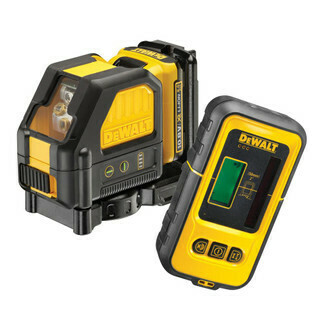
Dewalt 12V XR Lasers, Detectors & Digital Measures
DeWalt 12V laser levels are built for fast, accurate set-out on site, giving sparks, chippies and fitters reliable lines without dragging cords about.
When you're marking out stud, lining up trays, setting kitchen runs or sorting second fix, a dewalt 12v laser level saves time and stops daft measuring mistakes. The DeWalt 12V XR range gives you cordless set-out kit that is easy to carry, quick to position and built for daily van life. If you also need line detection or quick room checks, there are dewalt 12v detector and dewalt 12v digital measure options worth keeping in the same case. Have a look through DeWalt 12V XR laser levels, compare DeWalt 12V XR crossline lasers with DeWalt 12V XR 360 degree lasers, and pick the measuring kit that actually suits the work in front of you.
What Are DeWalt 12V Lasers Detectors and Digital Measures Used For?
- Setting out stud walls, ceiling tracks and service runs is where a dewalt 12v laser level earns its keep, giving you straight level references without snapping chalk lines across a busy room.
- Fitting kitchens, media walls and built-in joinery goes quicker when a dewalt cordless laser level keeps cabinets, rails and fixings lined through properly from one end to the other.
- Working in brighter rooms or over longer distances, a dewalt 12v detector helps you pick up the beam when the line gets harder to see by eye, which matters on larger fit-outs and open areas.
- Measuring room sizes, ceiling heights and repeat distances for first fix or snagging is faster with a dewalt 12v digital measure, especially when you're on your own and need quick numbers without wrestling a tape.
- Marking socket heights, pipe brackets, dado lines and tile courses is cleaner with a dewalt 12v xr laser because you can trust the line and get on with fixing instead of checking every mark twice.
Choosing the Right DeWalt 12V Laser Level
Sorting the right one is simple. Match the beam pattern and range to the job, not the other way round.
1. Crossline for Rooms and Second Fix
If you're mainly working indoors on kitchens, sockets, partitions or bathroom fit-outs, a crossline dewalt 12v laser level is usually the sensible buy. It gives you the horizontal and vertical reference you need without paying for coverage you will not use.
2. 360 Degree for Full Area Set-Out
If you're lining through a whole room, running long ceiling lines or working across larger open spaces, go for a 360 degree model. It saves constant repositioning, which is the bit that really slows you down on bigger jobs.
3. Detector Compatibility Matters
If you work in bright conditions or need longer range, do not ignore detector use. A dewalt 12v detector is worth having when the beam starts disappearing in daylight or across bigger commercial areas.
4. Buy Into the 12V Kit You Already Run
If you already own the battery platform, stick with it. Using the same packs and chargers keeps the van simpler, and a compact dewalt 12v xr laser makes more sense when you are carrying it room to room all day.
Who Uses These on Site?
- Sparkies use a dewalt 12v laser tool for lining through tray, trunking, sockets and lighting runs, especially on first fix where one bad line carries through the whole job.
- Kitchen fitters and chippies swear by these for cabinet runs, worktop support rails and wardrobes, because a clear level line is quicker than chasing a pencil mark round four walls.
- Dryliners and ceiling fixers use them to set tracks, noggins and suspended ceiling lines, where getting square and level early saves a lot of grief later on.
- Plumbers and HVAC fitters use them for bracket spacing, pipe clips and plant room set-out, and many keep a dewalt 12v digital measure close by for quick checks across awkward spaces.
- Site managers, snagging teams and general builders reach for a dewalt 12v measuring tool when they need fast layout checks, room dimensions or a straight answer before signing work off.
The Basics: Understanding DeWalt 12V Lasers and Detectors
These tools are all about faster, more accurate set-out. The main thing is knowing what sort of beam you need, when a detector helps, and where a digital measure fits in.
1. Cross-Line Lasers
This is the standard choice for indoor fitting work. A cross-line unit throws a level horizontal line and a plumb vertical line, which is what you want for kitchen units, stud partitions, cable routes and general room set-out.
2. 360 Degree Lasers
A 360 degree laser gives you a continuous line around the room, so everyone works from the same height reference. It is the better option for ceilings, long walls, multi-trade fit-outs and larger spaces where moving the laser wastes time.
3. Detectors and Digital Measures
A detector picks up the beam when distance or brighter light makes it hard to see, while a digital measure handles quick distance checks without a second pair of hands. Between them, they cut down re-measuring and speed up layout work.
Accessories That Keep Your Laser Kit Working Properly
The right extras save set-up time, protect the kit and stop simple jobs turning into a faff.
1. Detectors
If you are stretching the range or working where the beam gets washed out, a detector stops you guessing where the line is. That is a lot better than marking off a faint beam and finding out later the whole run has drifted.
2. Laser Brackets and Mounts
A decent bracket or mount helps you fix the laser to track, ceiling grid or steel without balancing it on whatever is nearby. It gives you a stable line and saves it getting knocked out every five minutes.
3. Tripods
A tripod is worth it when floor levels are awkward or you need repeatable height adjustment across a room. It is far quicker than packing bits under the laser and hoping nothing shifts.
4. Spare Batteries
Keep a spare pack in the case so the laser does not die halfway through set-out. There is no point stopping a room full of trades because one battery ran flat before lunch.
Choose the Right DeWalt 12V Laser Tool for the Job
Use this quick guide to sort the right set-out kit for the work you are doing.
| Your Job | Category or Type | Key Features |
|---|---|---|
| Setting sockets, tray and partition lines in single rooms | 12V cross-line laser level | Horizontal and vertical lines, compact size, quick room-to-room set-up |
| Lining through ceilings, long walls and full room perimeters | 12V 360 degree laser level | Full room coverage, fewer moves, better for larger fit-outs |
| Working over longer distances or in brighter conditions | 12V laser level with detector | Detector compatibility, clearer beam pick-up, more reliable range |
| Quick room sizes, height checks and one-man measuring | 12V digital measure | Fast distance readings, fewer tape errors, handy for surveys and snagging |
| Keeping a full measuring kit on one battery platform | 12V XR laser and measuring tool setup | Shared batteries, simpler charging, easier van organisation |
Common Buying and Usage Mistakes
- Buying a basic laser for large open areas is a common mistake. You save money up front, then lose time constantly moving it, so for longer runs a 360 degree unit usually pays you back.
- Ignoring detector compatibility catches plenty of lads out. If you work in brighter conditions or across bigger spaces, not having a detector means slower set-out and more chance of marking off a weak line.
- Relying on a laser alone without checking the surface and set-up point causes grief. If the base gets knocked or the position is poor, your line is out before you start, so always place it somewhere solid and sensible.
- Choosing a digital measure when you actually need full visual set-out wastes time. It is brilliant for distance checks, but it will not replace a proper line reference for fixing runs and room layout.
- Not carrying a spare battery is asking for trouble. A dead laser in the middle of setting out holds everyone up, especially when the next pack is still back in the van on charge.
Cross-Line vs 360 Degree vs Digital Measure
Cross-Line Laser Level
Best for straightforward indoor set-out like sockets, kitchen units, stud and tile lines. It is usually the most compact and cost-effective option, but it needs more repositioning on longer runs or bigger rooms.
360 Degree Laser Level
Better when several trades are working from the same line or you need a full room reference. It covers more area and cuts set-up time, though it can be more than you need for quick one-room snagging or light second fix.
Digital Measure
Made for distance checking rather than visual set-out. It is ideal for surveys, room dimensions and one-man measuring, but it will not replace a laser level when you need level and plumb lines to actually fix from.
Detector
Not a substitute for the laser itself, but a proper add-on for extending usable range and reading the beam in tougher conditions. If your work stays indoors in smaller rooms, you may not need one every day, but on bigger sites it soon proves its worth.
Maintenance and Care
Keep the Glass Clean
Dust on the laser window weakens the beam and can make the line harder to read. Wipe it down with a soft cloth after use, especially after plasterboard, chasing or dusty first fix work.
Store It in the Case
Do not leave your laser loose in the van. Keeping it in its case stops knocks, protects the pendulum and saves the lenses from getting covered in site muck between jobs.
Check Calibration Behaviour
If the line suddenly looks off compared with known levels or previous marks, do not just work around it. A laser that has had a hard knock may need checking before it puts a whole install out.
Look After the Batteries
Charge packs properly and do not leave them flat for weeks in the van. A healthy battery keeps the beam stable and means your measuring kit is ready when you open the case in the morning.
Replace Worn Accessories
Bent brackets, sloppy mounts and damaged tripods cause more trouble than most realise. If the support gear will not hold the laser firmly, swap it before it costs you accuracy on site.
Why Shop for DeWalt 12V Laser Levels at ITS?
Whether you need a compact dewalt 12v laser level for room-by-room set-out, a dewalt 12v detector for longer range work, or a dewalt 12v digital measure for fast surveying, we stock the full DeWalt 12V XR range in one place. That includes the core units, DeWalt laser accessories and DeWalt 12V XR batteries, all in our own warehouse and ready for next day delivery.
DeWalt 12V Lasers Detectors and Digital Measures FAQs
What laser levels are available in the DeWalt 12V range?
You will typically find cross-line and 360 degree options in the range, covering anything from small room set-out to longer perimeter and ceiling work. The right choice comes down to whether you need simple horizontal and vertical lines or full room coverage with fewer moves.
Are DeWalt 12V laser levels self-levelling?
Yes, most are designed to self-level within their working range, which is what makes them useful on site. That said, they still need to be placed on a stable surface or proper mount, because self-levelling will not fix a laser that has been set on something wobbling about.
Do 12V laser levels share the same battery as 12V power tools?
Yes, that is one of the big advantages of buying into the 12V platform. If you already run DeWalt 12V XR kit, sharing batteries and chargers keeps things simpler and means one less separate system to carry in the van.
Is a detector actually worth buying with a DeWalt 12V laser level?
Yes, if you work across longer distances or in brighter spaces where the beam starts fading to the eye. For small indoor rooms you may get by without one, but on larger fit-outs a detector saves time and stops rough guesswork.
Can a DeWalt 12V digital measure replace a tape measure completely?
Not completely. It is quicker and more accurate for many room measurements, height checks and repeat distances, but you will still want a tape for rough marking, short checks and anywhere you need to physically hook onto an edge.
Are these tough enough for normal van and site life?
Yes, they are built for trade use, but be sensible with them. They will handle daily carrying, site dust and regular set-up work, though repeated knocks, loose storage and being thrown in with heavy gear will shorten the life of any laser.